
Uji matcha is matcha connected with the Uji tea tradition around Kyoto, Japan. In everyday shopping language, it usually signals a matcha positioned around Uji’s historic tea reputation. It does not automatically prove the powder is the best grade, freshly milled, or suitable for every drink.
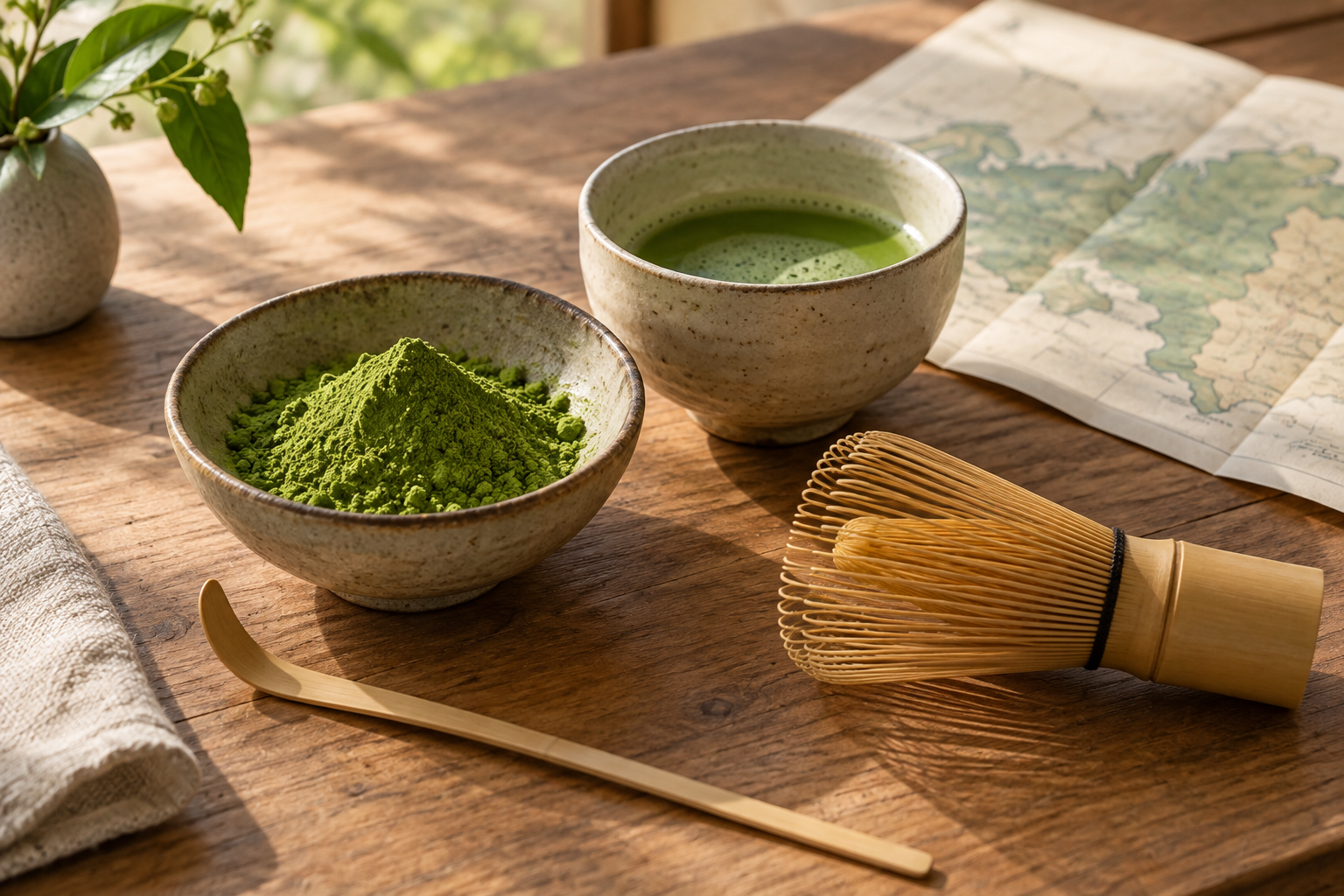
The careful answer is narrower than many product pages make it sound: Uji is famous for tea, and matcha is powdered tea made by grinding tencha. A label that says “Uji matcha” should therefore make you ask two questions: what exactly is the seller claiming about the tea’s place and processing, and can the seller support that claim for the actual lot?
What the words mean
| Term | Useful meaning | What it does not prove by itself |
|---|---|---|
| Uji | A historic tea area and tea tradition associated with Kyoto. | That every leaf in a retail tin came from one small city. |
| Uji-cha | A regional tea term with official and industry usage in Japan. | That a foreign-language marketplace listing is using the term precisely. |
| Tencha | The leaf material that is finished and ground to make matcha. | That the final powder is automatically ceremonial grade. |
| Matcha | Fine powdered tea made from suitable processed tea leaf. | That it is unsweetened, single-origin, or from Japan unless the label says so. |
Kyoto Prefectural Tea Chamber material separates Uji tea education by tea type and explains matcha through the tencha route. Japan’s Ministry of Agriculture, Forestry and Fisheries also lists Uji Cha in its Geographical Indication register. Those sources are useful because they treat Uji tea as a defined regional food culture, not just a pretty word for green powder.
Why people look for Uji matcha
Uji has a long reputation in Japanese tea, so the term carries buyer value. People often search it because they want a traditional-tasting matcha, a giftable Japanese powder, or a café ingredient with a stronger origin story than generic “green tea powder.”
That reputation is real, but it is not a shortcut around evaluation. In actual use, a beautiful Uji-labeled matcha can still be wrong for a sweet milk drink if it is too delicate or too expensive for the recipe. Another powder may perform better in a latte because it has stronger color, body and cost control. For production buying, match the tea to the drink, not just to the place name.
What to check before buying
- Ingredient line: it should be matcha or green tea powder without sugar if you need plain matcha.
- Origin wording: look for whether the seller says Uji, Kyoto, Japan, blended Japanese tea, or only “Uji style.” Those are not the same claim.
- Lot evidence: for wholesale, request lot code, production date, storage condition and any origin or traceability document the supplier can lawfully provide.
- Use case: test the actual powder in usucha, latte, baking or RTD formulation before accepting the name as proof of performance.
- Claim discipline: do not turn “Uji” into unsupported health, grade or certification claims in your own menu or packaging.
Uji matcha versus Japanese matcha
All Uji matcha is positioned inside the Japanese tea world, but not all Japanese matcha is Uji matcha. Japan has multiple tea-producing regions, and a general Japanese matcha claim is broader than a specific Uji claim. This matters when a café menu, gift box or importer page uses place names as selling points.
If your goal is simply to understand matcha as a product, start with what matcha is. If your goal is business sourcing, compare this with Sailtik’s Japanese and Uji matcha wholesale sourcing guide. For grade language, use matcha grades explained and remember that grade names are market labels, not one universal law.
What not to assume
Do not assume Uji means organic. Do not assume it means shade-grown for a fixed number of days unless the seller documents that. Do not assume it is stone-milled unless the supplier states the milling method for the lot. And do not assume a bright green photo proves Uji origin; lighting, camera processing and editing can all change the look of matcha online.
For Sailtik specifically, do not read a Uji explainer as an origin claim for Sailtik products. Sailtik’s known matcha origins must be stated from product-specific documentation, not inferred from educational articles about Japan.
Bottom line
Uji matcha means matcha tied to the Uji tea reputation and regional tea context. Treat it as a meaningful clue, then verify the actual product: ingredient, origin wording, lot documents, freshness, taste and performance in your intended recipe.
Sources checked
- Kyoto Prefectural Tea Chamber, “Learn about Uji tea” and tea-type education pages, checked September 2026.
- Kyoto Prefectural Tea Chamber, “How Tencha (Matcha) is Made,” checked September 2026.
- Japan Ministry of Agriculture, Forestry and Fisheries GI register page for Uji Cha, checked September 2026.