
One tablespoon of matcha can plausibly land in a very wide caffeine range because the spoon has to be converted to grams first. If your tablespoon of powder weighs 5-7 g, a literature-based estimate using 18.9-44.4 mg caffeine per gram would be about 95-311 mg. That is an estimate, not a label value for every powder.
The quick calculation
The practical formula is simple:
Estimated caffeine = grams of matcha in the tablespoon × caffeine per gram of that powder.
A review of matcha composition reports caffeine values across analyzed matcha products that support a broad working range of about 18.9-44.4 mg per gram. Use the seller’s own caffeine test if it publishes one; otherwise treat this as a rough planning range.
| If your tablespoon weighs… | Low estimate at 18.9 mg/g | High estimate at 44.4 mg/g | How to read it |
|---|---|---|---|
| 4 g | 76 mg | 178 mg | A light or not-fully-filled tablespoon |
| 5 g | 95 mg | 222 mg | A common practical estimate for a level-ish spoon |
| 6 g | 113 mg | 266 mg | A heavier spoonful |
| 7 g | 132 mg | 311 mg | A rounded or dense spoonful |
| 8 g | 151 mg | 355 mg | A large packed spoonful |
The table is intentionally shown by weight. A tablespoon is a volume measure, while caffeine follows the mass and chemistry of the leaf powder. Fine powder, clumps, humidity, settling and whether the spoon is level or heaped can change the grams in the same spoon.
A tablespoon is not the same as a normal matcha serving
Many matcha drinks use about 1-3 g of powder. A full tablespoon may be several times that amount. That is why a tablespoon question deserves a separate calculation from a normal cup-size answer. It also explains why two people can both say “one spoon” and still make drinks with very different caffeine levels.
| Question | Safer answer | Common mistake |
|---|---|---|
| Can I use one tablespoon every day? | First weigh the spoon and count all other caffeine sources. | Assuming matcha is automatically low-caffeine because it is tea. |
| Is one tablespoon more than coffee? | It can overlap some coffee servings, depending on grams and powder chemistry. | Comparing a heaped tablespoon of matcha with a small brewed-tea serving. |
| Can a label solve it? | Only if the label or supplier gives caffeine per serving or per gram. | Using the serving size for another brand. |
How to get a better number at home
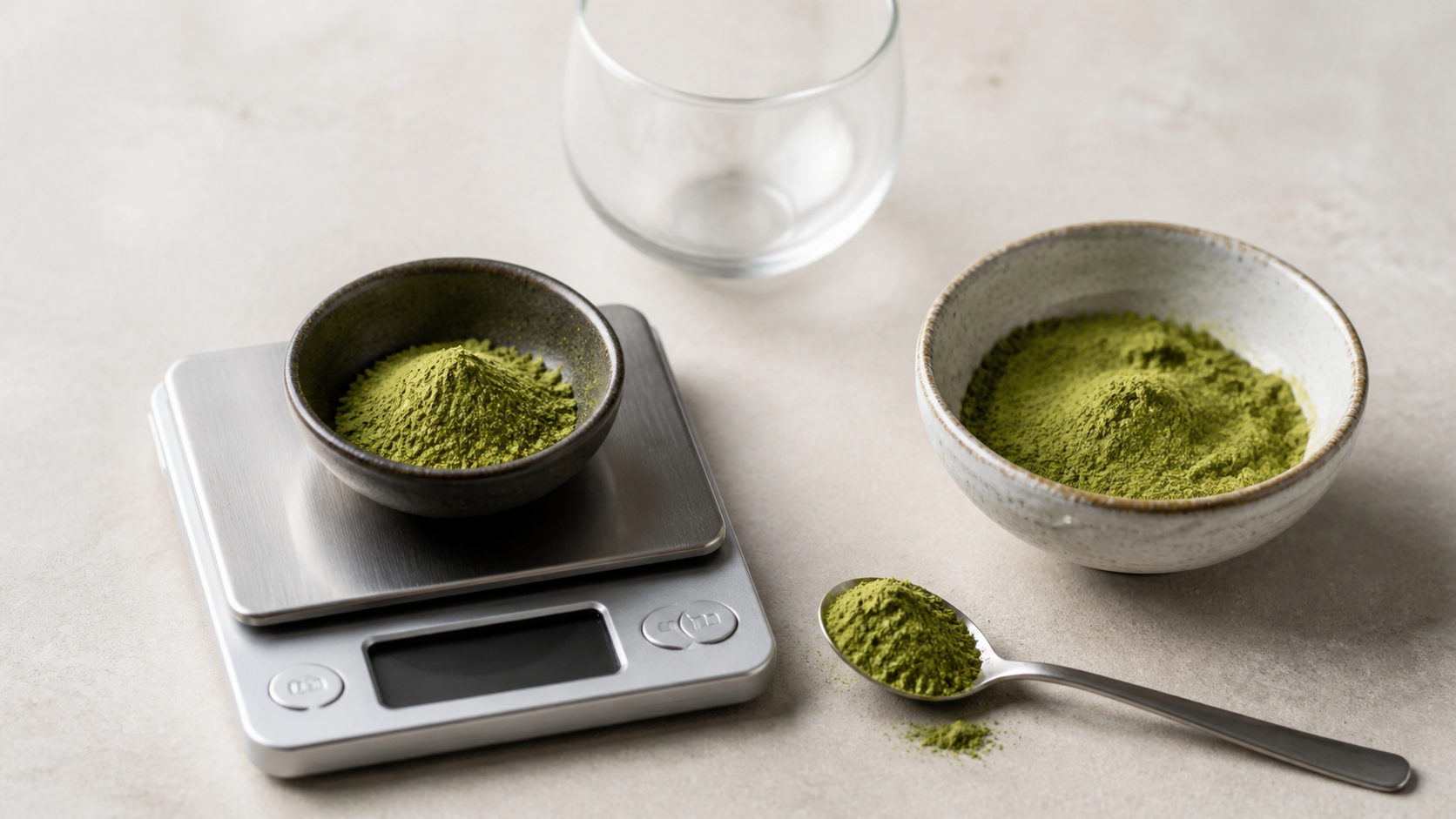
- Place an empty bowl or cup on a small kitchen scale and tare it to zero.
- Add one level tablespoon of your matcha exactly as you normally scoop it.
- Record the grams. Repeat once or twice if your scooping is inconsistent.
- Multiply the grams by a low and high caffeine-per-gram estimate, unless your supplier publishes a product-specific value.
- Use the result as a range, not as a medical or lab-confirmed number.
If the range matters for pregnancy, a medical condition, medication use, anxiety, palpitations or sleep problems, use a lower serving or ask a clinician. The FDA notes that 400 mg per day is an amount not generally associated with negative effects for most adults, but it also emphasizes large differences in sensitivity and lists possible symptoms of too much caffeine.
Bottom line
A one-tablespoon matcha estimate is only meaningful after you weigh the powder. As a working range, 5-7 g of matcha could estimate to roughly 95-311 mg caffeine using published matcha-composition data. For a more typical drink, start from grams rather than tablespoons and see Sailtik’s broader matcha caffeine calculator and coffee comparison.