
To make iced matcha without milk, disperse 1.5–2 g matcha in 40–60 ml water, then add 120–180 ml cold water and ice. Whisking, shaking in a sealed jar or using a bottle all work. The best method is the one that gives you an even suspension without excessive foam.
This is straight iced matcha: matcha, water and ice. It is not an iced matcha latte, which contains milk or a plant beverage. Keeping those two drinks separate matters because the ratio, powder choice and sensory target are different.
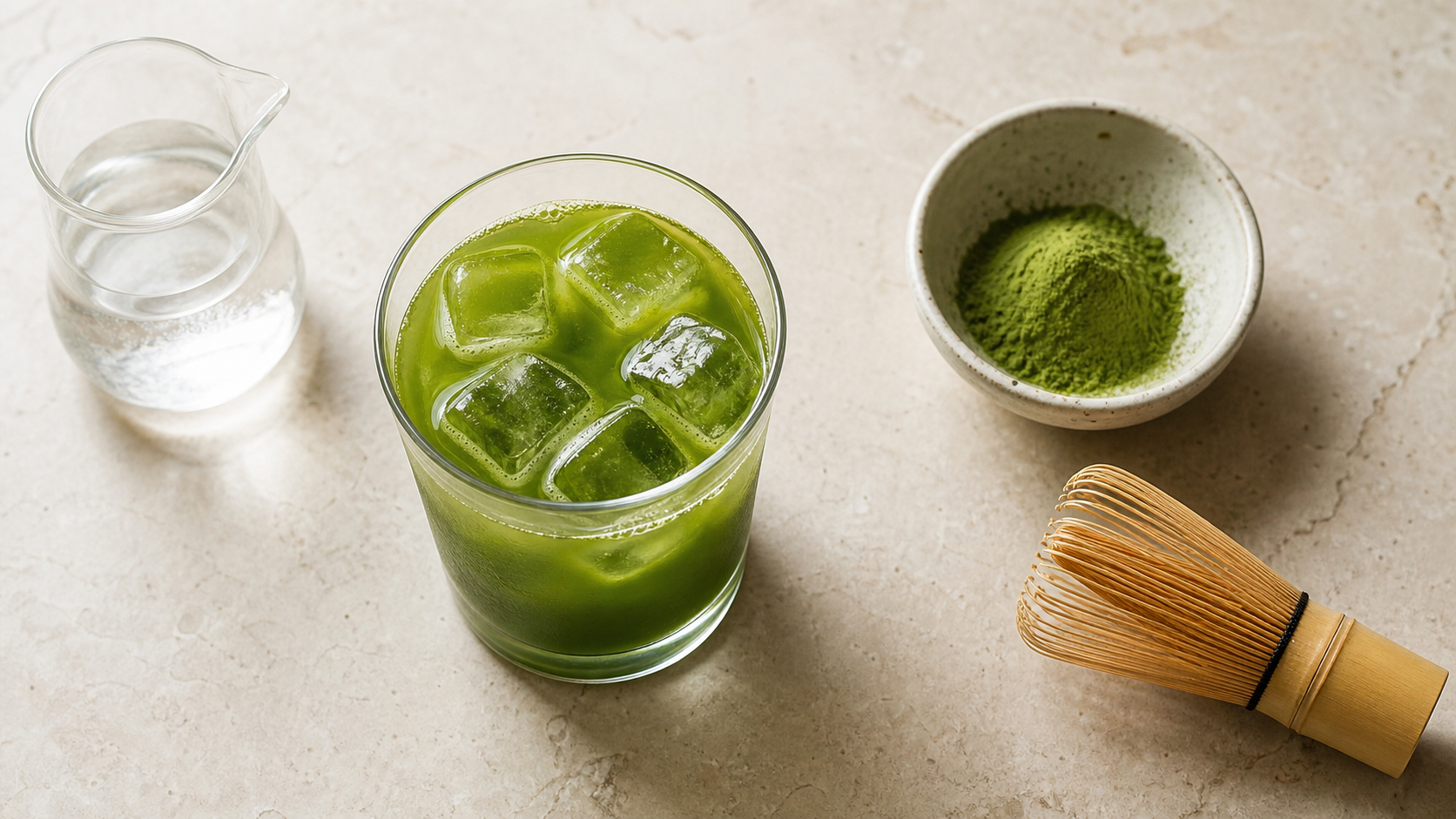
Basic iced matcha ratio
| Component | Starting amount | How to adjust |
|---|---|---|
| Matcha | 1.5–2 g | Move toward 3 g for a smaller, stronger drink |
| Mixing water | 40–60 ml | Use enough to move the powder freely |
| Cold water | 120–180 ml | Reduce for more intensity; increase for a lighter drink |
| Ice | Enough to chill the serving glass | Account for melting and final cup size |
Sailtik generally recommends testing 1.5–3 g per cup. The table is a starting formula, not a universal rule. Powder strength, water chemistry, ice melt and the preferred bitterness all change the result. For menu costing and larger cups, use the matcha-per-cup guide.
Method 1: whisk a small concentrate
- Sift 1.5–2 g matcha into a dry bowl.
- Add 40–60 ml water. Cool or room-temperature water works; slightly warm water can make dispersion easier, but avoid water hot enough to flatten the aroma or amplify harshness.
- Whisk briskly until no dry pockets remain. You do not need a deep foam for an iced drink.
- Fill a glass with ice and add 120–180 ml cold water.
- Pour in the matcha concentrate and stir once before serving.
This method gives the most control over clumps and surface foam. If you use warm mixing water, keep the volume small so the finished drink remains cold. See the water-temperature and frothing guide for a deeper explanation.
Method 2: shake it in a jar
- Add 1.5–2 g sifted matcha and 160–220 ml cold water to a clean jar or shaker with a reliable lid.
- Seal it and shake vigorously for 15–30 seconds.
- Let large bubbles settle briefly if you prefer less foam.
- Pour over fresh ice.
Shaking is fast and practical when you do not have a whisk. It usually creates more foam, and an unsuitable lid can leak, so test the container with water first. A shaker is also useful for travel or low-volume café service, provided it can be cleaned and dried thoroughly between uses.
Method 3: bottle method
- Put cold water into a bottle first.
- Add sifted matcha through a dry funnel.
- Leave headspace, close the cap and shake until evenly green.
- Drink immediately or pour over ice.
The bottle method is convenient but not a storage method. Matcha particles remain suspended rather than truly dissolving, so settling is normal. Re-shake before drinking, and do not use the same bottle for extended room-temperature holding.
Cold water or warm water?
Both approaches can work. Cold-water preparation keeps the process simple and gives a crisp drink, but it demands effective agitation. A small warm-water concentrate can be easier to disperse before dilution. The practical test is not whether the powder “dissolves”—plain matcha does not dissolve like sugar—but whether the particles disperse evenly enough for the intended drinking time.
How to prevent clumps
- Sift first: compacted powder is harder to break apart in cold water.
- Start small: a concentrated base is easier to inspect than a full glass.
- Add water before powder in a bottle: this reduces powder sticking in the bottom corners.
- Use enough motion: whisk or shake until the color is uniform, then check the bottom.
- Serve promptly: settling increases with holding time; stir or shake again if needed.
Why iced matcha tastes bitter or watery
| Problem | Likely cause | Test next |
|---|---|---|
| Harsh or bitter | Too much powder, unsuitable powder, stale product or too little water | Reduce dose by 0.25–0.5 g or compare a smoother sample |
| Watery | Too much dilution or ice melt | Reduce cold water or raise the dose gradually |
| Large clumps | Compacted powder or insufficient agitation | Sift and make a small concentrate first |
| Too foamy | Long, aggressive shaking | Whisk the concentrate or allow bubbles to settle |
| Dull color | Product, age, storage, lighting or dilution | Compare samples under the same recipe and light |
| Powder at the bottom | Normal settling of suspended leaf particles | Stir before drinking; do not expect true solubility |
Which matcha works for a water-only iced drink?
Milk and sweetener can soften bitterness; water cannot. A straight iced drink therefore needs a sample that remains clean and balanced at the actual dose. Do not choose by a grade name alone. “Ceremonial,” “premium” and numbered grades are not standardized across suppliers.
For Sailtik’s range, 5A–7A are the logical starting points for higher-end straight drinking, while the final choice should come from side-by-side testing. Each grade can include multiple internal origin models with different color and sensory profiles, and those internal model codes are not published. Review the grade guide before requesting samples.
Frequently asked questions
Can I make iced matcha without milk?
Yes. Matcha, water and ice make straight iced matcha. Milk changes it into an iced matcha latte.
Can I make iced matcha without a whisk?
Yes. Use a sealed jar, shaker bottle, handheld frother or blender. Each creates a different amount of foam. The no-whisk matcha guide compares the options.
Can I prepare it ahead?
Fresh preparation gives the clearest sensory result. If you batch for service, use a documented food-safety and holding procedure, protect the liquid from contamination and agitation loss, and re-mix before dispensing. Do not assume a household recipe defines a safe commercial hold time.
Test the ratio in your real cup
For cafés, record the powder dose, water volume, ice weight, mixing method, preparation time and sensory result. Sailtik provides selected 10 g samples based on the customer’s business model and intended application rather than sending every internal model. Contact Carol with the cup size, expected monthly volume, target color and flavor, and destination to narrow the sample set.