
Matcha is not proven to “detox” or repair the liver, and an ordinary cup belongs in a different safety category from concentrated green-tea-extract products. For most liver questions, the useful answer is about product form, dose, total caffeine, medicines and existing liver disease—not the word “matcha” by itself.
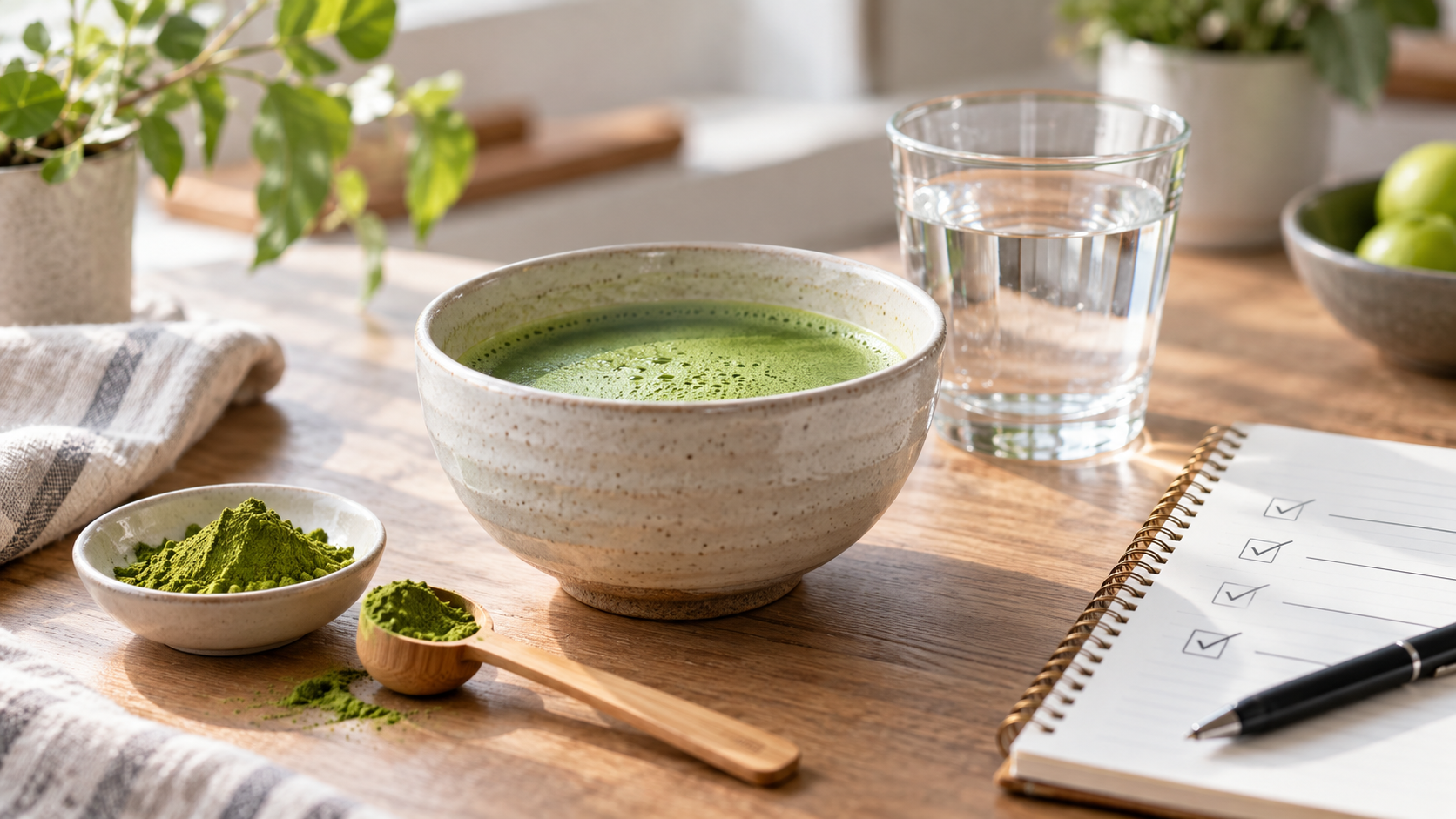
This page separates three claims that search results often blur together: whether matcha is good for liver health, whether matcha can damage the liver, and whether green tea extract supplements have liver warnings. Those are related, but they are not interchangeable.
The practical answer
| Question | Careful answer | What not to infer |
|---|---|---|
| Is plain matcha good for the liver? | It can fit a generally healthy diet, but human evidence does not prove it treats liver disease. | Do not call it a liver cleanse or detox. |
| Is matcha bad for the liver? | A normal tea serving is different from high-dose extract; risk depends on dose, sensitivity, products and health status. | Do not treat every matcha latte like a supplement capsule. |
| Can green tea extract cause liver injury? | Authoritative safety sources warn that concentrated extract products have been linked to rare liver problems. | Do not ignore supplement labels just because the ingredient comes from tea. |
| Should people with liver disease use matcha? | They should ask their clinician, especially before supplements, weight-loss blends or high daily intake. | Do not use a general tea article as personal medical clearance. |
Why “matcha” and “green tea extract” should not be merged
Matcha is powdered green tea leaf whisked into liquid. A typical drink uses a measured amount of powder, often around 1.5–3 g per cup depending on the recipe. Green tea extract supplements are different: they can concentrate catechins, be taken as capsules or powders, and may be stacked with other weight-loss or stimulant ingredients.
That distinction is central to liver safety. NCCIH describes green tea as generally safe as a beverage in moderate amounts, while warning that concentrated green tea extracts have been associated with liver problems in rare cases. NCBI LiverTox also treats green tea extract as the main concern in reported liver-injury cases, not ordinary brewed tea use.
What EFSA’s catechin warning means for matcha buyers
The European Food Safety Authority reviewed green-tea catechin safety and identified a concern with high supplemental intakes of EGCG, especially around 800 mg per day or more from food supplements. EFSA did not identify the same evidence of liver injury for catechins consumed from traditional green tea infusions.
Matcha is not exactly a steeped infusion because the leaf powder is consumed, but an ordinary cup still needs to be evaluated by its realistic serving size rather than by supplement marketing. A scoop of matcha in water is a different exposure scenario from several capsules of concentrated extract taken daily.
When the liver-risk question becomes more serious
Be more cautious if matcha is part of a supplement stack, a “slim” or detox product, a fasting routine, or a high-caffeine day. Sailtik’s matcha slim powder guide explains why weight-loss blends need ingredient-level checking instead of assuming they behave like plain tea.
- Existing liver disease: use medical advice before adding concentrated extracts or unusually high intake.
- Medicines or alcohol use: avoid making safety assumptions from tea tradition alone.
- Pregnancy or breastfeeding: count total caffeine and use clinician guidance for supplements.
- Symptoms after a supplement: stop the product and seek medical advice for jaundice, dark urine, severe fatigue, persistent nausea, right-upper-abdominal pain or unexplained itching.
- Multiple stimulant products: check total caffeine using Sailtik’s matcha caffeine comparison.
Does matcha help fatty liver or liver enzymes?
Some green tea and catechin research looks at metabolic markers, body weight, cholesterol, oxidative stress or liver enzymes. That does not make matcha a treatment for fatty liver disease. Liver conditions have different causes, and improvement in a marker in one study design does not prove that a daily matcha drink reverses disease.
A defensible statement is narrower: matcha contains tea polyphenols of research interest, and plain unsweetened matcha may fit a diet pattern that also includes weight management, fiber-rich foods, limited alcohol and medical treatment when needed. For the broader human-evidence picture, see Sailtik’s matcha health benefits review.
How to use matcha more conservatively
- Choose plain matcha powder rather than a proprietary liver-detox or fat-burning blend.
- Measure the powder instead of heaping a spoon.
- Keep total daily caffeine in view, including coffee, energy drinks and pre-workout products.
- Avoid taking green tea extract supplements on an empty stomach unless a clinician specifically advised it.
- If you have liver disease, abnormal liver tests or unexplained symptoms, ask a clinician before using concentrated extracts.
- If matcha causes jitters, nausea or stomach upset, reduce the serving or move it after food rather than increasing the dose for “detox” effects.
Bottom line
Plain matcha can be a reasonable beverage for many adults, but it should not be marketed as a liver detox, liver cure or guaranteed liver-protection drink. The strongest warning signal sits with high-catechin extract supplements, especially when dose, fasting, other ingredients or existing health problems are involved. Treat matcha as tea first, not as medical therapy.
Sources checked
- NCCIH green tea safety overview
- NCBI LiverTox record for green tea
- EFSA scientific opinion on green-tea catechin safety
- Sailtik matcha health-benefit evidence review
- Sailtik daily matcha safety checklist
- Sailtik caffeine comparison
- Sailtik matcha slim powder label-check guide
FAQ
Can matcha cause liver damage?
A bowl or latte should not be evaluated like an extract capsule. Reported liver warnings focus mainly on extracts and high-dose supplement use, but people with liver disease or symptoms should ask a clinician.
Is matcha a liver detox?
No. “Detox” is not a responsible claim for matcha. The liver already performs detoxification functions, and matcha should not be presented as a cleanse or medical treatment.
Is matcha okay if I have fatty liver?
Do not treat this page as personal medical advice. Unsweetened matcha may be compatible with some diet plans, but fatty liver management depends on diagnosis, alcohol intake, weight, diabetes risk, medicines and clinician guidance.