
Matcha green tea is not a stroke treatment, and it should not replace stroke prevention or recovery care. Some green-tea cohorts report fewer strokes among heavier tea drinkers, but most of that evidence is observational and should be read as diet-pattern evidence, not a prescription for matcha.
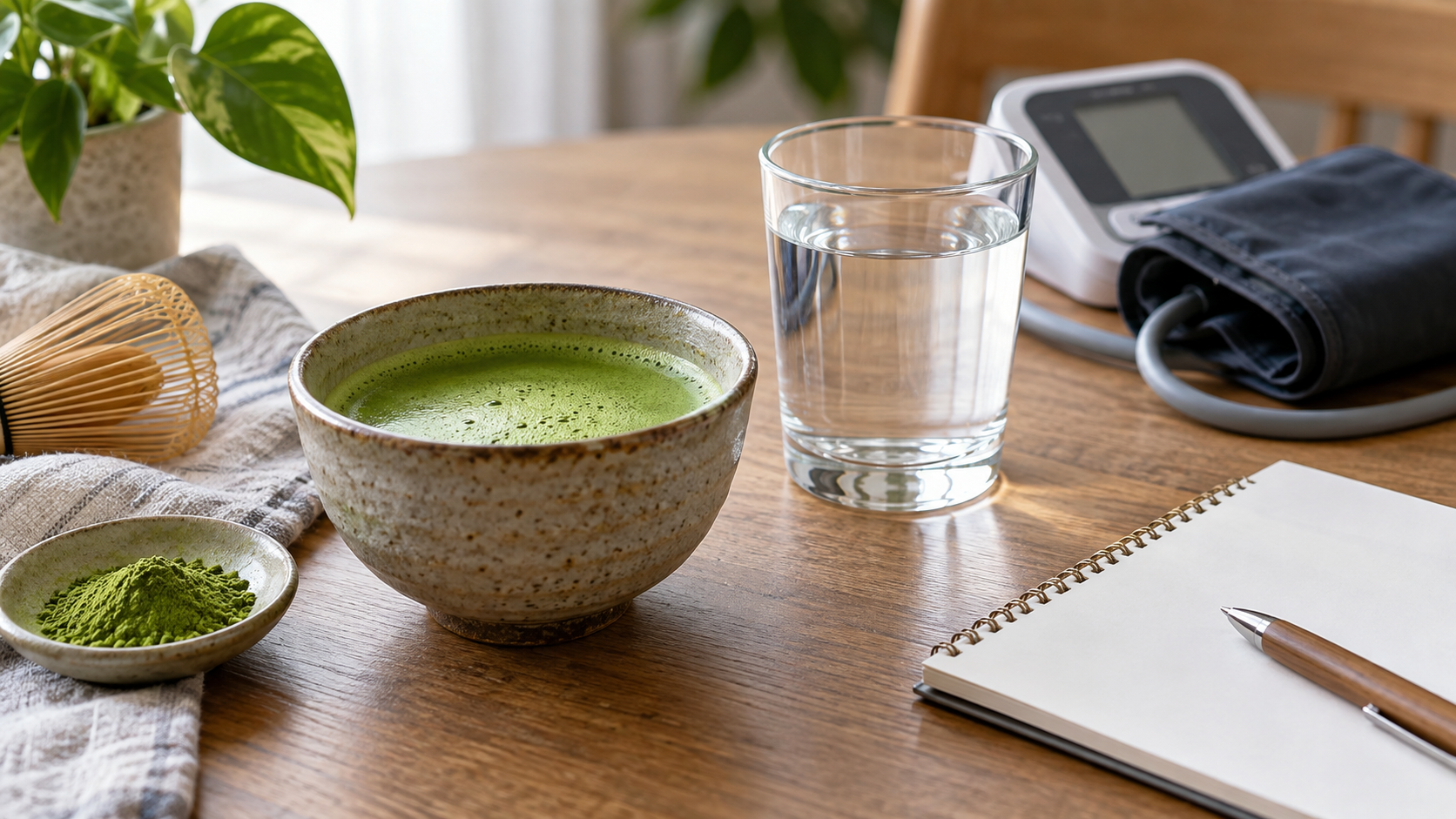
This is a high-stakes query. Someone may be asking after a stroke, because of family risk, or because they saw a headline about green tea and cardiovascular health. The safest answer is narrow: matcha may fit into a healthy beverage pattern for some adults, but stroke decisions belong with medical professionals.
What the research suggests
A 2023 meta-analysis of cohort studies found that higher green-tea consumption was associated with lower stroke risk, with a summary relative risk of 0.74 for the highest consumption group compared with the lowest. A large China Kadoorie Biobank analysis also reported lower stroke risk among tea drinkers, especially green-tea drinkers, though subgroup patterns differed by sex and lifestyle factors.
Those numbers are interesting, but they do not prove a personal protective effect from matcha. Tea drinkers can differ in diet, smoking, alcohol use, physical activity, income, medical care and other factors that are hard to fully separate.
What stroke guidance emphasizes instead
| Stroke-relevant area | Why it matters more than one drink |
|---|---|
| Blood pressure | High blood pressure is a major stroke risk factor and needs proper monitoring and care. |
| Medication plan | Blood thinners, blood-pressure drugs and cholesterol drugs should not be adjusted around tea advice. |
| Diet pattern | Daily eating habits matter more than adding one green drink. |
| Caffeine response | People vary in heart-rate, blood-pressure, sleep and anxiety response to caffeine. |
| Emergency symptoms | A suspected stroke is urgent; a beverage is irrelevant in that moment. |
MedlinePlus treats stroke as a medical emergency and describes prevention around risk factors and care. Its high-blood-pressure material also keeps the focus on risk-factor control, not on a single beverage. That is different from saying matcha is a stroke-prevention tool.
Caffeine and matcha
Matcha contains caffeine. A 2026 American Heart Association statement on cardiovascular effects describes a mixed evidence base, individual variation and limits in observational research. It also distinguishes naturally occurring caffeinated products from high-dose caffeine products such as energy drinks.
For many adults, moderate matcha may be fine. For someone with recent stroke, arrhythmia, uncontrolled blood pressure, medication changes or sleep problems, the decision is more personal. Ask the clinician managing the stroke risk rather than treating a tea study as individual advice.
What not to assume
- Do not assume matcha prevents stroke.
- Do not use matcha instead of blood-pressure control, medication or emergency care.
- Do not assume more caffeine is better.
- Do not apply population studies to a recent stroke survivor without medical input.
- Do not turn green-tea extract into a stronger “stroke supplement.”
Bottom line
Green tea has encouraging observational links with lower stroke risk, and unsweetened tea can fit into a heart-healthy diet. Matcha is still not a stroke treatment or guarantee. Keep the claim modest: beverage matcha may be part of a healthy pattern if caffeine is appropriate for you.
Sources checked
- MedlinePlus: stroke overview
- PubMed: 2023 green tea and stroke meta-analysis
- PubMed: tea consumption and stroke in Chinese adults
- PubMed: 2026 AHA caffeine statement
- MedlinePlus: high blood pressure
- NCCIH: green tea usefulness and safety
- Sailtik: matcha caffeine compared with coffee
- Sailtik: matcha health evidence boundaries
FAQ
Can matcha prevent a stroke?
No reliable evidence proves that drinking matcha prevents an individual stroke.
Do studies connect green tea with lower stroke risk?
Some cohort studies and meta-analyses report an association, especially for moderate green-tea consumption, but association is not proof of cause.
Can stroke survivors drink matcha?
It depends on caffeine tolerance, medications, blood pressure, sleep and the care plan. Ask the treating clinician.
Is green-tea extract better for stroke prevention?
No. Do not treat extracts as stronger medicine. Concentrated extracts have different safety concerns from beverage tea.