
Matcha green tea is not a treatment for multiple sclerosis, and it should not be used to replace MS care. For some people with MS, a small cup of matcha can be a reasonable beverage. The evidence does not show that matcha reduces relapses, slows progression or repairs nerve damage.
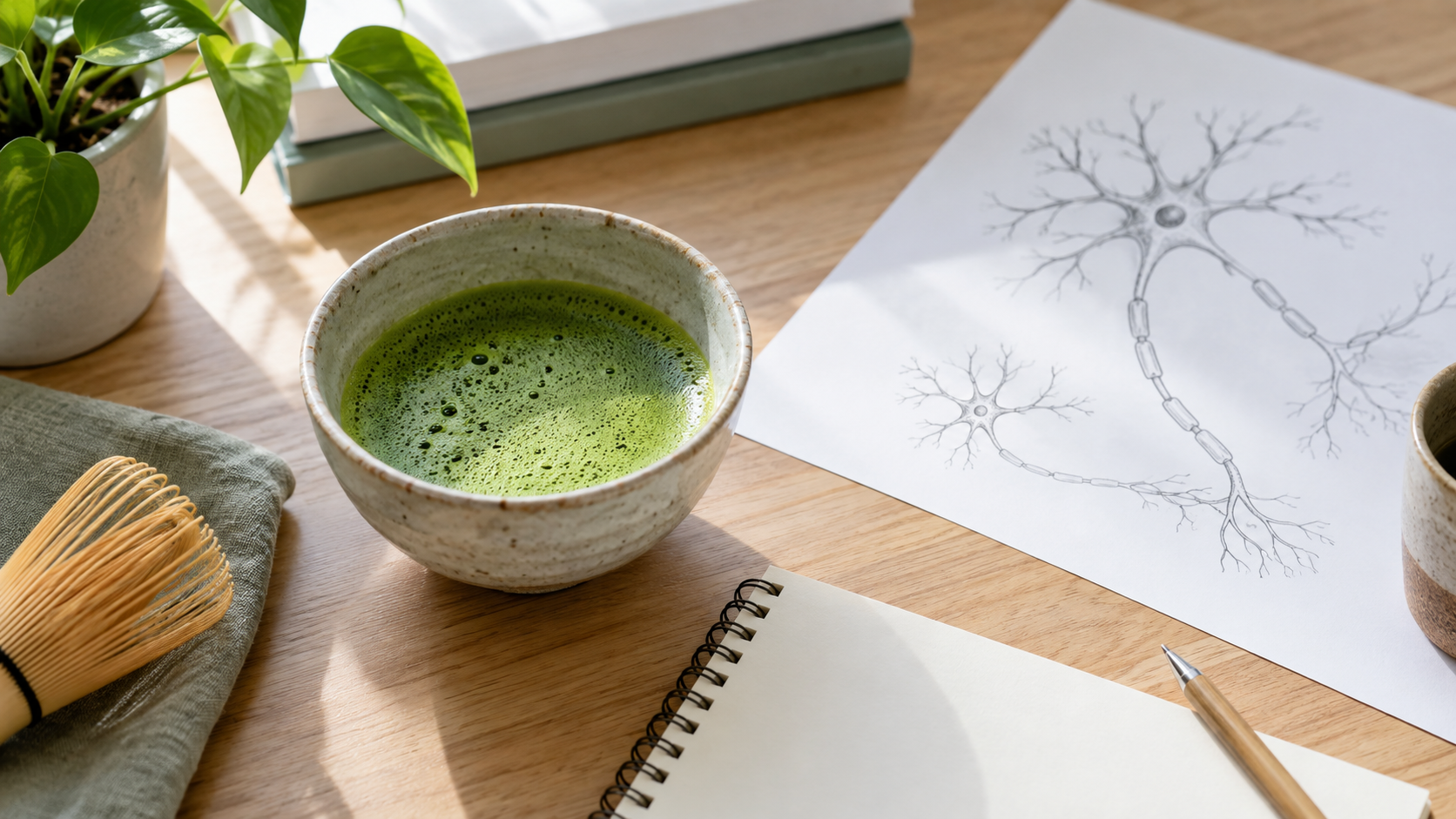
The search sounds simple, but the real question is usually more personal: will matcha help fatigue, inflammation, gut health or daily energy without making symptoms worse? That answer depends on caffeine tolerance, sleep quality, bladder pattern, medications and what your MS team has already recommended.
What MS guidance says before matcha enters the conversation
NICE guidance for MS management says there is no evidence that a specific diet improves MS-related fatigue, while a healthy diet can support general health. A 2020 Cochrane review of dietary interventions for MS also found insufficient high-certainty evidence that dietary interventions change the course of MS.
NCCIH’s 2025 clinical digest on complementary approaches is also direct: there is currently no definitive evidence that any dietary supplement reduces MS relapses or symptoms. That does not mean every cup of tea is a problem. It means matcha should not be promoted as MS therapy.
Where matcha may fit
| Question | Cautious answer |
|---|---|
| Can it help morning alertness? | Possibly, because matcha contains caffeine. The same caffeine can disturb sleep in sensitive people. |
| Is it anti-inflammatory medicine? | No. Green tea compounds are biologically active, but beverage matcha is not disease-modifying MS treatment. |
| Is it better than coffee? | Only if the serving, taste and caffeine level fit the person better. It is not automatically safer. |
| Can extracts be stronger? | Stronger is not the same as better. Concentrated green-tea extracts have different safety concerns from brewed or whisked tea. |
Plain matcha is easiest to evaluate. A sweet latte adds sugar and milk variables. A powdered supplement blend may add herbs or doses that are harder to check against MS medications.
MS-specific cautions people often miss
Sleep matters in MS fatigue. If matcha after lunch makes sleep lighter, it may be a poor trade even if it feels helpful at 2 p.m. Bladder urgency is another practical issue: caffeine can be irritating for some people, and MS can already affect bladder control.
Heat sensitivity also matters. A hot drink may be uncomfortable for someone whose symptoms worsen with heat. Iced matcha solves the temperature issue, but not the caffeine issue. The useful test is not whether matcha is good in theory; it is whether a measured serving fits the person’s symptom pattern.
What not to assume
- Do not assume matcha reduces MS relapses.
- Do not use green-tea extract as a substitute for disease-modifying therapy.
- Do not copy a restrictive MS diet because a matcha article mentions inflammation.
- Do not ignore sleep, bladder or medication questions.
- Do not treat animal or cell research as proof for daily MS care.
Bottom line
Matcha may be fine for some adults living with MS as a moderate caffeinated drink. It is not proven MS treatment. If fatigue, poor sleep, urinary urgency, pregnancy, heart rhythm, liver concerns or medication interactions are in the picture, check with the clinician who knows the MS plan.
Sources checked
- NICE: multiple sclerosis in adults, recommendations
- NCCIH: multiple sclerosis and complementary approaches
- PMC: MS diet intervention evidence review
- PubMed: MS diet review commentary
- NCCIH: green tea usefulness and safety
- Sailtik: matcha caffeine compared with coffee
- Sailtik: matcha health evidence boundaries
FAQ
Can matcha treat MS?
No. There is no good evidence that matcha treats MS or replaces prescribed MS therapies.
Is matcha safe for everyone with MS?
No drink fits everyone. Caffeine sensitivity, night rest, urinary symptoms, medications and other conditions can change the answer.
Is green-tea extract better than drinking matcha?
Not for MS. Extracts are more concentrated and can carry different safety risks.
Should people with MS avoid matcha?
Not automatically. A moderate serving may be acceptable if it does not worsen symptoms or interfere with care.