
A matcha latte usually tastes creamy and milky first, followed by vegetal green-tea notes, gentle umami and some bitterness or astringency. It may taste sweet if the milk, premix or recipe contains sugar, but pure matcha is not naturally as sweet as a flavored café drink. The exact experience depends more on the complete formula than on the word “matcha.”
A balanced latte lets the tea remain recognizable after milk is added. Too little powder can taste like vaguely green milk; too much or poorly dispersed powder can feel harsh, chalky or drying.
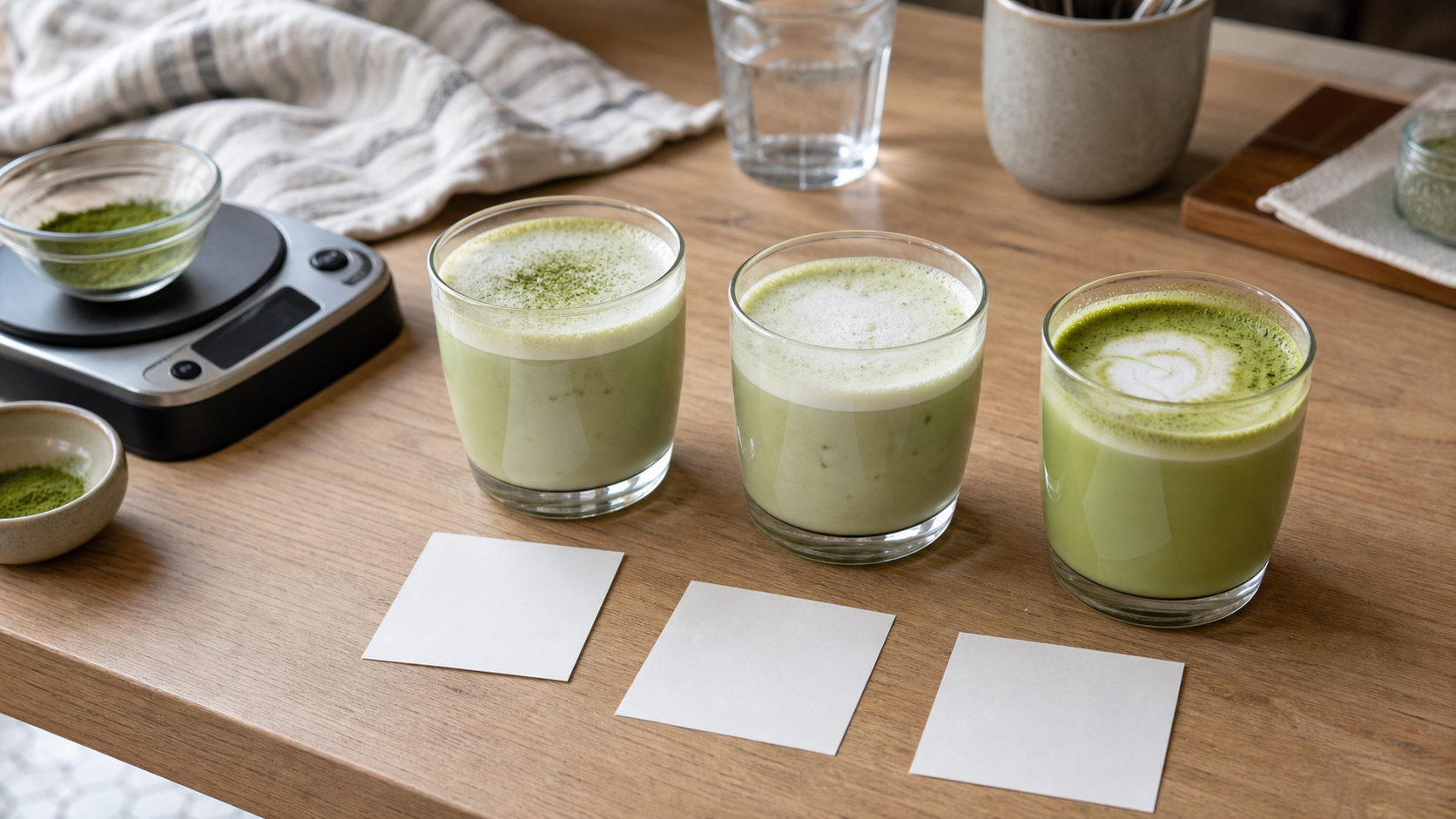
Is a matcha latte sweet?
Not automatically. A latte made from pure matcha, water and unsweetened milk can have a mild sweet impression from the milk and tea, but it is not a dessert-level sweet drink. Café versions may use sweetened matcha premix, vanilla syrup, honey, fruit purée or another sweetener. Two drinks with the same name can therefore have completely different sugar and flavor profiles.
Ask whether the café uses pure powder or a premix. “Matcha latte” describes a drink format, not a standardized recipe. The ingredient list or café recipe—not the green color—answers whether sweetness was added.
The main flavors you may notice
| Sensory note | How it appears in a latte | What changes it |
|---|---|---|
| Creamy | Rounded body and a softer edge | Milk fat, protein, plant-beverage solids and foam |
| Vegetal | Fresh greens, pea, spinach or grassy impressions | Matcha character, freshness and dose |
| Umami | A savory depth beneath the milk | Leaf composition and whether the powder remains perceptible |
| Sweet | From subtle milk sweetness to a syrup-forward drink | Milk choice, premix and added sweetener |
| Bitter | A clean edge or, when excessive, a harsh dominant taste | Powder, dose, water temperature and recipe balance |
| Astringent | A drying or puckering mouthfeel | Tea composition, concentration and dispersion |
| Earthy or nutty | May come from matcha, milk or a plant beverage | Oat, almond, soy and other ingredient aromas |
Bitterness and astringency are not the same. Bitterness is a basic taste; astringency is the physical drying sensation in the mouth. Matcha sensory research measures umami and astringency as distinct dimensions, which is why “not bitter” does not necessarily mean “not drying.”
How milk changes matcha taste
Milk does more than dilute the tea. It contributes aroma, sweetness, fat, protein, viscosity and its own aftertaste. Dairy can create a rounded, familiar milk flavor. Oat drinks often add cereal sweetness and body. Soy can contribute a bean or nut-like note. Almond and coconut beverages may become prominent enough to change the identity of the drink.
These descriptions are tendencies, not rules. Formulations within one milk category vary in sugar, fat, protein, stabilizers and flavor. A café should test the exact market-ready milk rather than assume all oat or dairy products behave alike.
Hot versus iced matcha latte
A hot latte releases aroma quickly and can feel softer because the milk is warm and integrated. An iced latte may seem less aromatic at first, while cold temperature and ice change sweetness perception, texture and concentration over time. As ice melts, the final third of the drink can taste weaker than the first.
The two formats should be tested separately. Simply pouring the hot formula over ice may not preserve the same matcha-to-liquid balance. Our hot and iced matcha latte formulas provide controlled starting points, but the present article is about sensory expectations rather than a universal recipe.
Does a matcha latte taste like coffee?
Usually not. Both can combine bitterness, roasted or earthy associations, milk and foam, but coffee is driven by roasted-bean aromas. Matcha is driven by green, vegetal, umami and tea notes. Someone who likes a coffee latte may enjoy the creamy structure of a matcha latte while finding the underlying flavor unfamiliar.
It also does not taste exactly like a chai latte. Chai is typically defined by black tea plus spices such as cinnamon, ginger or cardamom. A plain matcha latte has no spice profile unless the recipe adds one.
Why one matcha latte tastes better than another
- Powder selection: delicate tea may disappear in a large milk drink, while a more assertive café grade can retain character.
- Measured dose: a repeatable gram weight is more useful than a heaped spoon.
- Milk volume: a larger cup is not stronger if the powder amount stays unchanged.
- Sweetener: a small amount can soften bitterness; too much can erase the tea distinction.
- Dispersion: dry clumps create sudden bitterness and a gritty texture.
- Freshness: oxygen, heat, light and moisture can flatten aroma and dull color.
- Equipment hygiene: old milk fat, detergent or bottle odors can be misattributed to matcha.
Sailtik’s general beverage-development range is 1.5–3 g per cup, but the correct dose depends on cup size, milk, sweetness and target strength. This is a formulation range, not a promise that every powder will perform identically at the same mass.
A useful café tasting test
Controlled sensory evaluation matters because changing several ingredients at once hides the cause of a difference. Technical matcha evaluation uses measured powder, water and preparation conditions for the same reason: consistency makes comparisons interpretable.
- Choose one matcha and record its lot.
- Use the same powder mass, water amount, temperature and mixing time for every cup.
- Prepare the first cup with the intended unsweetened milk.
- Change only the milk in the second comparison.
- Change only the sweetener level in a third comparison.
- Score matcha intensity, sweetness, bitterness, astringency, creaminess and finish.
- Repeat the winning formula hot and iced before approving it.
For powder-only vocabulary and a fuller tasting form, use the general matcha flavor and quality guide. It helps separate the tea’s character from what milk and syrup add.
Choosing matcha for a latte business
A higher price or ceremonial position does not automatically make a powder better for milk. The commercially useful question is whether the matcha reaches the target color, aroma, tea intensity and finish in the final recipe at an acceptable cost per cup.
Sailtik sources matcha from Guizhou and Zhejiang, China, and offers multiple internal models with different color and taste profiles. Those model codes are not publicly listed. Carol recommends selected grades and 10 g samples based on the buyer’s business model, drink format and price position rather than sending every model. The buyer should make the final judgment using its own milk, water, equipment and customers.
For a sample recommendation, contact Carol with the hot or iced format, cup volume, powder grams, milk, sweetener, target color and desired balance between creamy, umami, vegetal and bitter notes.
Frequently asked questions
Does a matcha latte taste grassy?
It can have a fresh green or grassy note, especially when unsweetened or made strongly. Milk normally softens that note. “Grassy” is a sensory analogy, not evidence that grass is an ingredient.
Is a matcha latte bitter?
Some bitterness is normal, but it should not have to dominate. Powder choice, dose, milk ratio, water temperature, freshness and sweetness all affect the balance.
Does a matcha latte taste good?
That is subjective. People who enjoy creamy drinks and vegetal or tea flavors often like it; others dislike the green or drying character. A lightly sweetened small serving is a lower-risk first taste than assuming every café recipe is the same.
Why does my matcha latte taste mostly like milk?
The powder may be too delicate or too low for the cup size, the ice may have diluted the drink, or the milk may have a strong flavor. Measure the recipe before changing products.
Technical references
- Ujihara et al.: objective evaluation of matcha astringency and umami
- Murakami: sensory evaluation of matcha
Last sensory and SERP review: July 31, 2026. Taste descriptions are variable and should be validated in the actual formula.