
MCT matcha powder is usually a formulated powder that combines matcha with MCT oil powder, often for latte, keto or “energy” positioning. It is a blend rather than plain matcha. A buyer should check matcha quantity, caffeine, fat, carrier ingredients, sweeteners, flavors and supplement-style claims before treating it as ordinary green tea powder.
What MCT means
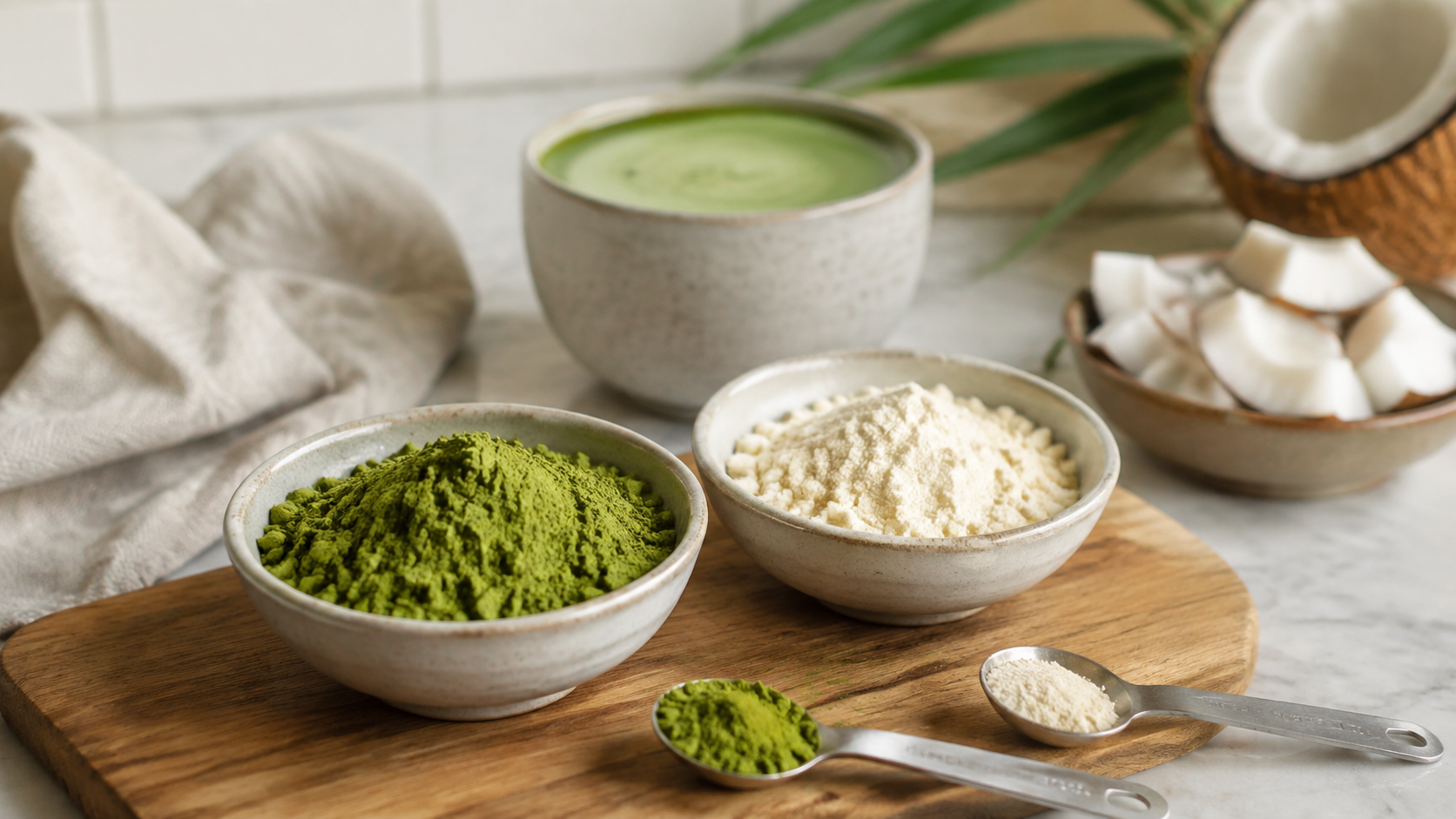
MCT stands for medium-chain triglycerides. In matcha products, the MCT part is commonly presented as oil powder or a creamy fat ingredient blended into a drink mix. The source and carrier vary by brand, so the label matters. Some products may use coconut-derived ingredients, some may use other sources, and powders may include carriers to make the fat flow and disperse.
What may be inside MCT matcha powder
| Label component | Why it matters | What to check |
|---|---|---|
| Matcha or green tea powder | Provides tea flavor, color and caffeine. | Ingredient order, origin, amount if disclosed and whether it is true matcha or generic green tea powder. |
| MCT oil powder | Adds fat, calories and creaminess. | Fat grams, serving size, source oil and carrier. |
| Carrier or fiber | Turns oil into powder and affects texture. | Acacia fiber, soluble fiber, starches, maltodextrin or other carriers. |
| Sweetener | Changes calories, taste and diet fit. | Sugar, monk fruit, stevia, sugar alcohols or no sweetener. |
| Flavoring or milk ingredients | Makes it more like an instant latte mix. | Allergens, dairy status and whether it still fits your intended use. |
How it differs from plain matcha
Plain matcha should be tea leaf powder. Sailtik’s ingredient-boundary guide explains that sugar, milk powder, flavoring and other additions belong to formulated products, not plain matcha. MCT matcha is therefore a blend, even if the front label emphasizes matcha. That is not automatically bad, but it changes how you compare price, nutrition and use.
Plain matcha is usually measured by grams of tea powder. MCT matcha may be measured by scoops of a mixed formula, so one scoop may contain only part matcha and part fat powder or carrier. That means color, caffeine and flavor can be weaker or stronger than expected.
Do not assume the health claims
Many MCT matcha products are marketed around keto, focus, energy or weight management. Those claims require careful reading. The FDA explains that dietary supplements are regulated differently from conventional foods and that structure/function claims have specific disclaimer rules. A product can make marketing claims without proving that it will produce the same result for every person.
For ordinary buyers, the practical question is simpler: how much caffeine, fat and sweetener are you actually consuming? If the product has meaningful MCT fat, it has calories. If it has matcha, it likely has caffeine unless the label says otherwise. If it uses sugar alcohols, fiber or a large fat dose, some people may notice digestive effects.
Who might want it?
- Someone who wants a fast creamy matcha-style drink and accepts a formulated powder.
- A keto or low-carb shopper who has checked the sweetener, net-carb logic and serving size.
- A traveler or office user who values convenience over plain-tea control.
- Someone comparing instant latte mixes and wants fat included in the formula.
Who may be better with plain matcha?
- People who want only tea leaf powder.
- Buyers who need to control caffeine by weighed matcha dose.
- Recipe developers who do not want added fat or carriers changing texture.
- Anyone avoiding sweeteners, dairy ingredients, coconut-derived ingredients or supplement-style blends.
Label checks before buying
- Read the full ingredient list. Do not rely on the front phrase “MCT matcha.”
- Find the serving size. A scoop of blend is not the same as a gram of plain matcha.
- Check caffeine. If caffeine is not disclosed, use caution with timing and total daily intake.
- Check fat and calories. MCT is a fat source, so it changes the nutrition profile.
- Identify carriers and sweeteners. These affect texture, digestion and dietary fit.
- Review claims critically. Be skeptical of guaranteed weight-loss, detox or disease-related language.
Bottom line
MCT matcha powder is a blended product, not plain matcha. It may be convenient for creamy drinks, but the useful comparison is label-based: tea content, stimulant level, added fat, carrier, sweetener, allergens and claims. If you want pure tea powder, choose plain matcha instead. If you want a formulated drink mix, read the Supplement Facts or Nutrition Facts panel before buying.
Sources checked
- Sailtik ingredient-boundary guide
- Sailtik matcha calories guide
- Sailtik caffeine comparison
- FDA dietary supplement Q&A
- FDA structure/function claims guidance
FAQ
Is MCT matcha the same as matcha tea?
No. It is usually a blend that includes matcha plus an MCT fat ingredient and possibly carriers, flavors or sweeteners.
Does MCT matcha have caffeine?
Usually yes if it contains real matcha, but the amount depends on the formula. Check the label.
Is MCT matcha good for weight loss?
Do not assume that from the name. Check calories, serving size and claims, and treat weight-loss promises skeptically.
Can I bake with MCT matcha powder?
Only after a small test. Added fat, carrier and sweetener can change texture compared with plain matcha powder.