
To make a basic bowl of matcha, sift 2 g matcha, add 60–70 ml water at about 70–80°C (158–176°F), and whisk briskly until evenly dispersed. Drink it promptly. This recipe makes straight matcha with water—not a matcha latte.
The exact dose and temperature are adjustable. A good first attempt controls four variables: powder weight, water volume, water temperature and mixing method. Once those are repeatable, change only one variable at a time to suit the particular matcha and your taste.
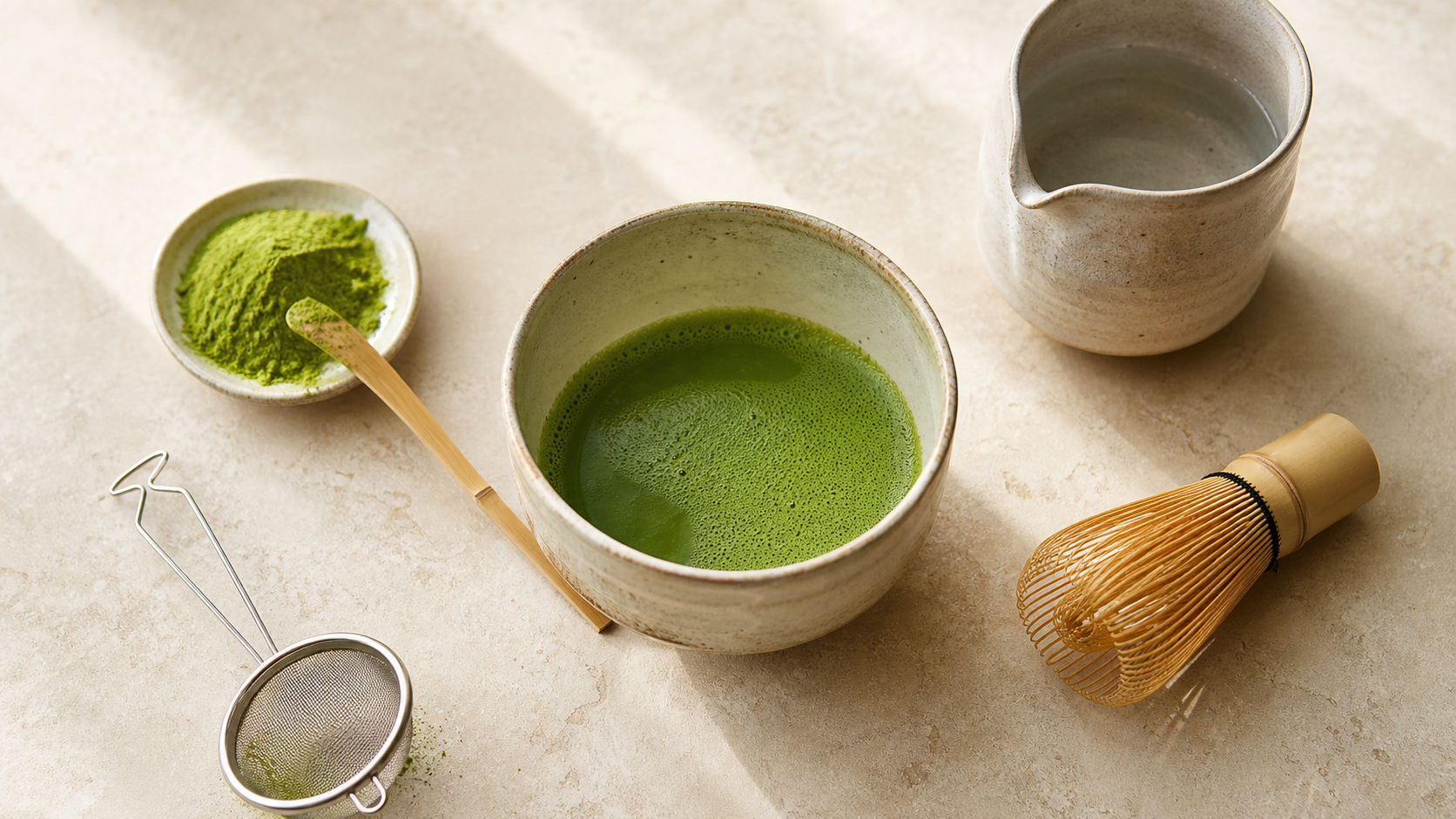
Basic matcha recipe
| Ingredient | Starting amount | Purpose |
|---|---|---|
| Plain matcha powder | 2 g | A balanced starting dose for one small bowl |
| Water | 60–70 ml | Enough depth for whisking without making the drink weak |
| Water temperature | 70–80°C / 158–176°F | A practical starting range for aroma and controlled bitterness |
Sailtik’s general application range is 1.5–3 g per cup. For straight matcha, start at 2 g, then compare 1.5 g and 2.5 g using the same water. A kitchen scale is more reliable than a heaped spoon. See the dose and yield guide when scaling the recipe.
What you need
- Matcha: choose a powder intended for straight drinking and test it before relying on a grade name.
- Water: use clean-tasting water; strong chlorine or unusual mineral content can change flavor and foam.
- Bowl: a wide bowl gives the whisk room to move.
- Fine sifter: breaks compacted powder into particles that are easier to wet.
- Bamboo whisk: effective for fine dispersion and controlled foam.
- Scale and thermometer: useful during recipe development, even if daily preparation later uses standardized scoops and equipment.
How to prepare matcha step by step
- Heat the water. Bring water to the intended temperature or boil it and allow it to cool. Start around 75°C / 167°F.
- Warm the bowl and whisk. Add warm water, gently move the whisk through it, then empty the bowl. Dry the bowl before adding powder.
- Measure 2 g matcha. Weigh the powder rather than judging by color or spoon height.
- Sift into the dry bowl. This prevents many large clumps before they form.
- Add a small portion of water. Wet the powder and mix slowly until no dry pockets remain.
- Add the remaining water. Keep the total at 60–70 ml for the first controlled test.
- Whisk from the wrist. Use quick back-and-forth M or W movements. Avoid grinding the whisk against the bowl.
- Finish the surface. Slow slightly near the top to break large bubbles, then lift the whisk cleanly.
- Drink promptly. Matcha is a suspension of fine leaf particles, so settling is normal.
Does matcha dissolve?
No. Plain matcha is finely ground tea leaf rather than a fully soluble extract. Whisking disperses the particles through water; it does not make them disappear at the molecular level. A smooth-looking bowl can still settle if left standing.
Sifting, wetting the powder before vigorous whisking and serving promptly improve the experience. If a product dissolves completely like an instant drink, inspect whether it contains extract, carriers, sugar or other ingredients. The matcha composition guide explains those product differences.
How long should you whisk matcha?
Whisk only until the powder is evenly dispersed and the desired surface has formed—often about 15–30 seconds with effective technique. Time alone is not a quality measure. Check for dry clumps, large bubbles, excessive cooling and powder stuck to the bottom.
A high foam layer is not mandatory. Thick matcha styles may have little foam, while modern presentations sometimes emphasize it. For an everyday thin bowl, aim for even dispersion and a pleasant texture rather than maximum foam height.
Can you make matcha without a bamboo whisk?
Yes. A sealed jar, shaker bottle, handheld frother or small blender can disperse matcha. A spoon is less effective but can work if you first make a smooth paste with a small amount of water. Different tools create different bubble sizes and cleaning requirements.
For exact alternatives and spill precautions, use the matcha-without-a-whisk guide.
Hot, cold, latte and thick matcha are different recipes
| Drink | Main liquid | Typical priority | Use this guide |
|---|---|---|---|
| Straight hot matcha | Water | Balance, aroma and fine dispersion | This page |
| Straight iced matcha | Cold water and ice | Cold dispersion and dilution | Iced matcha without milk |
| Matcha latte | Water plus milk or plant beverage | Flavor penetration, sweetness and milk texture | Hot and iced matcha latte |
| Thick matcha | Less water with more powder | Dense texture and a suitable high-end powder | Use a dedicated koicha method, not the thin-tea ratio above |
Troubleshooting your matcha
| Problem | Likely cause | Next controlled test |
|---|---|---|
| Large clumps | Unsifted powder or insufficient initial wetting | Sift and make a smooth paste before adding all water |
| Very bitter | High dose, hotter water, unsuitable powder or stale product | Lower temperature to 65–70°C or reduce dose by 0.25–0.5 g |
| Weak or watery | Too much water or too little powder | Keep 2 g and reduce water, then compare |
| Large bubbles | Whisking too close to the surface or using slow circular motion | Use fast back-and-forth wrist movement below the surface |
| Little foam | Tool angle, bowl shape, whisk condition or product differences | Check technique and dispersion before judging the powder |
| Powder settles | Normal behavior of suspended leaf particles | Drink sooner or stir again; do not expect true solubility |
Which grade should you use?
Grade words are not globally standardized. A straight water-based drink exposes bitterness, aroma and aftertaste more directly than a sweet latte, so compare samples in the exact 2 g / 60–70 ml recipe. Color matters, but lighting and camera processing make online photos unreliable.
Within Sailtik’s range, 5A–7A are the starting positions for ceremonial and higher-end straight drinking. Each grade can have multiple internal origin models with different color and sensory profiles; those internal model codes are not published. Read the Sailtik grade guide before testing.
Frequently asked questions
Can I use boiling water?
You can, but boiling water often makes harshness more obvious and removes a useful control point. Start at 70–80°C and adjust by taste.
Should I add milk?
Not for straight matcha. Adding milk makes a matcha latte and changes the useful dose, grade and flavor target.
Can I sweeten it?
Yes, but taste the unsweetened bowl first when evaluating a sample. Sweetener can hide bitterness and makes supplier comparisons less clear.
Make one controlled bowl, then adjust
Record the powder, lot, dose, water, temperature, whisk time, aroma, bitterness, umami, texture and aftertaste. Sailtik normally provides selected 10 g model samples according to the customer’s intended application rather than sending every internal model. Contact Carol with your business model, target flavor, expected volume and destination for a focused sample recommendation.