
A matcha latte made with 1.5–3 g of plain matcha can be estimated at roughly 28–133 mg of caffeine using a published matcha range of 18.9–44.4 mg per gram. That wide span is intentional: the powder’s chemistry and the weighed dose determine the starting estimate. Milk, ice and a larger cup do not remove caffeine.
An exact value requires product-specific data. “Small,” “16 oz,” “large,” “green tea latte” and even the visible color do not tell you how many grams of matcha were used or whether the formula contains a sweetened blend, espresso or another caffeine source.
Matcha latte caffeine calculator
Start with this formula:
Estimated caffeine = matcha powder in grams × caffeine in milligrams per gram
A scientific review reported 18.9–44.4 mg caffeine per gram across analyzed matcha products. Applying that literature range gives the following educational estimates:
| Plain matcha dose | Low estimate at 18.9 mg/g | High estimate at 44.4 mg/g |
|---|---|---|
| 1.0 g | 19 mg | 44 mg |
| 1.5 g | 28 mg | 67 mg |
| 2.0 g | 38 mg | 89 mg |
| 2.5 g | 47 mg | 111 mg |
| 3.0 g | 57 mg | 133 mg |
| 4.0 g | 76 mg | 178 mg |
These are range calculations, not measured values for every matcha or a Sailtik specification. Published samples differ substantially, and a result from one study, brand or batch cannot validate another product.
Cup size alone cannot answer the question
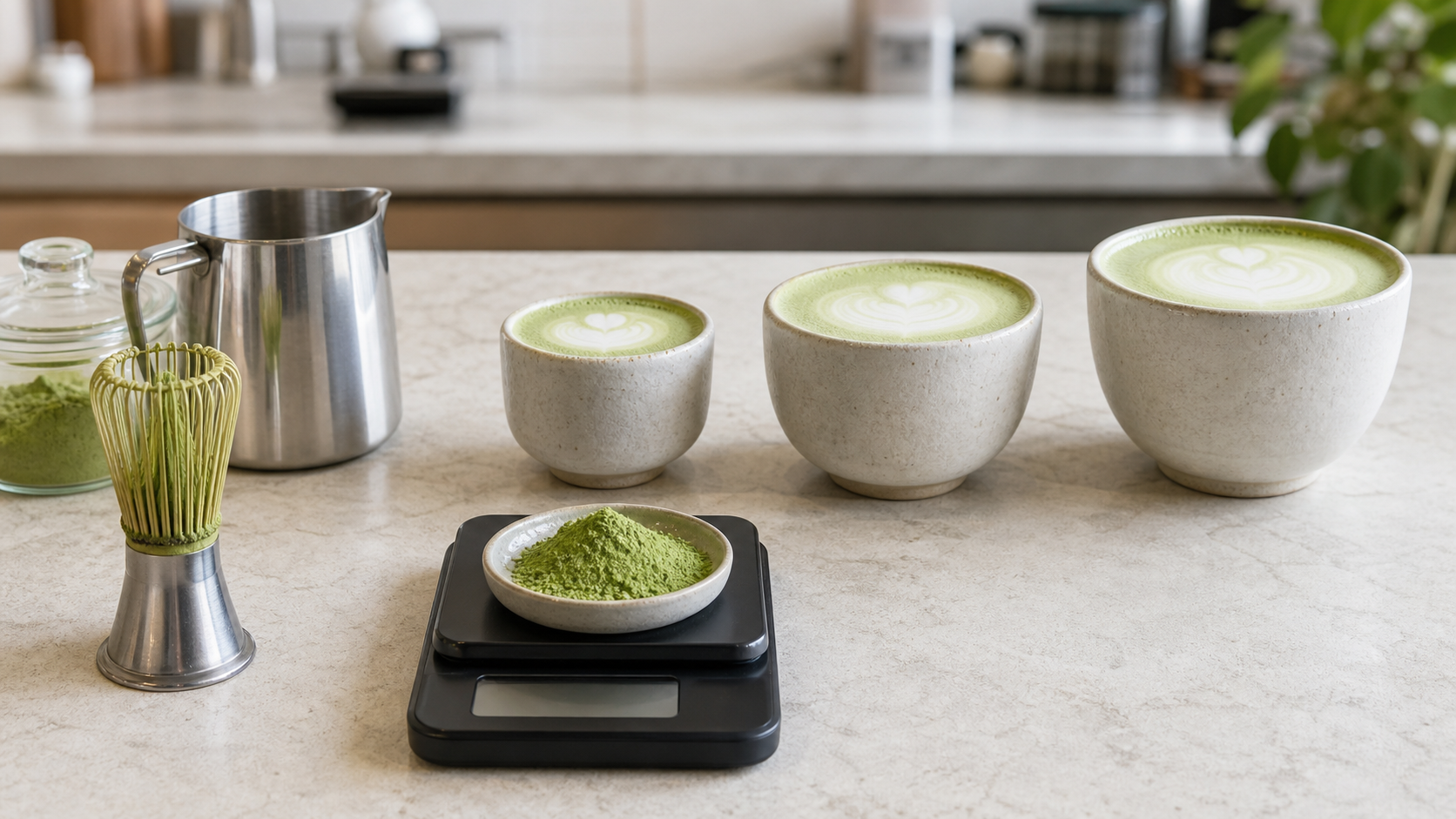
A 12 oz, 16 oz or 20 oz latte can all contain the same caffeine if the café puts 2 g of the same powder in each one. The larger cups would simply contain more milk, water or ice. Conversely, a café may scale the matcha dose with cup size, but there is no universal rule for how much it adds.
| Illustrative drink | Matcha dose | Estimated caffeine | Lesson |
|---|---|---|---|
| 12 oz latte | 2 g | 38–89 mg | Serving volume does not change the powder’s caffeine contribution. |
| 16 oz latte | 2 g | 38–89 mg | More milk changes dilution, not total caffeine. |
| 20 oz latte | 2 g | 38–89 mg | The larger cup is not automatically more caffeinated. |
This table is a controlled example, not a claim that cafés use 2 g. For an actual drink, ask for the matcha scoops or grams per size and whether a scoop is plain powder or a formulated mix.
What changes the caffeine in a matcha latte?
- Powder dose: doubling the grams approximately doubles the caffeine contributed by the same powder.
- Natural product variation: cultivar, leaf maturity, growing conditions and processing can change caffeine concentration.
- Plain matcha versus latte mix: one gram of a sugar-containing mix is not one gram of matcha.
- Espresso or coffee: a dirty matcha latte requires adding the caffeine from both components.
- Chocolate or added caffeine: other formula ingredients can increase the total.
- Recipe scaling: some cafés keep one dose across sizes; others add scoops as the cup gets larger.
Milk type does not chemically remove the caffeine already present. Oat, almond, soy and dairy milk can change nutrition, sweetness, texture and flavor, but the matcha-derived caffeine starts with the matcha portion.
Hot versus iced matcha latte
If a hot and iced latte use the same matcha powder and the same weighed dose, their estimated caffeine contribution is the same. Ice changes beverage volume and concentration as it melts; it does not decaffeinate the matcha.
Preparation temperature matters more for steeped leaf tea, where leaves are removed after extraction. With plain matcha, the powdered leaf remains dispersed in the drink. For recipe control, standardize the powder mass first. Sailtik’s hot and iced matcha latte formulas use measured powder rather than color as the control point.
What about Tall, Grande, Venti or named café drinks?
Proprietary size names belong to a particular brand and menu. Do not convert a generic 12 oz or 16 oz estimate into a branded drink claim. Check that brand’s current official nutrition listing for the exact market, drink, temperature, size and customization. Menu formulas and disclosed values can change.
This page intentionally keeps generic latte calculations separate from current-brand questions. A branded powder, premix, syrup, seasonal drink or regional “Jeju” item may use a different formula and requires its own source review.
How does a matcha latte compare with coffee?
The FDA gives 113–247 mg as an example range for 12 fl oz of regular brewed coffee. A latte made with 2 g matcha is estimated at 38–89 mg using the matcha literature range above, but stronger matcha portions can overlap with some coffees. Compare actual servings, not the words “matcha” and “coffee.”
The complete matcha caffeine and coffee comparison explains the evidence range, FDA references and why “calm energy” or “no crash” should not be guaranteed.
How cafés can control and communicate caffeine
- Weigh the matcha dose for each menu size instead of relying on a heaped spoon.
- Document whether the ingredient is plain matcha or a sweetened/formulated blend.
- Add all caffeine sources, including espresso, coffee concentrate and chocolate.
- Use the same recipe in training, costing and consumer information.
- State that the drink contains caffeine even when an exact milligram value is unavailable.
- Use product- and lot-appropriate testing before making a precise quantitative claim.
Sailtik recommends starting application tests around 1.5–3 g per cup. That is a recipe-development range, not a caffeine specification. Color, grade name and price cannot substitute for caffeine analysis.
Caffeine limits and individual sensitivity
The FDA says that 400 mg per day is not generally associated with negative effects for most adults, while emphasizing that sensitivity varies. That figure is not a target or personalized guarantee. Count all sources across the day.
Possible signs of excessive caffeine include sleep disruption, anxiety, jitters, headache, nausea, increased heart rate and palpitations. People who are pregnant, breastfeeding, taking medicines, managing a health condition or especially caffeine-sensitive should obtain individualized professional advice. See the separate pregnancy, breastfeeding and childhood caffeine guide.
Frequently asked questions
How much caffeine is in a 16 oz matcha latte?
The volume does not determine the answer. If it contains 2 g plain matcha, the educational estimate is 38–89 mg; if it uses a different powder or dose, recalculate. A branded 16 oz drink requires that brand’s current official value.
Does a larger matcha latte have more caffeine?
Only if the recipe adds more matcha or another caffeine source. More milk, water or ice alone does not increase total caffeine.
How many grams of caffeine are in a matcha latte?
Caffeine is usually reported in milligrams, not grams. For context, 100 mg equals 0.1 g. Do not confuse grams of matcha powder with grams of caffeine.
Does Sailtik publish a caffeine amount for its matcha?
No product-specific Sailtik caffeine value has been confirmed for publication here. The educational literature range must not be presented as a Sailtik specification. Business buyers who require testing can contact Carol with the product, intended claim and destination market.
Sources and calculation boundary
- Scientific review of matcha composition, including reported caffeine range
- FDA caffeine guidance, beverage examples and individual sensitivity
All matcha figures on this page are arithmetic estimates based on a published range. They are not laboratory results for a specific café drink, brand, Sailtik product or production lot.