
Matcha should not be served to cats. Because it is a caffeinated tea-leaf powder, it is inappropriate as a feline drink, food or supplement. Animal-poison specialists describe pets as more caffeine-sensitive than humans, and risk changes with the exposure, product strength, individual animal and complete ingredient list.
After a possible ingestion of powder, tea, latte or matcha food, promptly call the cat’s veterinary clinic, an emergency hospital or a recognized animal-poison service. Seek guidance before signs appear. Online dose arithmetic and unsupervised attempts to make a cat vomit or administer household remedies can delay appropriate care.
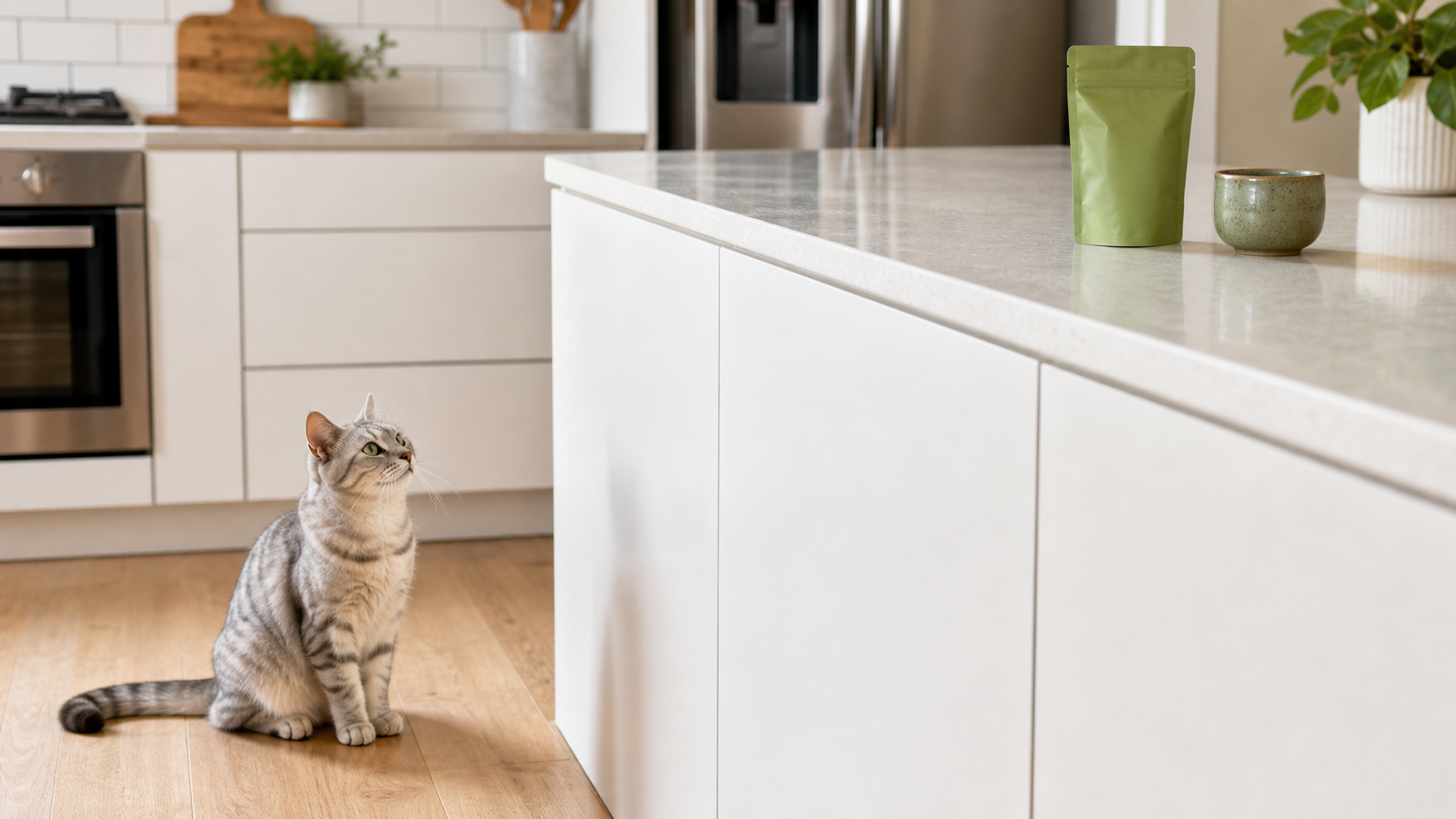
Why a human tea does not belong in a cat’s diet
Caffeine belongs to the methylxanthine stimulant family. Pet Poison Helpline identifies tea as a common source. Veterinary references associate meaningful exposures with digestive upset, nervous-system stimulation and cardiovascular changes; reported signs range from vomiting and agitation to rhythm abnormalities, tremors and seizures.
Matcha deserves particular care because the leaf is consumed as fine powder rather than steeped and discarded. A torn pouch can expose a cat to dry concentrated material quickly. Caffeine content varies across matcha products, so color, grade name, spoon size or the word “ceremonial” cannot establish pet safety.
Is any amount of matcha safe for cats?
No feeding quantity is offered here. A toxicology threshold is not a treat allowance. Body mass, age, illness and medicines differ among cats, caffeine varies among powders, and the swallowed quantity is frequently uncertain. Lapping a diluted beverage is different from reaching dry powder, but either event should be reported accurately when requesting veterinary advice.
Pet Poison Helpline notes that one or two licks of coffee, tea or soda are unlikely to poison most pets, while concentrated materials such as grounds, tea bags and supplements present greater concern. That general statement is not permission to offer matcha or to dismiss an individual cat’s exposure. Ask for case-specific guidance.
Powder, tea, latte and dessert are different exposures
| Product | Exposure question | Useful evidence |
|---|---|---|
| Loose tea powder | How much dry caffeinated leaf might be missing? | Container, spill area, clock time and best estimate |
| Water-prepared matcha | What dose went into the cup and how much remains? | Recipe plus a photograph of the cup |
| Milk-based latte | Which tea, milk, syrups, sweeteners and toppings were present? | Full formula and original serving volume |
| Frozen or baked item | How concentrated was the matcha and what else was in the food? | Wrapper, commercial label or complete recipe |
| Capsule or extract | Is the exposure concentrated beyond beverage use? | Product identity, declared strength and original packaging |
A finished food requires a whole-recipe review. Chocolate adds other methylxanthines; sugar-free syrups and snacks may contain additional concerning ingredients; and rich dairy or unfamiliar food can cause separate problems. Share every ingredient, not only the green component.
What to do if a cat drank or ate matcha
- End access. Secure the cup, food or pouch and contain the spill without exposing the cat again.
- Get expert guidance. Telephone the regular veterinary clinic, emergency hospital or animal toxicology service.
- Preserve product information. Keep the package, ingredient panel, receipt or recipe for the assessment.
- Describe the case. Be ready with body weight, age, conditions, medicines, ingredients, probable quantity, timing and observed changes.
- Use only directed care. Milk, oil, salt, peroxide, charcoal and other interventions should not be given unless the professional handling the case instructs it.
In the United States, the ASPCA Animal Poison Control Center and Pet Poison Helpline provide animal toxicology assistance; fees may apply. Elsewhere, contact a local veterinarian or recognized animal poison service.
Possible signs of caffeine poisoning
- Uncharacteristic agitation, pacing or hyperactivity
- Digestive upset or increased thirst
- A heartbeat that seems unusually fast, forceful or irregular
- Weakness, panting or difficulty coordinating movement
- Twitching, muscular tremor or a seizure
- Reduced responsiveness or collapse
This list cannot rule poisoning in or out. PetMD and veterinary poison resources advise seeking immediate guidance after caffeine ingestion because signs and severity depend on the source and dose. An apparently normal cat may still need a professional exposure assessment.
Why a cat’s interest does not mean matcha is suitable
A cat may investigate a cup because it is warm, novel, milky or smells like another ingredient. Curiosity and preference do not demonstrate nutritional need or safety. Do not let repeated interest become repeated exposure, and do not test whether the cat “really likes” the drink.
The separate behavioral question of why some cats approach matcha requires its own evidence review. The safety answer remains the same: keep caffeinated tea products out of reach.
Preventing exposure
- Place powder inside a shut cabinet, away from ledges and counter edges.
- Assume a flexible refill pouch can be bitten or torn.
- Remove abandoned cups, foam, desserts and recipe-testing waste promptly.
- Check beneath appliances when cleaning both liquid and dry spills.
- Close café ingredient bins and rubbish containers.
- Make a clear household or staff rule that caffeinated menu items are never animal treats.
- Store regular and emergency veterinary contact details in advance.
For the broader dogs-and-cats overview, see Sailtik’s matcha pet-safety guide. Human caffeine comparisons, including our matcha caffeine guide, must not be converted into veterinary feeding advice.
Frequently asked questions
Can cats drink decaffeinated matcha?
“Decaffeinated” should not be read as caffeine-free or feline-suitable. Residual caffeine and processing differ, and the full drink can introduce other unsuitable components. Do not offer it without veterinary guidance.
Is matcha good for cats because it contains antioxidants?
No established feline benefit justifies intentionally exposing a cat to caffeine. Ingredient marketing for people is not evidence of safety or benefit for another species.
Can a cat eat a matcha-flavored treat?
A “matcha-flavored” label does not disclose caffeine concentration or establish that all ingredients suit cats. If the item has already been eaten, keep its label and request advice using the exact product and estimated quantity.
Veterinary sources
- Pet Poison Helpline: caffeine toxicity to pets
- PetMD: cats and caffeine exposure
- American College of Veterinary Pharmacists: caffeine
- ASPCA: people foods to avoid feeding pets
Veterinary sources last reviewed August 1, 2026. This general information cannot replace an individual veterinary assessment.