
For a concentrated whisked bowl, start with 2 g matcha and about 60 ml, or 2 oz, of water. Use less water for a latte concentrate, use 60–70 ml for classic thin matcha, and use more water only when you intentionally want a lighter tea rather than foam, body or latte strength.
The common mistake is treating “one cup of matcha” as an 8 oz mug. Traditional-style whisked matcha is usually a small concentrated serving, not a full mug of water. If you want an 8 oz drink, decide whether you want a light water-based tea, a latte, or a cold shaken drink; the water amount changes for each.
Quick ratio table
| Use case | Matcha | Water to start | What this does |
|---|---|---|---|
| Classic thin matcha / usucha baseline | 2 g | 60 ml / 2 oz | Concentrated, foam-friendly, easy to evaluate. |
| Gentler straight bowl | 2 g | 70–90 ml / 2.4–3 oz | Lighter taste, less intensity, usually less foam density. |
| Latte concentrate | 1.5–3 g | 30–60 ml / 1–2 oz | Creates a smooth base before milk, without making the latte watery. |
| Iced latte concentrate | 2–3 g | 25–50 ml / 0.8–1.7 oz | Leaves room for milk and ice dilution. |
| Cold shaken water drink | 1.5–2 g | 150–250 ml / 5–8.5 oz | A lighter tea-style drink; shake hard and drink before settling. |
| 8 oz water-only cup | 2 g | 240 ml / 8 oz | Very light and diluted compared with a small whisked bowl. |
Why 2 g and 60 ml is a useful starting point
Ippodo’s current foamy-matcha guide uses 2 g matcha with 60 ml water at 80°C / 176°F, followed by about 15 seconds of vigorous M-shaped whisking. It also notes that too much water can make thick foam harder to develop. That makes 2 g to 60 ml a useful control recipe: concentrated enough to taste the tea, small enough to whisk effectively, and easy to scale.
Do not confuse this with a universal serving law. Matcha grade, grind, storage, bowl shape, whisk, water chemistry and personal taste all matter. The point is to start with a known ratio, then change one variable at a time.
If your question is “how much water for 2 grams of matcha?”
Use 60 ml / 2 oz as the first test. If the cup tastes too intense but not bitter, try 70–90 ml. If it tastes bitter, do not immediately add more water; first check water temperature, powder dose and powder freshness. Dilution can hide harshness, but it does not fix the cause.
If the final drink is a latte, 2 g matcha with 30–60 ml water is usually more useful than 2 g matcha with a full mug of water. You want the water to hydrate and disperse the powder, not to become most of the beverage.
If your question is “how much matcha for 8 oz water?”
An 8 oz water-only drink made with 2 g matcha will be much lighter than a small whisked bowl. That may be fine if you want a mild cold shaken tea, but it is not the best baseline for evaluating flavor quality or foam. If you want the drink to taste more like a classic bowl, keep the water closer to 60–90 ml and drink it as a smaller serving.
If you want an 8 oz latte, do not make 8 oz of matcha water and then add milk. Make a concentrate, then add milk until the finished drink reaches the cup size you want.
Water amount and temperature work together
Water volume is not the only lever. For many matcha preparations, Sailtik uses 70–80°C / 158–176°F as a practical starting temperature range. Hotter water can make bitterness more obvious; cooler water can taste softer but may feel less aromatic or harder to foam depending on the powder and tool.
Change one thing at a time. If a 2 g / 60 ml bowl tastes too sharp, test 75°C before changing the ratio. If it tastes too thick but pleasant, add 10–20 ml water. If it tastes weak, reduce water or increase powder only after confirming the powder is fresh and properly whisked.
Use grams for water when precision matters
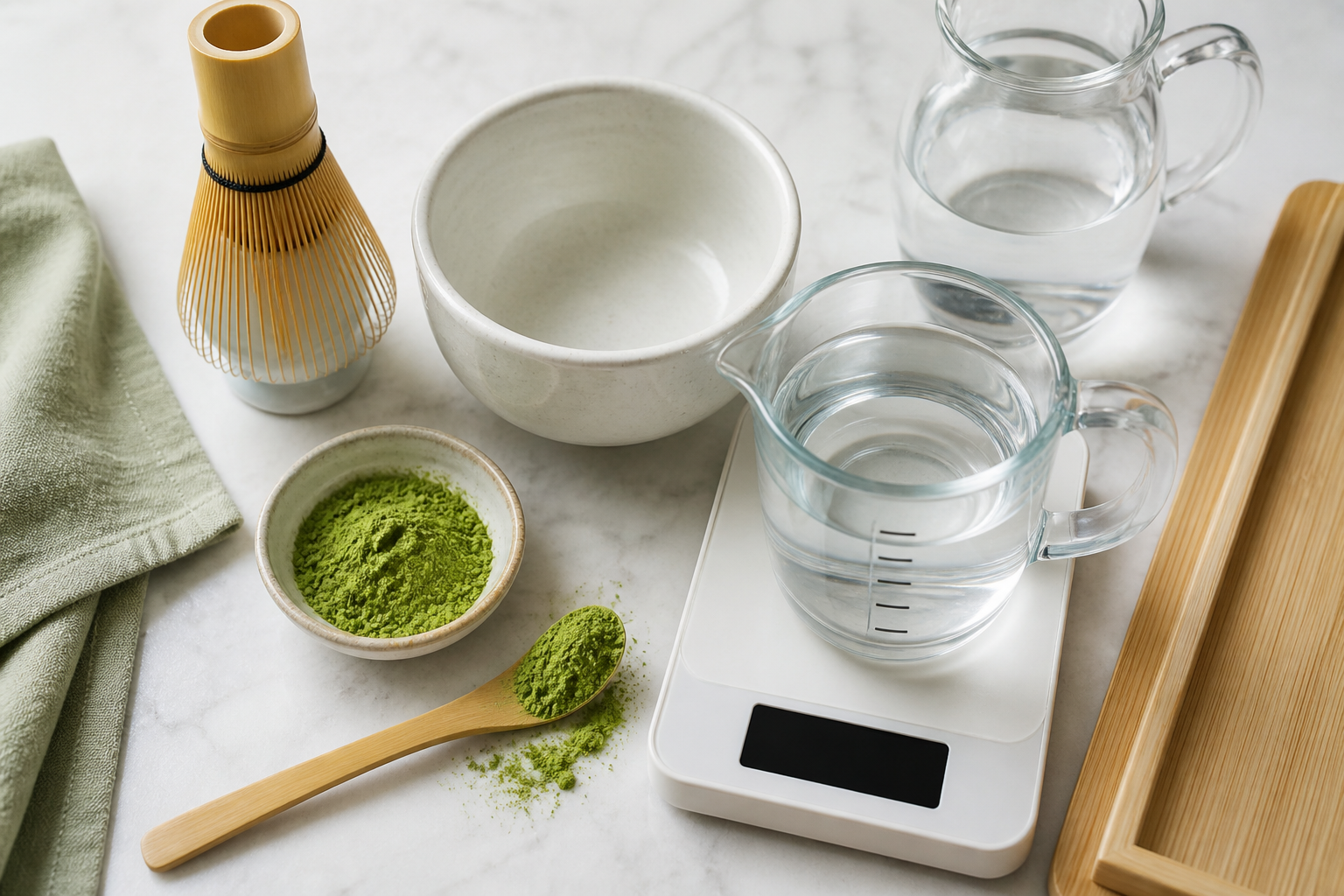
For kitchen testing, water is convenient because 1 ml water is close to 1 g. That means 60 ml water is approximately 60 g on a scale. If your measuring cup is unreliable or the batch needs repeatability, put the bowl on a scale, tare it, and add 60 g water. This is often faster and more repeatable than reading tiny cup marks.
Common ratio mistakes
- Starting with a full mug. This makes a diluted drink and can make foam harder.
- Using more water to fix bitterness. First check temperature, dose, freshness and sifting.
- Using latte water amounts for plain matcha. A latte concentrate can be too intense to drink straight.
- Ignoring ice. Ice melts and increases dilution, so iced drinks often need less initial water.
- Measuring powder by a random spoon. Use a gram-first matcha dose while testing.
Bottom line
Start with 2 g matcha and 60 ml / 2 oz water for a concentrated whisked bowl. For a latte, use only enough water to make a smooth concentrate before adding milk. For a lighter water drink, increase water intentionally and accept that the result will be thinner and usually less foamy.