
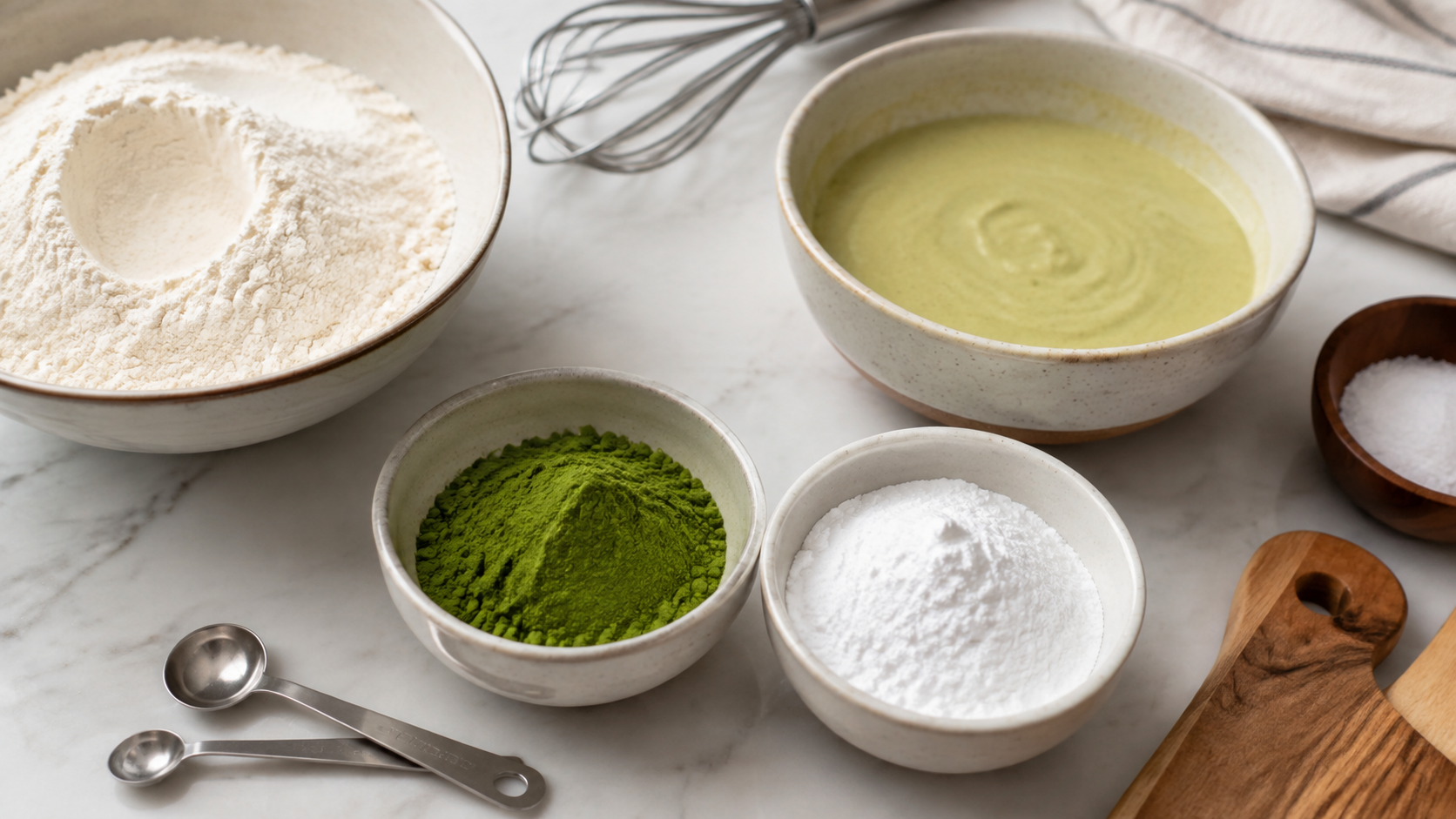
“Matcha baking powder” is usually not a special leavening ingredient. Most of the time, people mean matcha powder used for baking, culinary matcha, or a recipe that contains both matcha and baking powder. Do not replace baking powder with matcha powder: matcha brings tea flavor and color, while baking powder helps cakes, muffins and cookies rise.
Why the phrase is confusing
The words sit next to each other in recipes: matcha powder, flour, sugar, eggs, butter and baking powder. Search engines may also rearrange “baking matcha powder” into “matcha baking powder.” That creates a problem because the two powders are not interchangeable.
| Ingredient | What it does | Can it replace the other? |
|---|---|---|
| Matcha powder | Adds green-tea flavor, color, bitterness, aroma and a small amount of tea solids. | No. It does not leaven a cake. |
| Baking powder | Creates gas in batter so baked goods rise. | No. It does not add matcha flavor. |
| Culinary matcha | A matcha grade or positioning used for food, bakery and beverage applications. | It can be the matcha ingredient, but it is still not baking powder. |
What to buy if a recipe says matcha
If the recipe says “matcha powder,” buy plain matcha powder, not a sweetened latte mix and not a white chemical leavener. For cakes and cookies, a vivid culinary or café-use matcha is often more practical than a very expensive drinking grade because heat, flour, fat and sugar mute delicate aroma. For larger bakery tests, compare the finished product, not the dry powder alone; Sailtik’s commercial baking guide explains that buyer workflow.
If the recipe says “baking powder,” use the amount of baking powder specified by the recipe. Do not remove it just because matcha is also present. Removing the leavener can make a cake dense, flat or gummy.
How much matcha goes into baked goods?
There is no universal spoon measure because matcha density and recipe size vary. Start with grams. For a small 6-inch cake, Sailtik’s matcha cake starter formula uses a controlled 7–9 g range. Cookies, muffins, ice cream and bread need different tests. A dry green powder that looks strong in the bowl may taste weak after baking, and a large dose can turn bitter or drying.
When “baking matcha” is a real buying term
Some sellers use “baking matcha,” “culinary matcha” or “ingredient-grade matcha” to describe powder intended for recipes instead of straight drinking. Those terms are useful, but they are not universal regulated grades. Read the ingredient list and test the powder in the actual recipe. A label should not contain sugar, milk powder or flavoring if you need plain matcha.
Recipe checks before you bake
- Confirm whether the recipe means matcha powder, baking powder, or both.
- Sift matcha with flour to avoid bitter green dots.
- Weigh the matcha instead of packing it into a spoon.
- Avoid assuming brighter dry powder always gives a better baked color.
- Use the same baking powder amount unless you are deliberately reformulating the recipe.
- Record the powder grams, flour grams, oven temperature and finished color before changing the next batch.
Bottom line
Matcha powder and baking powder are separate ingredients. If a search result says “matcha baking powder,” read it as an ambiguity until the recipe proves otherwise. Use matcha for flavor and color, use baking powder for lift, and test culinary matcha in the finished baked product before scaling a cake, cookie or commercial recipe.
Sources checked
- Sailtik commercial baking guide
- Sailtik matcha application guide
- Sailtik matcha cake formula
- Sailtik grade guide
- King Arthur Baking ingredient weight chart
FAQ
Is matcha baking powder the same as baking powder?
No. Matcha is powdered tea leaf. Baking powder is a leavener.
Can I bake with regular matcha powder?
Yes, if it is plain matcha and the flavor works in your recipe. Culinary or café-use grades are often more cost-effective for baking.
Can matcha replace flour?
No. Matcha is used in small amounts for flavor and color. It does not replace the structure of flour.