
An MCT matcha latte is a matcha drink made with milk or water plus MCT oil or MCT oil powder. It is not plain matcha. It is a formulated latte, usually sold or made for keto-style, creamy-texture or “energy” positioning, so the label and recipe matter more than the green color.
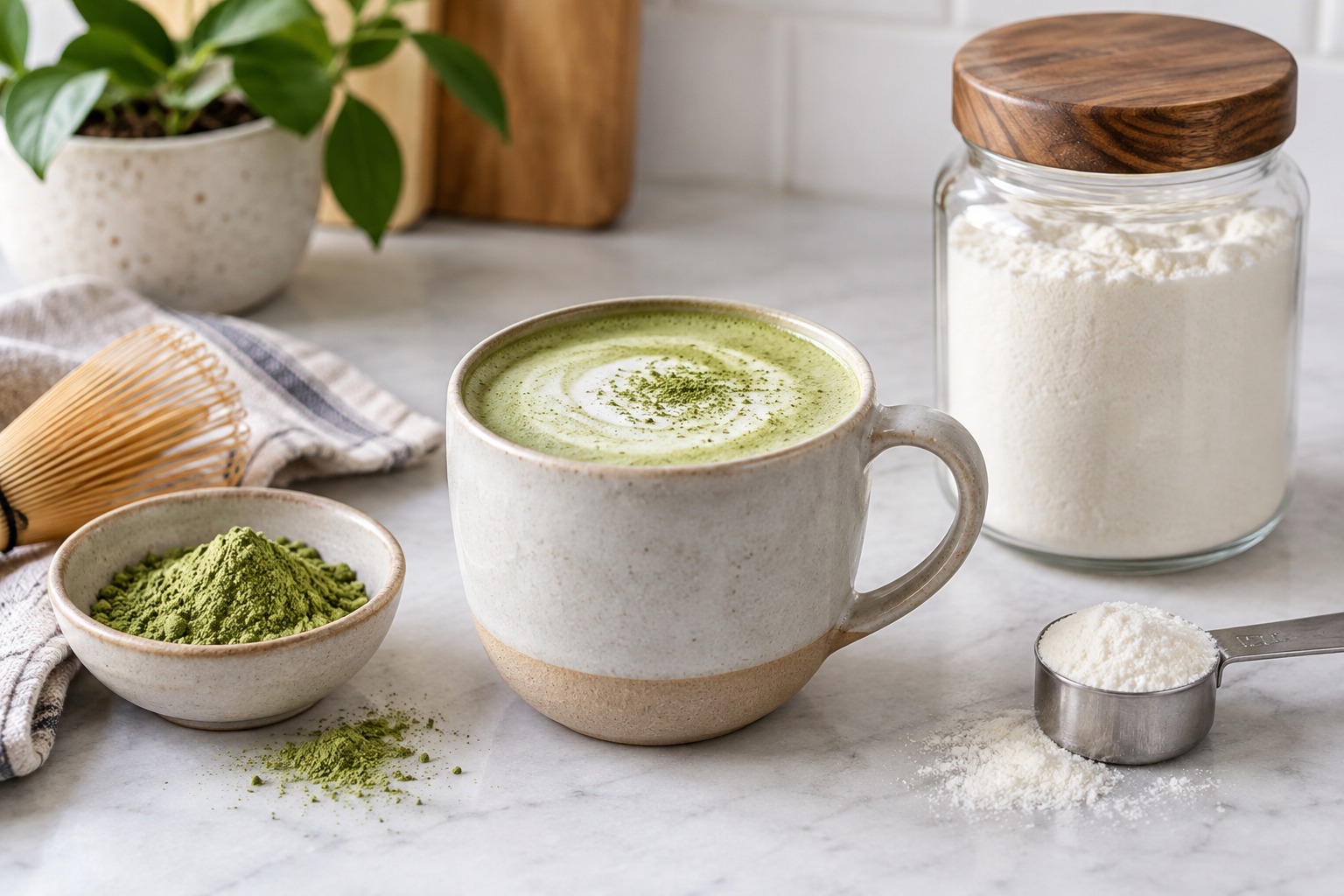
MCT stands for medium-chain triglycerides, a type of dietary fat. In matcha products, MCT can appear as liquid oil blended into a latte or as a powder made from MCT oil plus carrier ingredients. That carrier detail is easy to miss: some powders include fiber, starches, milk ingredients, flavors or sweeteners.
What is usually in it?
| Part | What to check | Why it matters |
|---|---|---|
| Matcha | Grams per serving and whether it is real tea powder. | Controls tea flavor and caffeine. |
| MCT oil or powder | Oil source, powder carrier and grams of fat. | Changes calories, texture and digestion tolerance. |
| Milk or water | Dairy, oat, coconut, soy or water base. | Changes protein, sugar, allergens and mouthfeel. |
| Sweetener | Sugar, monk fruit, stevia, syrups or none. | Changes taste and diet fit. |
| Claims | Energy, keto, fat-burning or appetite claims. | These need evidence, not label hype. |
How it differs from a normal matcha latte
A regular matcha latte is usually matcha powder, a small amount of water and milk. An MCT version adds fat, which can make the drink feel creamier and heavier. It can also add calories quickly: fat contains about 9 calories per gram, before milk or sweetener is counted.
Texture is the practical challenge. MCT oil can separate if it is stirred casually into cold liquid. MCT powder disperses more easily, but the powder is not just oil; it usually needs something to carry the fat. If you are buying a premix, read the ingredient list rather than assuming it is matcha plus pure MCT.
Health claims need a hard look
MCT products are often promoted with confident language. The evidence is more cautious. A 2021 systematic review looking at MCT oil and blood-fat markers found no effect on total cholesterol, LDL cholesterol or HDL cholesterol, but a small increase in triglycerides. A 2015 meta-analysis found modest body-composition changes when MCT replaced longer-chain fats, but also said the evidence quality was not the highest.
That does not mean an MCT matcha latte is bad. It means you should not treat it as a magic fat-burning matcha. It is a caffeinated drink with added dietary fat. If you have lipid concerns, digestive sensitivity, pregnancy questions, medication issues or a clinical diet plan, use professional guidance instead of a café trend.
How to make one without ruining the matcha
- Whisk matcha first with warm water so there are no dry clumps.
- Add warm milk or a milk alternative.
- Add a small amount of MCT oil or the labeled serving of MCT powder.
- Blend or froth enough to emulsify the fat.
- Taste before sweetening; MCT changes body, not sweetness.
Start small. Many people tolerate a little added fat better than a large scoop. A latte should still taste like matcha, not like a supplement hidden in green milk.
Bottom line
An MCT matcha latte is matcha plus a fat ingredient, usually MCT oil or MCT powder, in a milk-style drink. Check the matcha amount, caffeine, fat grams, carrier ingredients, sweeteners and claims. It can be a creamy specialty latte, but it is not the same thing as plain matcha.
Sources checked
- Sailtik: MCT matcha powder label checks
- PubMed: systematic review on medium-chain fats and lipids
- PubMed: MCT and body composition meta-analysis
- Cleveland Clinic: MCT oil overview
- Sailtik: grams of matcha per latte
- Sailtik: basic matcha latte ingredients
FAQ
Does an MCT matcha latte have caffeine?
Yes, if it uses real matcha. The caffeine comes from the matcha powder, not the MCT oil.
Is MCT matcha latte keto?
It depends on the milk, sweetener and powder carrier ingredients. Do not assume it is keto just because it contains MCT.
Can I put MCT oil in iced matcha?
You can, but it needs strong blending or frothing. Oil stirred into a cold drink may separate.
Is MCT matcha latte good for weight loss?
No. It should not be treated as a weight-loss shortcut. It adds calories from fat, and the research behind broad MCT claims is mixed and context-dependent.