
Matcha green tea is not a gout treatment, and it has not been proven to lower uric acid or prevent flares. It is also not a classic high-purine food like organ meats or certain seafood. For many people, the real issue is the whole drink: caffeine, sugar, hydration and kidney context.
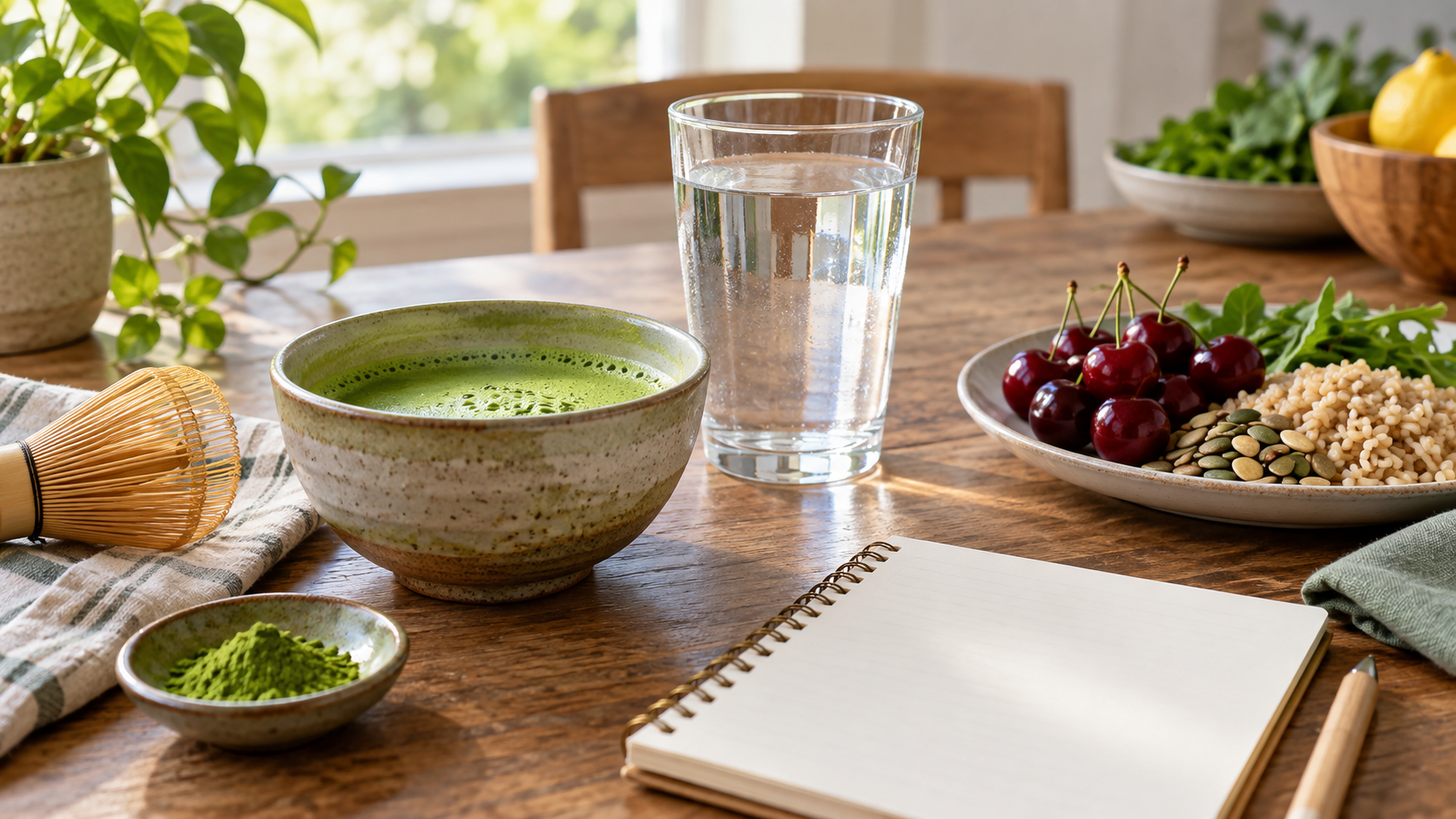
Gout happens when urate builds up and forms crystals in joints. NIAMS and the American College of Rheumatology focus gout advice on urate-lowering medication when needed, limiting alcohol and high-purine foods, reducing high-fructose corn syrup, weight management and care for kidney or heart risk. Matcha is not central in those guidelines.
What tea and gout research suggests
A systematic review and meta-analysis on tea drinking, urate measures and gout did not find a clear association between tea drinking and gout risk. Its green-tea subgroup was limited and even suggested higher serum uric acid in some analyses, so it cannot be used to claim that green tea protects against gout.
That is an important correction to many wellness answers. Green tea polyphenols may look promising in some animal or lab work, but the human gout question is not settled.
How to judge a matcha drink if you have gout
| Drink choice | Gout-relevant issue |
|---|---|
| Plain matcha with water | Mostly a caffeine-tolerance and hydration question. |
| Sweet matcha latte | Added sugar matters more than the tea powder. |
| Matcha with alcohol | Alcohol is a recognized gout concern; do not hide it behind a green-tea label. |
| Green-tea extract | Not the same as a drink and not a gout therapy. |
| Large late-day matcha | Can disturb sleep, and poor sleep can make pain coping harder. |
Hydration is a better anchor than antioxidant language. If matcha replaces water during a flare, that is not helpful. If a small unsweetened matcha sits beside enough water and a gout plan already agreed with a clinician, it is a different story.
Medication and kidney boundaries
People with gout often have kidney disease, high blood pressure or cardiovascular risk. NCCIH notes that green tea and extracts can interact with some medicines and that extracts have different safety concerns from beverages. If you take urate-lowering medication, diuretics, blood-pressure drugs or have kidney stones, do not redesign the plan around matcha advice.
During an acute flare, the practical steps are rest, clinician-approved medication, and avoiding known personal triggers. Matcha should not be treated as a pain-relief tool.
What not to assume
- Do not assume matcha lowers uric acid.
- Do not use matcha instead of urate-lowering medication when prescribed.
- Do not count a sugary latte as a gout-friendly drink just because it contains green tea.
- Do not turn animal green-tea studies into human gout advice.
- Do not ignore kidney disease, stones or medication questions.
Bottom line
Plain matcha may be acceptable for some people with gout, but it is not proven to prevent flares or reduce urate. Keep it unsweetened, keep water intake steady, and treat gout as a medical urate-management condition rather than a tea problem.
Sources checked
- NIAMS: gout symptoms, causes and risk factors
- NIAMS: gout diagnosis, treatment and steps to take
- American College of Rheumatology: gout patient information
- PMC: 2020 American College of Rheumatology gout guideline
- PMC: tea, urate and gout meta-analysis
- NCCIH: green tea usefulness and safety
- Sailtik: matcha caffeine compared with coffee
- Sailtik: matcha and kidney safety boundaries
FAQ
Can matcha cure gout?
No. Matcha is not a gout cure or flare treatment.
Does matcha raise uric acid?
Human evidence is mixed and not strong enough for a simple claim. Existing tea reviews do not prove gout protection.
Is a matcha latte okay for gout?
Check the added sugar first. A sweet latte is not the same as plain matcha.
Should I avoid green-tea extract if I have gout?
Ask your clinician or pharmacist. Extracts are concentrated and should not be treated like ordinary tea.