
Matcha is not proven to cleanse, heal or protect the kidneys, but plain matcha can fit many adult diets if total caffeine, hydration and personal kidney history are considered. Kidney-stone risk, chronic kidney disease and ordinary beverage tolerance are different questions, so they should not be answered with one wellness claim.
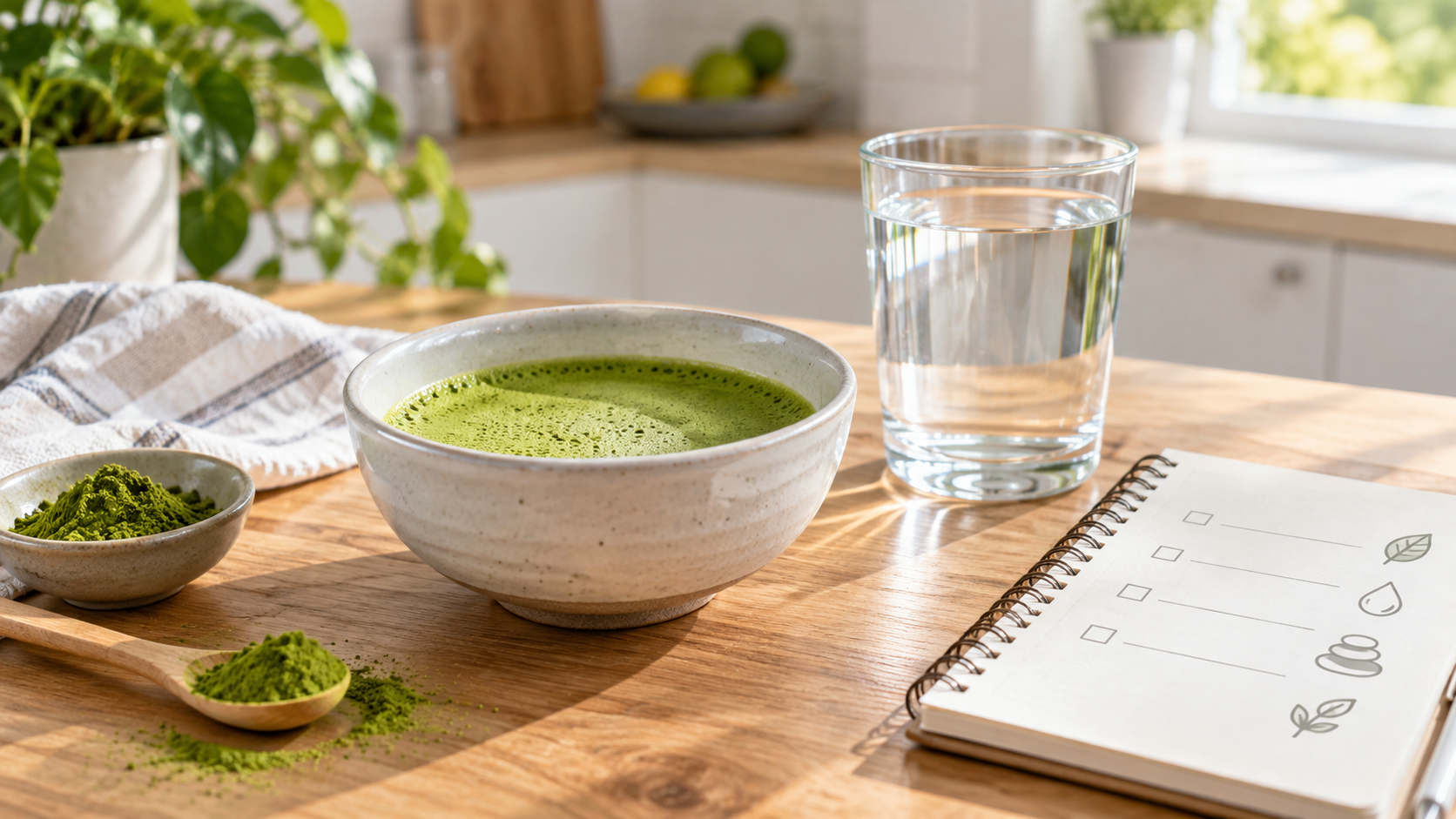
Search results often mix green tea studies, oxalate warnings, kidney-stone advice and kidney-disease diet restrictions. The safer way to answer is to separate product form and personal risk. A measured cup of plain matcha is not the same decision as a concentrated supplement, a sweet café drink, or using matcha while managing kidney disease.
The practical answer
| Question | Careful answer | What changes the answer |
|---|---|---|
| Is matcha good for kidneys? | It can be a reasonable drink for many adults, but it is not kidney medicine. | Kidney disease, stones, medicines and caffeine sensitivity. |
| Can matcha cause kidney stones? | Plain matcha is not usually singled out as a leading cause, but oxalate and hydration still matter. | Stone type, fluid intake and high-oxalate diet pattern. |
| Is matcha bad for kidney disease? | People with kidney disease should use clinician or renal-dietitian advice. | Potassium, phosphorus, fluid limits, labs and medication plan. |
| Is matcha a kidney detox? | No. Detox or cleanse wording overstates the evidence. | Marketing language is not a clinical outcome. |
Kidney stones: what matters more than the tea label
NIDDK kidney-stone diet guidance emphasizes fluid intake and tailoring diet to the type of stone. It discusses sodium, animal protein, calcium and oxalate because stone prevention is not one universal list of forbidden foods. Patient kidney-stone education generally frames prevention around urine chemistry, hydration and personal risk factors, not one drink label.
For matcha, that means the right question is not simply “green tea yes or no?” It is whether your total diet, fluids and stone history make extra oxalate, caffeine or sweetened drinks a concern. Someone with recurrent calcium oxalate stones needs a different answer from someone with no stone history who drinks one modest cup.
Oxalate and matcha: keep the claim narrow
Matcha is powdered leaf, so it is reasonable to ask about oxalate. But public nutrition databases and product labels often do not give a reliable oxalate number for each matcha powder, and oxalate content can vary by tea type and preparation. Do not assume every green tea, brewed tea, matcha powder and extract has the same kidney-stone relevance.
A cautious consumer rule is simple: if you have been told to follow a low-oxalate diet, ask your clinician or renal dietitian how matcha fits your plan. If you have no stone history, a normal serving of plain matcha is usually a much smaller decision than overall hydration, sodium intake, repeated high-oxalate foods and large sweetened beverages.
Caffeine, fluids and symptoms
Matcha contains caffeine, and caffeine tolerance matters. Some people urinate more, feel jittery or get stomach upset when they stack matcha with coffee, energy drinks or pre-workout products. Use Sailtik’s matcha caffeine comparison if a kidney concern is really part of a high-caffeine day.
Hydration also matters. A small matcha drink should not replace water if you are trying to maintain urine volume for stone prevention. If matcha causes diarrhea or you drink it instead of fluids, the kidney-stone conversation changes. Sailtik’s diarrhea guide covers that adverse-effect boundary.
Plain matcha vs café drinks vs supplements
| Product form | Kidney-health interpretation | Check first |
|---|---|---|
| Plain matcha with water | Most direct way to judge tolerance. | Powder amount, caffeine and hydration. |
| Sweetened matcha latte | Judge the full drink, not just the tea. | Sugar, milk, serving size and total calories. |
| Matcha energy blend | More variables than tea. | Caffeine stack, additives and supplement label. |
| Green tea extract capsules | Not equivalent to a cup of matcha. | Dose, warnings, medicines and clinician advice. |
Sailtik’s daily matcha safety checklist is the better page for routine serving and sensitivity questions. For broad health claims, use Sailtik’s human-evidence review rather than assuming kidney-specific benefit.
When to ask a clinician before using matcha
- You have chronic kidney disease or abnormal kidney labs.
- You have recurrent stones or know your stone type is calcium oxalate.
- You have been prescribed a low-oxalate, low-potassium, low-phosphorus or fluid-restricted diet.
- You take diuretics, lithium, blood-pressure medicines or other medicines where hydration and caffeine matter.
- You plan to use green tea extract, weight-loss powders or high-caffeine blends instead of plain matcha.
Bottom line
Plain matcha is best treated as a caffeinated tea drink, not as a kidney cleanse or stone-prevention treatment. If you have no kidney disease or stone history, a measured serving is mainly a tolerance and total-diet question. If you have kidney stones, kidney disease or diet restrictions, use individualized medical advice because oxalate, fluids, minerals and medicines can change the answer.
Sources checked
- NIDDK eating, diet and nutrition for kidney stones
- PubMed literature search for green tea, oxalate and kidney-stone evidence
- Sailtik matcha health-benefit evidence review
- Sailtik daily matcha safety checklist
- Sailtik matcha caffeine comparison
- Sailtik matcha and diarrhea guide
FAQ
Does matcha cause kidney stones?
There is no responsible blanket answer for every person. Stone type, fluids, sodium, calcium, oxalate pattern and medical history matter more than a single tea label.
Is matcha high in oxalates?
Matcha is powdered tea leaf, so oxalate is a reasonable concern for people on low-oxalate plans. Exact content can vary, so use renal-dietitian guidance if you have calcium oxalate stones.
Can matcha help kidney function?
Do not rely on matcha to improve kidney function. Kidney function should be managed with medical testing and clinician guidance, not tea or detox claims.