
Yes, matcha can upset the stomach in some people, but it does not affect everyone the same way. Caffeine is one plausible contributor, while powder dose, personal sensitivity and the rest of a latte recipe can also matter. Direct human evidence proving one universal matcha-specific cause is limited.
What “upset stomach” can mean
People use the phrase for different symptoms: nausea, upper-abdominal discomfort, burning, fullness, bloating, cramping or loose stool. Those symptoms have many possible causes. Timing after a drink can make an ingredient suspicious, but it does not establish a diagnosis.
| Possible contributor | Why it belongs in the review | What not to conclude |
|---|---|---|
| Caffeine | FDA lists upset stomach and nausea among possible signs of excessive intake; sensitivity varies. | A general daily limit does not prove a serving suits an individual. |
| Powder amount | More matcha usually means more caffeine and more suspended leaf material. | A heaped spoon is not a reliable dose. |
| Milk or plant drink | Lactose, gums or other ingredients may be relevant for some people. | Symptoms after a latte do not automatically identify matcha as the cause. |
| Sweetener or syrup | Large sugar loads or certain sugar alcohols can cause digestive symptoms in susceptible people. | “Sugar-free” does not mean symptom-free. |
| Another condition or medicine | Reflux, dyspepsia, infection, allergy, intolerance and medicines can change the picture. | An online article cannot diagnose the cause. |
Caffeine is a credible factor, not the whole answer
Matcha naturally contains caffeine. Published analyses show a wide concentration range, so identical-looking drinks may not deliver identical amounts. The FDA notes wide individual variation and includes nausea and upset stomach among signs that caffeine intake may be too high for a person.
The National Institute of Diabetes and Digestive and Kidney Diseases also lists caffeinated foods and drinks among items that can trigger or worsen functional dyspepsia symptoms in some people. That guidance supports caffeine as a possible trigger; it does not prove that matcha caused a particular episode.
A recent cross-sectional study found associations between caffeine-containing drinks and several self-reported gastrointestinal symptoms. Because it was observational and had acknowledged confounding limitations, it cannot show that caffeine caused the symptoms or quantify risk from a matcha serving.
Check the complete drink
Plain matcha and water is a different exposure from a large café latte. Dairy can be relevant to lactose intolerance. Plant drinks may contain oils, gums or other ingredients. Flavored syrups, sugar alcohols, cream toppings, espresso shots and a very large serving introduce additional variables.
Also check what else was consumed that day. Coffee, energy drinks, supplements and some medicines can raise total caffeine. A symptom that appears after the last drink may reflect the cumulative exposure rather than that drink alone.
A cautious troubleshooting sequence
- Stop the suspected drink while symptoms are active instead of repeatedly testing through discomfort.
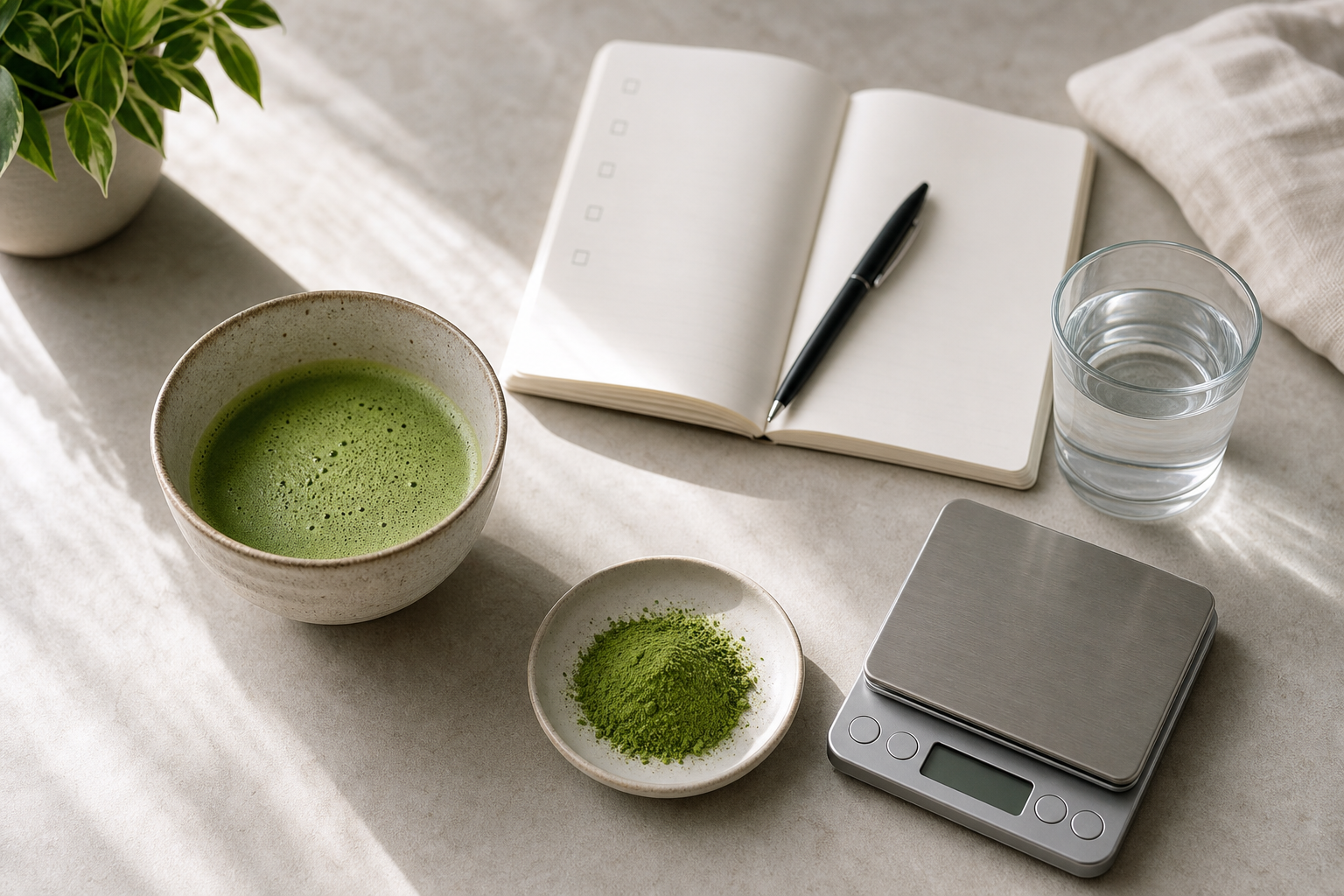
- Write down the product, weighed powder dose, full recipe, serving size, other caffeine and symptom timing.
- Check whether the product is plain matcha or a formulated mix with additional ingredients.
- If a later retry is medically appropriate, change only one variable and use a smaller measured serving.
- Stop again if symptoms recur. Repeated or significant symptoms deserve professional assessment rather than increasingly elaborate self-experiments.
This sequence is a way to organize observations, not a diagnostic test. Avoid using another person’s tolerance as proof that your reaction is harmless.
When to get medical help
Seek prompt medical advice for severe or persistent pain, repeated vomiting, dehydration, fainting, difficulty breathing, swelling, black or bloody stool, blood in vomit, unexplained weight loss, fever, chest pain or symptoms that keep returning. Urgent or rapidly worsening symptoms should be assessed urgently.
People with a diagnosed gastrointestinal condition, pregnancy, medication questions or unusual caffeine sensitivity should obtain advice suited to their circumstances. Do not use a general 400 mg adult caffeine reference as proof that a particular dose is appropriate.
What this page does not claim
This page addresses adverse stomach discomfort. It does not decide whether matcha improves digestion, whether it should be consumed at a particular meal time, or whether it is appropriate for an ulcer or another diagnosed condition. Those are separate outcomes and clinical questions.
Sailtik does not market matcha as a digestive treatment. Café and private-label buyers should evaluate taste, color, dispersion, weighed recipe performance and supported specifications. For dose-related caffeine context, read the matcha caffeine guide; for bowel-movement questions, see the separate evidence review.
Frequently asked questions
Why does matcha make my stomach hurt?
No single cause can be assumed. Caffeine sensitivity, powder dose, the complete recipe, another dietary exposure, medicine or an underlying condition may be relevant.
Can matcha cause nausea?
It can coincide with nausea in a susceptible person, and FDA lists nausea as a possible sign of excessive caffeine intake. Persistent nausea needs assessment rather than a matcha-only assumption.
Is a matcha latte more likely to cause symptoms than plain matcha?
Not universally, but a latte introduces milk or plant drink, sweeteners and sometimes other additions. Review each component and the total serving.