
Yes, you can mix brewed green tea and prepared matcha. Brew the leaf tea first, whisk the matcha separately into a smooth suspension, then combine them. For one 240 ml / 8 fl oz drink, start with 1–1.5 g matcha and about 180 ml brewed green tea.
The two ingredients are related but not interchangeable. Loose-leaf green tea is steeped and removed; matcha powder remains in the drink. Mixing them creates a stronger layered tea beverage. It does not turn ordinary leaf tea into matcha.
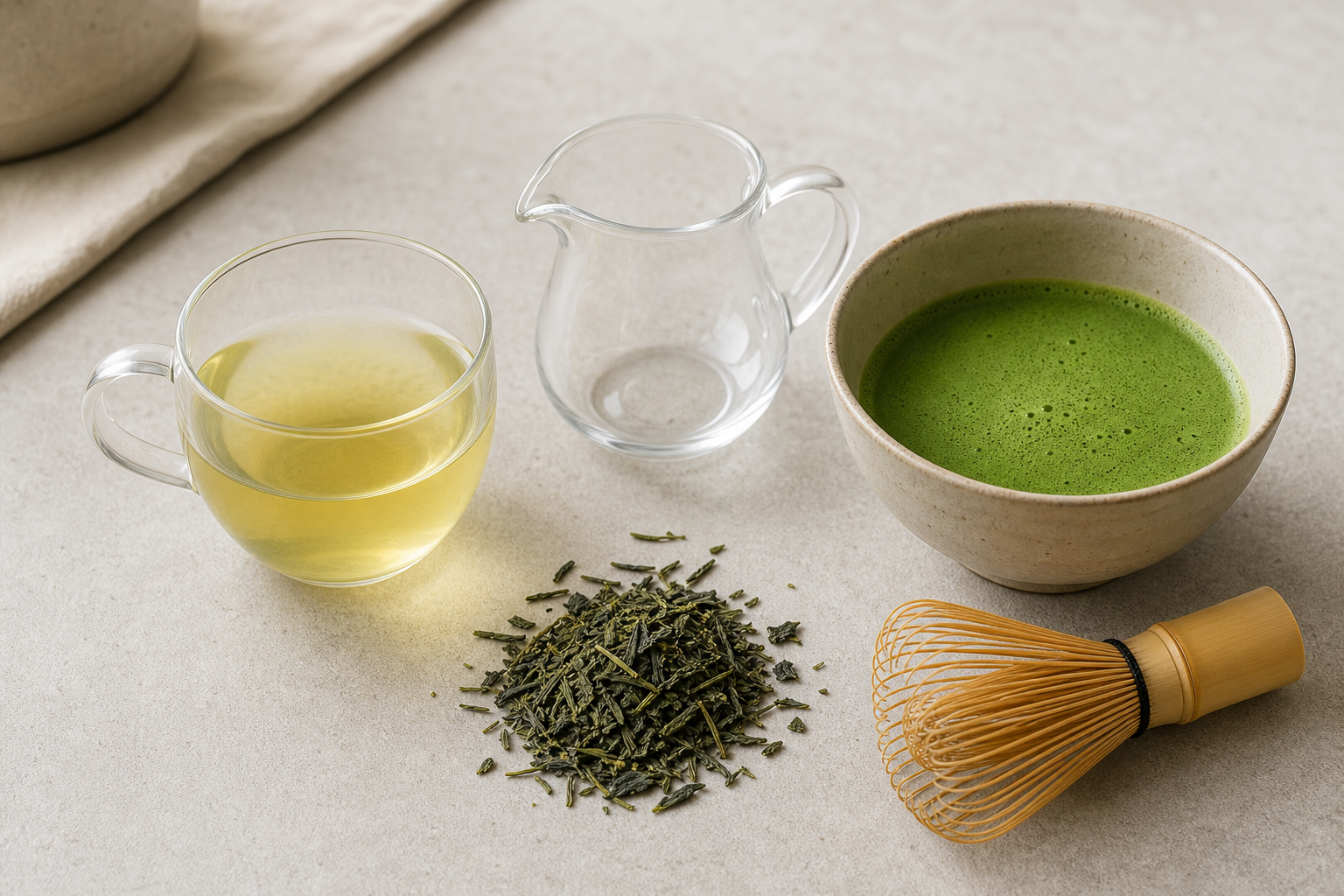
A measured starting recipe
| Component | Starting amount | Adjustment |
|---|---|---|
| Loose-leaf green tea | 2 g | Use the supplier’s brewing guidance if it differs |
| Water for brewing | 180 ml | Reserve another 30 ml for the matcha |
| Matcha | 1–1.5 g | Start lower because the brewed tea also contributes flavor and caffeine |
| Water for matcha | 30 ml | Warm, not boiling |
| Sweetener | Optional, measured to taste | Add only after tasting the unsweetened blend |
This is a development formula, not a universal standard. Sencha, jasmine green tea, roasted green tea and other leaf teas differ in aroma, bitterness and recommended brew conditions. Matcha also varies in strength and sensory profile.
How to make green tea with matcha
- Brew the leaf tea. Steep 2 g loose-leaf green tea in 180 ml water according to that tea’s instructions. Remove the leaves promptly so an overlong infusion does not introduce avoidable bitterness.
- Let it cool slightly. The final temperature should suit the tea and the way you intend to serve it.
- Sift the matcha. Put 1–1.5 g through a fine sifter into a bowl or cup.
- Make a separate suspension. Add 30 ml warm water and whisk, froth or shake until no dry pockets remain.
- Combine gradually. Pour the matcha into the brewed tea while stirring. Matcha disperses rather than truly dissolves, so occasional settling is normal.
- Taste before sweetening. Record strength, bitterness, aroma, texture and finish; then make one adjustment at a time.
Cold version
For an iced drink, brew the leaf tea slightly concentrated, cool it promptly, and pour it over a measured amount of ice. Add the separately dispersed matcha and stir. Do not drop dry powder directly onto ice: cold liquid and crowded ice make clumps harder to break.
If the drink becomes watery, reduce the liquid used for brewing rather than simply adding more matcha. Ice melt is a recipe variable. Weighing the ice during testing makes repeated cups easier to compare.
What the blend tastes like
Brewed leaf tea can add a clear top-note—grassy, floral, nutty or roasted depending on the tea—while matcha adds opacity, body and a more concentrated vegetal character. A poor pairing can also magnify astringency. “More green tea” is not automatically a more balanced drink.
- Too bitter: shorten the leaf-tea steep, lower its brewing temperature, or reduce matcha.
- Too weak: first decide whether the missing character is the leaf-tea aroma or matcha body; adjust only that ingredient.
- Gritty: sift and disperse the matcha separately before combining.
- Muddy flavor: try a simpler or lighter leaf tea rather than adding sweetener immediately.
- Fast settling: stir before drinking; settling alone does not mean the powder is defective.
Can you grind regular green tea into matcha?
Grinding an ordinary finished green tea produces powdered green tea, but it does not recreate the raw-material selection and processing used for matcha. Leaf teas designed for steeping may be rolled, include stems or veins, and produce a coarser, harsher powder in home equipment. The question of making matcha from leaves is therefore separate from mixing a finished brew with purchased matcha.
For the production distinction, see how matcha is made. For a direct category comparison, read matcha versus green tea.
Caffeine is additive, not cancelled out
Both components can contain caffeine. Combining them does not neutralize it, and a fixed caffeine total cannot be calculated from the recipe alone because leaf tea, matcha, dose and brewing vary. People limiting caffeine should count the whole drink rather than treating the brewed tea as flavored water.
The matcha caffeine guide explains why serving-level estimates need an actual powder value and dose.
Frequently asked questions
Can I mix matcha with a green tea bag?
Yes. Brew the bag according to its label, remove it, and add separately whisked matcha. Start with a small matcha dose because the base already has tea flavor.
Should I steep matcha like green tea?
No. Matcha is suspended and consumed rather than steeped and strained. Sift it, mix it with a small amount of water, and then combine it with the finished infusion.
How should I sweeten the mixture?
Taste it plain first. If needed, dissolve a measured sweetener while the liquids are still warm. Changing both tea strength and sweetness at once makes it difficult to learn which adjustment improved the cup.
For a simpler drink made only from matcha and water, use the basic matcha preparation guide. Sailtik does not claim that mixing two caffeinated teas creates a special health effect.