
To make hot matcha, sift a small serving of powder into a bowl, add a splash of hot water below boiling, whisk it into a smooth paste, then add more water and whisk quickly until the surface is lightly foamy. For a thicker matcha shot, use less water. For a gentler cup, dilute it more after the powder is fully dispersed.
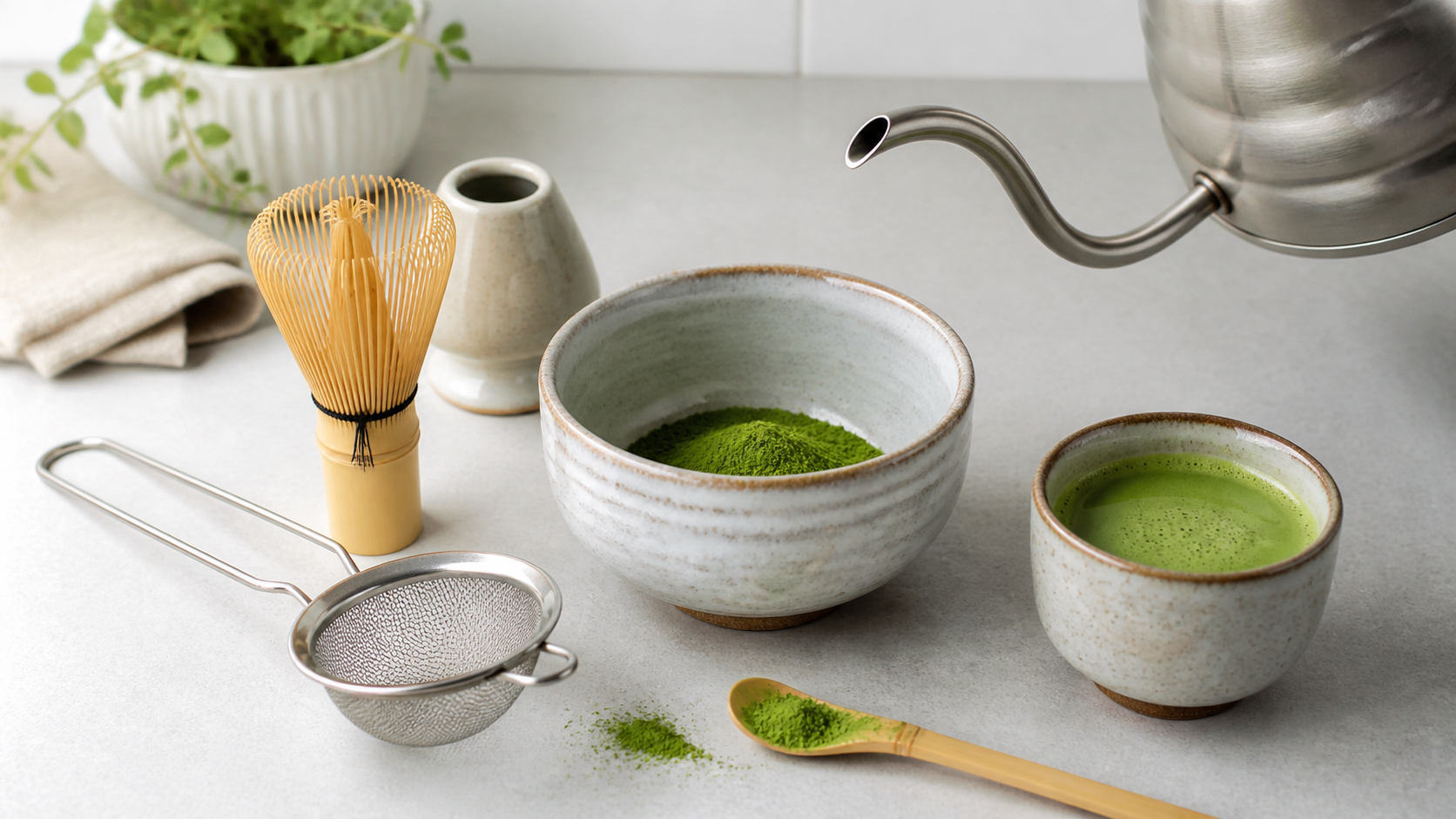
The basic hot matcha method
- Warm the bowl or cup, then discard the warming water.
- Sift 1–2 grams of matcha, roughly ½ to 1 teaspoon depending on density and taste.
- Add 20–30 ml hot water below boiling and stir or whisk into a paste. This step prevents dry clumps.
- Add more hot water, usually 60–120 ml total for a tea-style cup.
- Whisk briskly in a back-and-forth motion until the powder is dispersed and a light foam forms.
- Drink soon. Matcha settles because the leaf powder is suspended in water, not dissolved like instant coffee.
Hot matcha ratios
| Style | Matcha | Total hot water | Best use |
|---|---|---|---|
| Light hot matcha | 1 g | 100–140 ml | Gentler taste, lower intensity, beginner cup |
| Standard hot matcha | 1.5–2 g | 70–120 ml | Balanced straight tea |
| Matcha shot | 2 g | 25–40 ml | Concentrated base for latte or quick drink |
| Latte base | 2–3 g | 30–60 ml | Strong enough to stand up to milk |
Water temperature matters
Do not pour hard-boiling water straight onto the powder if you want a smoother cup. Very high heat can make bitterness and a cooked-green note more obvious, especially with lower-grade or older powder. Aim for water that is hot enough to disperse the powder and make a warm drink, but not so aggressive that it punishes the flavor.
If you do not have a thermometer, boil water, then let it stand briefly before using it. The exact wait depends on kettle, room and cup temperature, so use taste as the final judge. If your cup tastes harsh, try slightly cooler water before blaming the matcha.
How to make a matcha shot
A matcha shot is concentrated matcha used like an espresso-style base. It is not pulled under pressure. Sift 2 grams matcha, add 25–40 ml hot water, and whisk until smooth. Use it immediately in hot milk, iced milk, smoothies or baking liquids. If you are making a latte, Sailtik’s separate hot and iced matcha latte guide covers milk ratios and café-scale batching.
No whisk? Use these alternatives
- Jar method: add sifted matcha and a small amount of hot water to a sealed jar, shake hard, then open carefully because heat can create pressure.
- Milk frother: use a handheld frother after making a paste. Keep the head submerged to avoid splashing.
- Small kitchen whisk: works if the cup is wide enough, but it may not foam as finely as a bamboo chasen.
- Hotel-room method: mix matcha with a little room-temperature water first, then add hot water from the kettle. This reduces clumps when tools are limited.
Troubleshooting hot matcha
| Problem | Likely cause | Fix |
|---|---|---|
| Clumps | Powder was not sifted or too much water was added first. | Sift and start with a paste. |
| Harsh bitterness | Water too hot, too much powder, old powder or unsuitable grade. | Lower temperature, reduce dose, or use fresher matcha. |
| Weak flavor | Too much water for the dose. | Use less water or increase powder slightly. |
| No foam | Slow stirring, narrow cup, old powder or too much water in the first whisk. | Use a bowl, whisk faster, and start concentrated. |
| Settling | Normal suspension of leaf powder. | Drink soon or swirl before sipping. |
What hot matcha is, and is not
Matcha is powdered tea leaf; the Japan Matcha Association describes matcha as powdered tencha. That means hot matcha is not brewed like loose-leaf tea and strained away. You drink the suspended leaf powder. For the ingredient boundary, see Sailtik’s page on what matcha is made of. For broader uses beyond hot tea, see how to use matcha powder.
Bottom line
Good hot matcha is mostly technique: sift the powder, start with a small amount of below-boiling water, whisk fast, then dilute to the strength you want. If the cup tastes harsh, adjust temperature, dose and freshness before adding sugar or milk. For flavor expectations, Sailtik’s matcha taste and quality guide can help separate normal bitterness from stale or low-quality powder.
Sources checked
- Japan Matcha Association matcha definition page.
- Sailtik internal guides on matcha composition, latte preparation, matcha use and taste troubleshooting.
FAQ
Can you make matcha hot?
Yes. Hot matcha is one of the standard ways to drink it. Use water cooler than a rolling boil and whisk the powder into suspension.
How much matcha should I use for one hot cup?
Start with 1–2 grams. Use 1 gram for a lighter cup, 1.5–2 grams for a standard bowl, and about 2 grams in less water for a matcha shot.
Do you brew matcha like tea bags?
No. Tea bags are steeped and removed. Matcha powder remains in the cup, so you whisk or shake it into the water and drink the suspended tea leaf.
Can I make hot matcha without a bamboo whisk?
Yes. A handheld frother, small kitchen whisk or sealed jar can work. Sifting and making a paste first matter more than the exact tool.