
To make smooth matcha ice cream, sift and bloom the matcha first, then whisk it into a chilled dairy base before churning. Do not dump dry matcha straight into cold cream; it will clump, leave specks and taste harsher than it should. The recipe below is a simple no-egg home version for an ice cream maker.
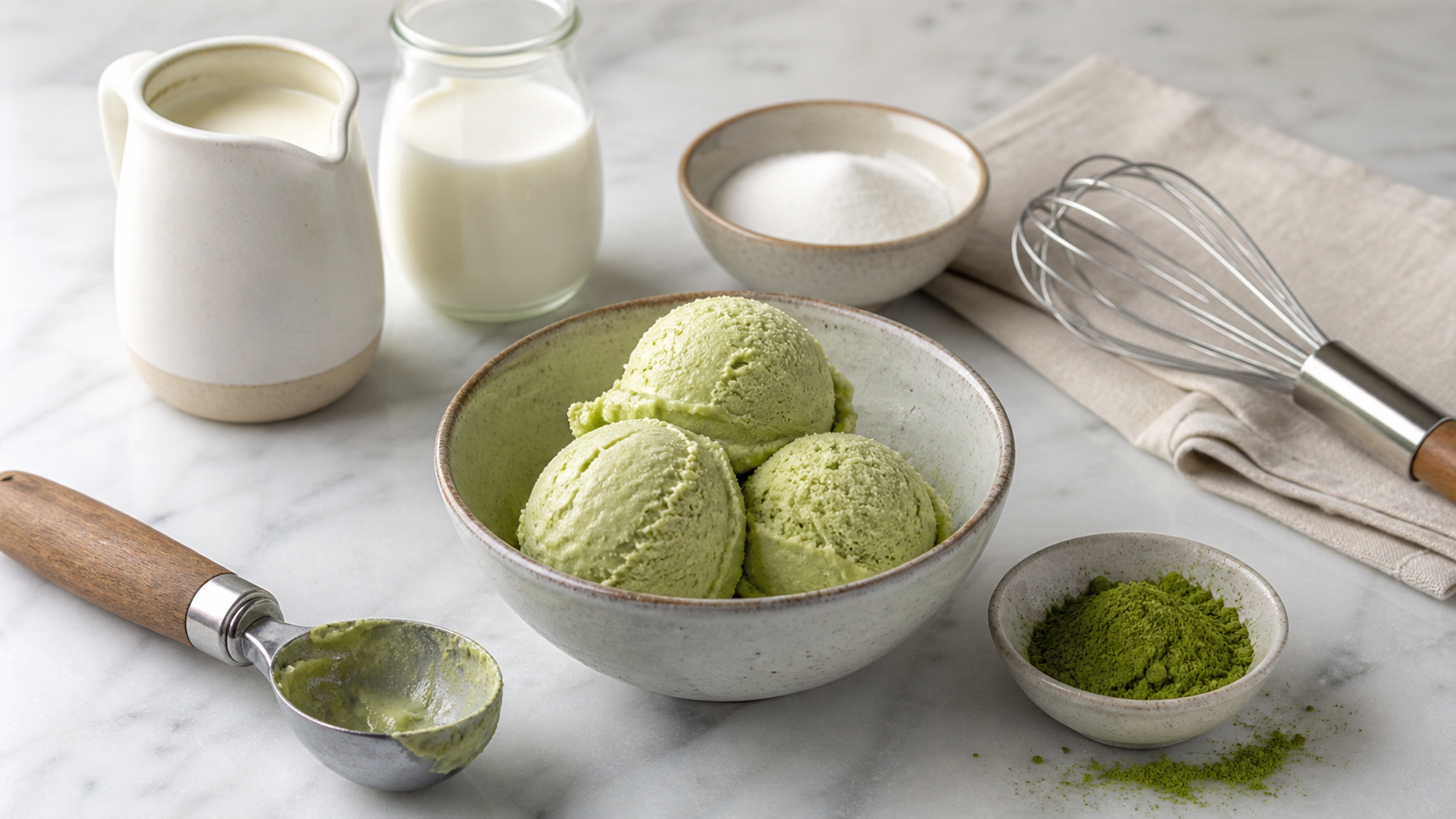
Ingredients for about 1 quart
- 2 cups heavy cream
- 1 cup whole milk
- 120–150 g sugar, adjusted for taste
- 8–12 g matcha powder
- 45 ml warm water, about 70–80°C / 158–176°F
- 1 small pinch fine salt
- Optional: 1 teaspoon vanilla, used lightly so it does not cover the tea flavor
Method
- Put the ice cream maker bowl in the freezer according to the machine directions.
- Sift the matcha into a small bowl. Add the warm water gradually and whisk into a smooth paste. This is the most important anti-clump step.
- In a saucepan or mixing bowl, combine the milk, sugar and salt. Warm gently only until the sugar dissolves; do not boil.
- Whisk the matcha paste into the sweetened milk until fully dispersed.
- Add the cream and optional vanilla. Taste the cold base after chilling, not only while warm.
- Cover and chill the base until very cold, ideally at least 4 hours or overnight.
- Churn in an ice cream maker until thick and soft-serve-like.
- Pack into a freezer-safe container, press parchment or film against the surface, and freeze until scoopable.
How much matcha should you use?
Use 8 g for a mild green-tea ice cream, 10 g for a balanced matcha flavor, and 12 g for a stronger, more intense version. More is not always better. Freezing mutes aroma and sweetness, but too much matcha can become drying, bitter or powdery. If you want a stronger result, increase by 1–2 g on the next batch rather than doubling the powder.
Why the bloom step matters
Matcha does not dissolve like sugar. It is finely ground tea leaf suspended in liquid. Warm water helps disperse the particles before fat and cold temperature make clumps harder to break. This is the same reason many good matcha drinks start with a small smooth concentrate before adding milk or ice.
How to make it taste more authentic
“Authentic” does not mean one global recipe. For a more tea-forward Japanese-style profile, keep vanilla low, avoid strong mix-ins, use a plain matcha powder, and let the tea flavor lead. Balance bitterness with sugar and dairy instead of covering it with caramel, chocolate or fruit. A muted pale green can still taste good; an unnaturally neon color is not required.
Troubleshooting
| Problem | Likely cause | Fix next time |
|---|---|---|
| Speckled or gritty texture | Dry matcha added directly to cold dairy or not sifted. | Sift first and make a warm paste before adding cream. |
| Weak matcha flavor | Too little powder, too much vanilla or a recipe that tastes strong warm but fades frozen. | Increase matcha by 1–2 g and reduce competing flavors. |
| Bitter finish | Too much matcha, harsh powder or insufficient sugar/fat balance. | Use less matcha, choose a smoother powder or raise sugar slightly. |
| Icy texture | Base not cold enough, low fat, too much water or slow freezing. | Chill thoroughly and keep the recipe’s cream-to-milk balance. |
| Dull color | Older powder, oxidation, heat, light exposure or recipe dilution. | Use fresher powder and store it tightly closed away from heat, light and moisture. |
Texture notes that matter more than extra matcha
A smooth texture comes from dispersion, chilling and freezing speed. Sifting removes dry lumps before they reach the dairy. Blooming turns the powder into a paste the base can carry evenly. Chilling gives the fat, sugar and liquid time to settle into a colder starting point, so the churn freezes smaller ice crystals. If the base enters the churn warm, the machine spends too much time cooling instead of freezing, and the finished ice cream can taste flatter even when the matcha amount is correct.
Serving temperature also changes the flavor. Matcha ice cream straight from a very cold freezer can taste muted and hard. Let the container sit briefly until a spoon can enter without force. That short tempering period makes the tea aroma easier to notice and reduces the temptation to add unnecessary sugar or powder in the next batch.
Scope of this recipe
This page covers a churned homemade ice cream base. Appliance-specific frozen dessert methods, no-churn formulas, dairy-free formulas and game-related instructions are separate intents because the process, ingredients and expected result are different. For commercial product development, use the matcha ice cream and gelato test guide rather than scaling this home recipe blindly.
Caffeine and storage notes
Matcha ice cream still contains caffeine from matcha. The amount depends on how much powder is used and how many servings the batch is divided into. See does matcha ice cream have caffeine? for the label-based answer. For best flavor, freeze the ice cream tightly covered and eat it while the tea aroma is still fresh.
Related guides
For general matcha applications, read how to use matcha powder. To fix bitterness and clumps in drinks before using matcha in desserts, see how to make matcha taste good. For color expectations, see why matcha is green.
FAQ
How do you make matcha ice cream easy?
Use a no-egg base, bloom sifted matcha in warm water, chill the dairy base fully and churn. The bloom step prevents most clumping problems.
Can I use green tea powder instead of matcha?
You can make green-tea ice cream with another powdered tea, but it may be coarser, more bitter or less vivid. If you want matcha ice cream, use plain matcha powder.
How do I make intense matcha ice cream?
Use 10–12 g matcha per quart as a starting range, keep vanilla low and taste after the base is chilled. Increase gradually because too much powder can turn bitter and dry.