
Matcha powder is most often shelved with tea and coffee, but that is not the only place to look. Depending on the store, it may sit with baking ingredients, natural foods, smoothie powders, Japanese or Asian groceries, café drink mixes, or sometimes supplements. If you only scan one tea shelf and leave, you may miss it by ten steps.
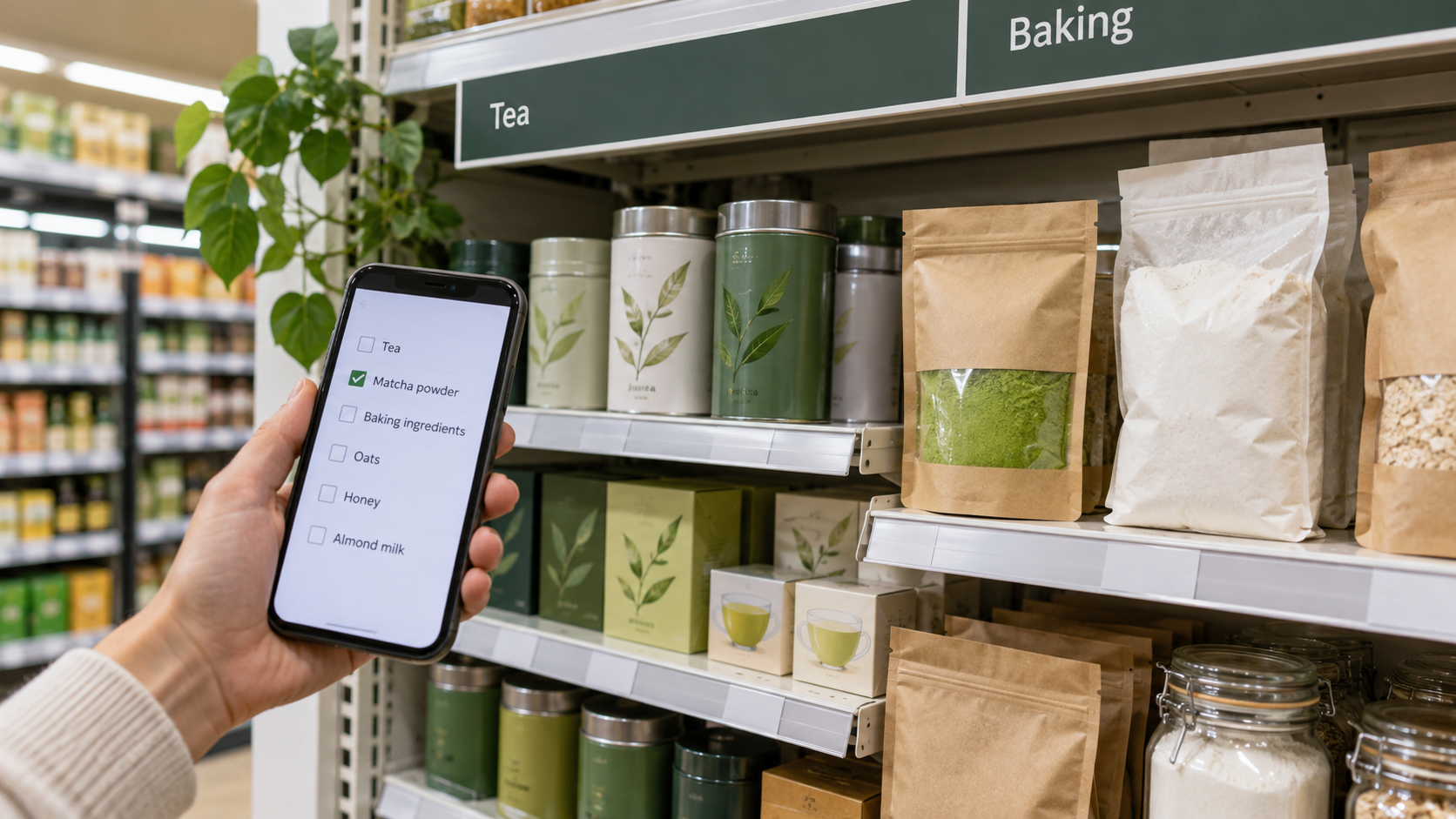
The frustrating part is that stores do not all think about matcha the same way. One buyer treats it as tea. Another treats it as a latte ingredient. A third shelves it beside baking powders because shoppers use it for cakes and cookies. That is why a good search plan works better than asking, “What aisle is matcha in?” as if every supermarket has the same map.
Check these places first
| Store area | Why matcha may be there | What to look for |
|---|---|---|
| Tea and coffee | Plain matcha is a tea powder. | Tins, small pouches, Japanese green tea, latte powder. |
| Baking aisle | Some shoppers buy it for cakes, cookies and frostings. | Small green-tea powder bags beside cocoa, extracts or specialty flours. |
| Natural or organic section | Stores often group matcha with wellness drinks and smoothie add-ins. | Organic green tea powder, superfood-style pouches, drink powders. |
| International or Asian foods | Japanese and broader Asian grocery sections may stock tea powders. | Japanese green tea, matcha, sencha, hojicha and dessert ingredients. |
| Refrigerated café drink area | Prepared matcha products may be chilled, not powdered. | Bottled lattes or mixed drinks, not loose powder. |
| Supplement aisle | Some blends are sold as nutrition powders. | Read the ingredient list; many are not plain matcha. |
If you want plain powder, do not stop at the first green package. Matcha should be a powdered tea ingredient, not just a green-colored latte mix. Sailtik’s what-is-matcha guide explains the basic identity check.
Use the store app before walking every aisle
Most large grocery chains now have app or website search, and it is usually faster than guessing. Search more than one phrase: “matcha,” “matcha powder,” “green tea powder,” “Japanese green tea,” and “matcha latte.” If the store has aisle numbers online, take the result seriously, but still check nearby shelves. Small specialty products often sit one bay away from the exact category shown in the app.
For store-specific searches, such as Wegmans, Skyfoods, or a New Zealand supermarket, do not assume another shopper’s answer is current. Inventory, aisle numbering and product names change by location. The safer move is to search that exact store branch or ask staff for “matcha powder or powdered Japanese green tea,” not just “matcha.”
Why “matcha latte mix” is not always what you want
A latte mix can be useful, but it is not the same purchase as plain matcha powder. Mixes may include sugar, milk powder, flavors, thickeners or other tea powders. That is fine if you want a quick sweet drink. It is not ideal if you are testing bitterness, color, grade, caffeine or recipe control.
For plain powder, the ingredient list should be short. If the front says ceremonial, premium or Japanese-style, still read the back. Sailtik’s ceremonial-grade label guide explains why a nice word on the front does not prove quality by itself.
What if the store only has tea bags?
Tea bags are not the same as matcha powder. A bag usually makes a brewed infusion; powder is mixed directly into the drink as fine suspended leaf. If your recipe calls for matcha powder, a bag will not behave the same way in foam, frosting, cookie dough or a latte base.
If tea bags are the only option, buy them for brewed green tea, not for a recipe that needs powder. For the form comparison, use Sailtik’s matcha tea bags versus powder guide.
How to ask staff without getting the wrong product
A simple question works best: “Do you carry plain matcha powder, the powdered green tea for whisking?” That phrase separates it from bottled drinks, flavored latte mixes and ordinary tea bags. If you need it for baking, add that detail. Staff may remember the baking or natural-food shelf faster than the tea aisle.
For cafés, wholesale buyers or people who need repeat supply, a grocery aisle is usually the wrong sourcing plan. Sailtik’s local, online and wholesale buying guide is a better starting point when consistency matters.
Quick buying checks before you leave the aisle
- Look for a sealed tin or pouch, not a damaged paper box.
- Check whether it is plain powder or a sweetened mix.
- Look for origin, storage advice and a best-by date.
- Avoid dull brown-green powder if the package has a clear window and looks faded.
- For recipes, buy powder rather than bags or bottled lattes.
- If the store has only one expensive tiny tin, compare online options before buying in bulk.
Bottom line
Begin with tea and coffee, then widen the search to baking, natural foods, Asian groceries and drink-powder shelves. Use the store app with several search terms, and read the ingredient list before buying. Matcha powder is easy to mis-shelve because shoppers use it like tea, a café ingredient and a baking color all at once.
Sources checked
- Sailtik: local, online and wholesale matcha buying guide
- Sailtik: Japanese matcha buying channels
- Sailtik: what matcha is
- Sailtik: ceremonial-grade label limits
- Sailtik: blue matcha powder label check
FAQ
Where should I look for matcha powder first?
Start where the store keeps tea. If that fails, try baking ingredients, the natural-food section, Asian groceries and smoothie or drink-powder shelves.
Is matcha powder in the baking aisle?
Sometimes. Stores that sell matcha for cakes, cookies or dessert coloring may place it near cocoa, extracts or specialty baking supplies.
Where is matcha powder at Wegmans or Skyfoods?
Use the specific store app, website or staff desk because aisle numbers and stock vary by branch. Search both “matcha powder” and “green tea powder.”
Is matcha powder at the supermarket the same as café matcha?
Not always. Supermarkets may sell plain powder, sweetened latte mix, bags or bottled drinks. The ingredient list tells you which one you found.