
Blue matcha powder is usually not matcha. In most listings, “blue matcha” means ground butterfly pea flower or another blue botanical ingredient that can be whisked into drinks. Real matcha is finely ground tea leaf powder. If the ingredient list does not say green tea, tencha or Camellia sinensis, you should treat the blue powder as a separate ingredient, not as a blue version of Japanese matcha.
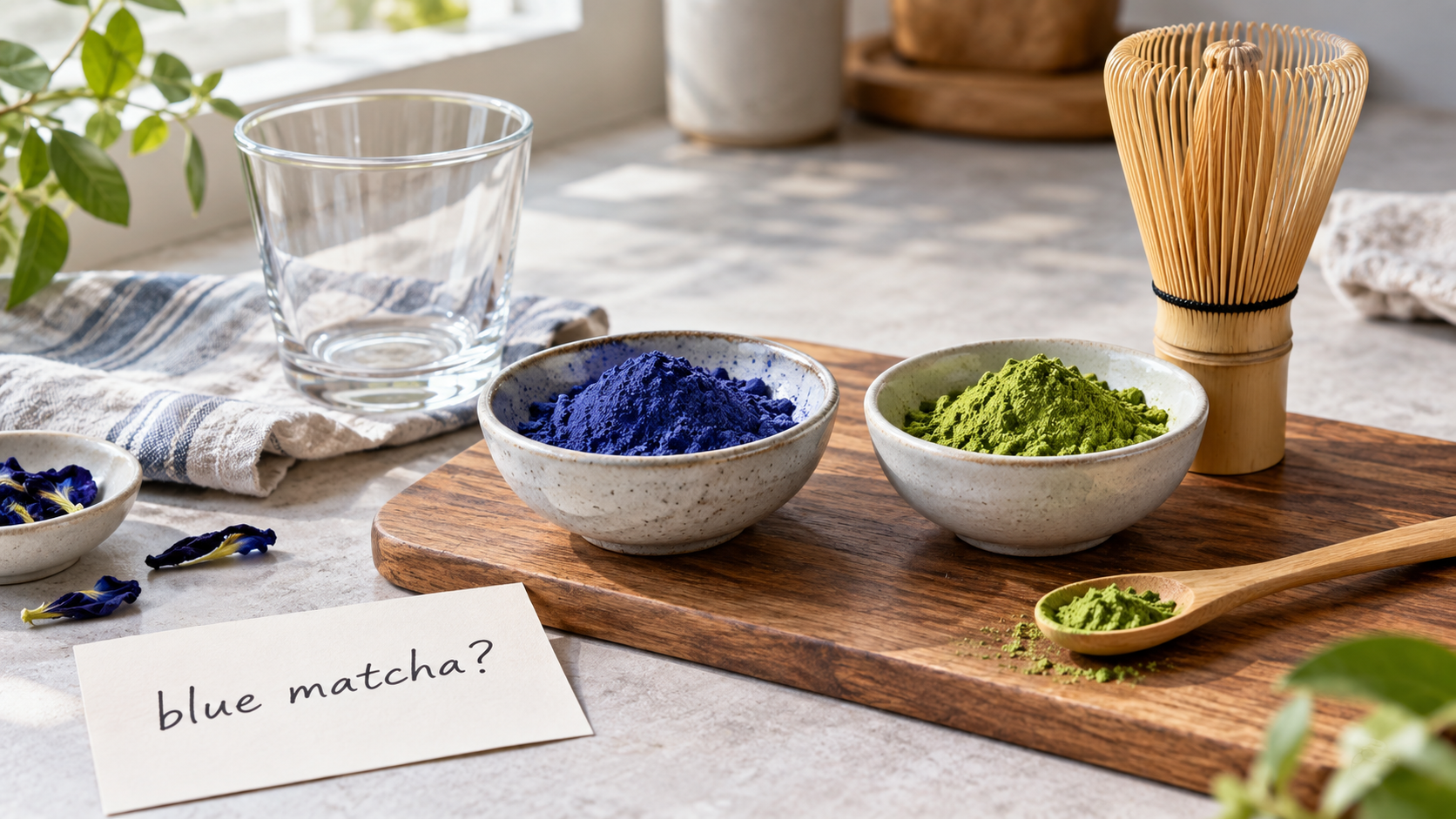
That distinction sounds picky until you are the person buying it. A blue latte, a blue smoothie bowl and a bowl of whisked green matcha may all look like café powders, but they do not have the same plant source, taste, caffeine, color behavior or quality markers. The word “matcha” is doing a lot of marketing work here.
The quick label test
| What the label says | What it probably means | How to use it |
|---|---|---|
| Butterfly pea flower powder | A blue botanical powder, often sold for color and lattes. | Use for blue drinks, desserts and color-changing recipes. |
| Butterfly pea flower extract | A more concentrated color ingredient or formulated food color. | Check food-use directions and local rules before using commercially. |
| Blue spirulina | A blue algae-derived ingredient, not matcha. | Common in smoothies and bright blue drinks. |
| Green tea, tencha or matcha | Actual tea-leaf powder. | Expect green color, tea flavor and caffeine. |
| “Blue matcha” with no ingredient list | A marketing name with missing proof. | Do not buy it for tea quality, caffeine expectations or origin claims. |
The plainest rule is this: color names are not ingredients. “Blue matcha” is only useful as a search phrase. The ingredient panel tells you what you are actually drinking.
Why is it called matcha if it is not matcha?
Usually because the powder is prepared like matcha. You can sift it, whisk it, blend it with milk, pour it over ice or use it in bakery recipes. That café behavior makes sellers reach for the word “matcha,” even when the plant is different.
Real matcha has a narrower meaning. Sailtik’s matcha definition guide explains that matcha is tea leaf powder, not a general word for any colorful powder. Sailtik’s origin guide also explains why production context matters. A blue powder can be useful and pretty without being matcha.
What does blue matcha taste like?
Butterfly pea flower powder is usually mild, earthy and floral rather than grassy or umami-rich. It does not taste like green tea matcha. In a latte, most of the flavor often comes from milk, sweetener, vanilla, coconut, citrus or fruit. That is why some people like it as a color ingredient even if they do not want the stronger taste of matcha.
If you are testing it at home, start smaller than the recipe says. A vivid blue color can arrive before the flavor is balanced. Too much powder may taste dusty or plant-like, especially in water.
Does blue matcha have caffeine?
Plain butterfly pea powder is not green tea matcha, so you should not assume it has matcha-like caffeine. But blended products can be different. Some “blue matcha latte” mixes include sugar, milk powder, tea, adaptogens, flavoring or other botanicals.
For caffeine, do not rely on the front label. Check the ingredient list and nutrition panel. If it contains green tea, black tea, yerba mate, guarana or added caffeine, then the drink is no longer a simple caffeine-free blue botanical powder.
The color can change in acidic drinks
One practical reason people buy butterfly pea powder is color play. Add lemon, lime or another acidic ingredient and the blue may move toward purple or pink. That is fun for drinks, but it can surprise people who expected a stable blue latte.
Milk, ice, syrup, heat, pH and the amount of powder all affect the final color. For cafés or content creators, test the actual recipe before promising a shade. A drink that looks electric blue in one photo may look gray-blue or lavender under different lighting.
Is butterfly pea flower allowed in food?
In the United States, the FDA Color Additives Inventory lists butterfly pea flower extract as a color additive that is permanently listed and exempt from certification, with specified food categories such as teas, flavored waters, fruit drinks, dairy and non-dairy drinks, frozen desserts, yogurt fruit preparations, cereals and snacks. That is a color-additive point, not a free pass for every “blue matcha” product or every health claim attached to it.
If you are buying for personal drinks, this mainly tells you to separate color use from wellness marketing. If you are using it commercially, check the exact ingredient form, supplier documentation, permitted use and your local rules. A retail powder, an extract, a latte mix and a supplement-style product are not automatically the same regulatory situation.
When blue matcha is a good buy
- You want a naturally blue color for drinks or desserts.
- You do not want the grassy flavor of green tea matcha.
- You understand it is not a substitute for Japanese matcha.
- The seller shows a clear ingredient list, origin, storage advice and use directions.
- You are comfortable testing color and flavor before serving it to others.
When to skip it
- The front label says “matcha,” but the ingredients are vague.
- The product implies Japanese tea quality without tea-leaf ingredients.
- You want caffeine, umami, foam behavior or bitterness similar to real matcha.
- The seller leans heavily on detox, weight-loss or cure-style claims.
- You need a predictable blue color for a paid menu item but have not tested pH and lighting.
How it differs from golden matcha and MCT matcha
Blue matcha sits in the same label-confusion family as golden matcha powder and MCT matcha powder. The front name sounds close to matcha, but the ingredient list may tell a different story. Golden matcha may mean turmeric, a blend or a brand phrase. MCT matcha may be tea plus fat powder. Blue matcha usually points to butterfly pea or another blue ingredient.
The useful habit is the same across all of them: read the first three ingredients before you read the claims. If tea is not there, it is not a tea-quality purchase.
Bottom line
Blue matcha can be useful, especially for colorful lattes and desserts, but the honest name is often butterfly pea powder. Buy it for color, mild flavor and recipe effects. Do not buy it expecting true matcha taste, caffeine, Japanese tea origin or ceremonial-grade quality unless the ingredient list actually supports those claims.
Sources checked
- FDA Color Additives Inventory: butterfly pea flower extract
- Sailtik: what matcha is
- Sailtik: where matcha comes from
- Sailtik: golden matcha naming guide
- Sailtik: MCT matcha ingredient guide
- Sailtik: ceremonial-grade label limits
FAQ
Is blue matcha real matcha?
Usually no. Most products using that name are made from blue botanicals rather than tea leaves. Real matcha is powdered tea leaf.
Can I make a latte with blue matcha powder?
Yes, if the product is sold for food use. Treat it as a blue latte ingredient, not as a green tea matcha substitute. Test the powder amount because color can become strong before the flavor tastes balanced.
Is blue matcha the same as blue spirulina?
No. Both can be blue powders, but they are different ingredients. Check whether the label says butterfly pea flower, spirulina, algae extract or a blend.
Does blue matcha turn purple?
Butterfly pea powder can turn lavender, violet or pink when the recipe becomes more acidic. Milk, pH and lighting can also change how the color looks.