
Yes. Conventional matcha powder naturally contains caffeine because it is made from green tea leaf. The amount is not fixed across every powder: it depends on the tea material and on how many grams are used in the finished drink or food.
One published analysis found caffeine at 1.72%–4.41% of dry weight across its matcha samples. Those results belong to that defined sample set; they are not a universal specification for every powder or an untested Sailtik lot.
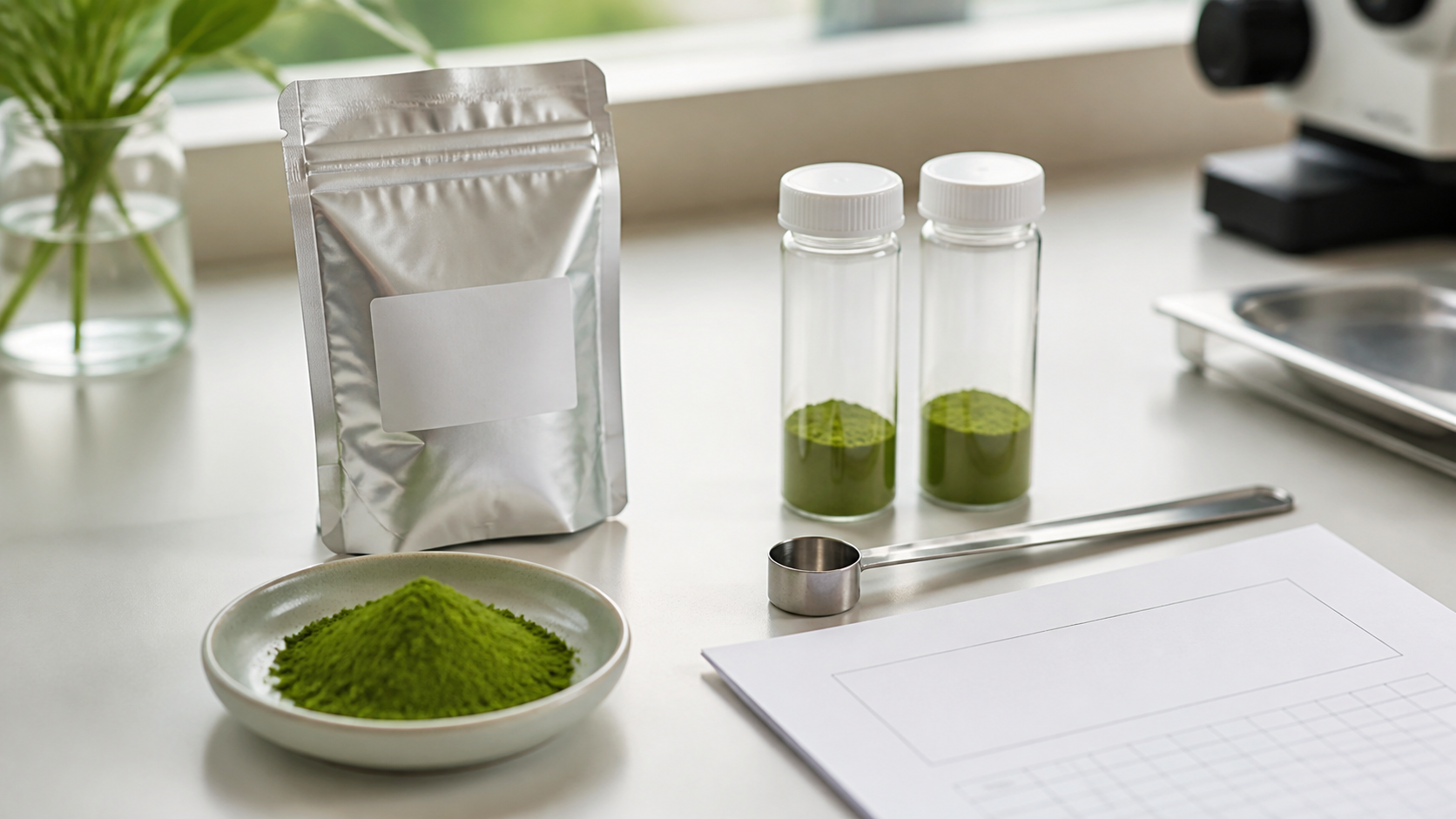
Caffeine is part of the tea powder
Matcha is not an herbal powder with caffeine added later. Tea plants naturally produce caffeine, and matcha preparation keeps the finely milled leaf in the drink. Milk, water and ice make each sip less concentrated without changing what the weighed tea dose contributed.
This differs from steeped leaf tea, where the leaf is removed after extraction. With plain matcha, the powder is dispersed and consumed. For that reason, the powder mass is the most useful starting point for estimating a serving.
How much caffeine can matcha powder contain?
A 2023 regional matcha analysis measured a low of 1.72% and a high of 4.41% caffeine among the products examined. Expressed per gram, those endpoints are 17.2 and 44.1 mg. A separate food study measured 2.35% caffeine in the particular matcha powder used in that experiment.
These figures demonstrate presence and natural variation; they are not label values, guarantees or recommended intake. If a supplier provides an analytical value for the identified product and lot, that evidence is more relevant than a literature range.
Pure matcha, blends and latte mixes are different
| Product wording | What one gram may represent | What to check |
|---|---|---|
| 100% matcha powder | One gram of milled tea leaf | Product or lot caffeine data, if available |
| Sweetened matcha mix | Matcha plus sugar or other carriers | Ingredient order and actual matcha percentage |
| Matcha latte powder | May include milk solids, flavors or sweeteners | Full ingredient statement and serving instructions |
| “Green powder” beverage | May not be matcha at all | Botanical and product identity |
A blended powder can contain less matcha per gram than pure tea powder. Therefore, applying a pure-matcha mg/g estimate to the total weight of a latte mix can overstate caffeine. Conversely, espresso or another caffeine source added to the drink must be counted separately.
Does grade tell you the caffeine level?
No grade name provides an exact caffeine specification. “Ceremonial,” “premium,” “café” and “culinary” are used differently across suppliers. Color, bitterness, origin and price also cannot replace analytical data.
A buyer who needs a maximum, minimum or label claim should define the requirement in measurable units and confirm that the test sample, lot and method match the commercial product. A number copied from a study or competing brand cannot validate another powder.
How to estimate caffeine in a drink
- Read the ingredient statement to distinguish pure tea from a formulated mix.
- Measure the tea portion in grams for one finished serving.
- Locate a relevant caffeine concentration reported on a per-gram basis.
- Multiply the measured mass by that concentration.
- Include espresso, coffee, chocolate or any other caffeinated component.
- Call the result an estimate unless suitable product-specific evidence supports more precision.
For serving-specific calculations, use the dedicated caffeine-per-cup table or the teaspoon guide. The broader matcha and coffee comparison addresses beverage categories rather than just powder identity.
Caffeine sensitivity still matters
The FDA notes wide variation in how people respond to caffeine and provides general consumer guidance rather than an individual target. Review the FDA caffeine overview, count all dietary sources and seek individualized advice when pregnancy, medication, a medical condition or unusual sensitivity is relevant.
Frequently asked questions
Does all ordinary matcha powder contain caffeine?
Conventional matcha made from tea leaf naturally contains caffeine. A product sold as decaffeinated requires separate processing and should be evaluated from its own specification rather than assumed equivalent.
Does adding milk lower the caffeine?
Milk changes dilution and flavor but does not remove the caffeine supplied by the matcha dose.
Does Sailtik publish one caffeine number for every grade?
No. No product-specific Sailtik caffeine value has been confirmed for publication here, and the educational range must not be treated as a Sailtik specification.
For café and product buyers
Sailtik selects samples around the buyer’s intended beverage and sensory target; recipe development must remain separate from any analytical caffeine specification. Contact Carol with the application, serving size and documentation requirement so those two questions can be handled independently.