
To make matcha foam, first decide which foam you mean: plain matcha surface froth, milk microfoam for a latte, cold foam topping, cream foam or cheese foam. They use different ratios and tools, so one generic “foam matcha” recipe often gives the wrong texture.
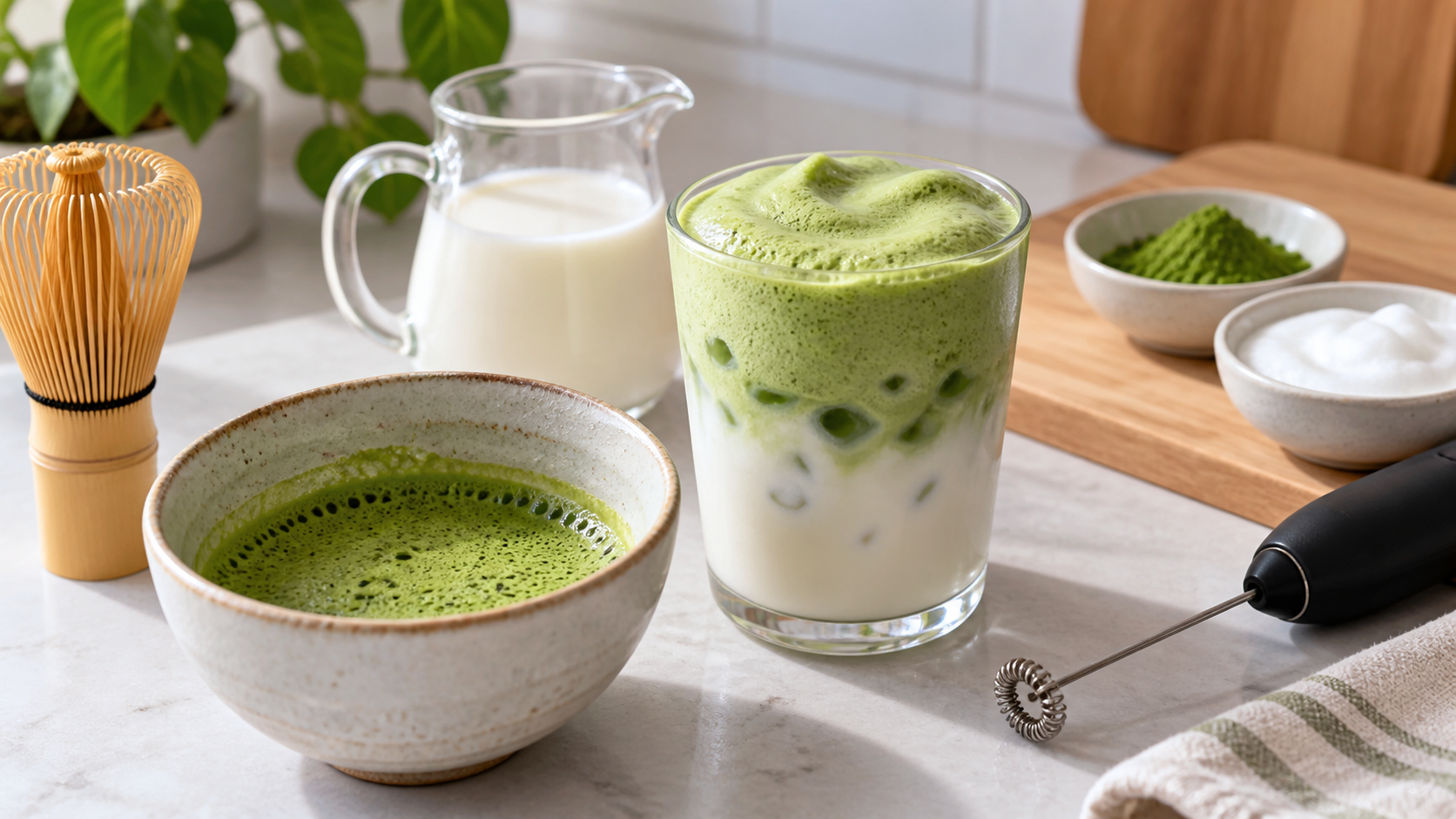
Choose the foam type first
| Foam term | What it usually means | Best starting method |
|---|---|---|
| Foamy matcha | A thin layer of bubbles on straight matcha tea. | Whisk a 1.5–2 g serving with 60–80 ml warm water. |
| Matcha latte foam | Milk foam over a matcha latte. | Make matcha concentrate, then add steamed or frothed milk. |
| Matcha cold foam | A chilled dairy topping poured over an iced drink. | Blend matcha paste into cold milk, cream and syrup. |
| Matcha cream foam | A richer cold topping, close to soft whipped cream. | Use more cream and stop before stiff peaks. |
| Matcha cheese foam | A creamy salted topping with a cream-cheese base or cheese powder. | Make a dairy base first, then add a small amount of matcha paste. |
Method 1: foamy straight matcha
This is the traditional-looking surface froth on matcha with water. Sift 1.5–2 g matcha into a bowl, add 60–80 ml water around 70–80°C, then whisk briskly in a zigzag motion until the surface has fine bubbles. It should be a suspended tea, not a dairy foam cap.
If the surface is flat, the likely causes are too little water movement, old or coarse powder, a bowl that is too narrow, or water that is too cool to help disperse clumps. Sailtik’s basic matcha recipe gives the controlled starting ratio.
Method 2: matcha latte microfoam
For latte foam, do not try to foam matcha powder by itself. Make a smooth matcha concentrate first, then pour in steamed milk or cold frothed milk. A hot latte needs milk that is aerated enough for a soft cap but not so stiff that it sits like whipped topping.
For an iced latte, foam is less stable because the drink is cold and diluted by ice. Use Sailtik’s hot and iced matcha latte guide for the base ratio, then adjust the milk texture separately.
Method 3: matcha cold foam topping
For cold foam, make a paste from 1–1.5 g matcha and 10–15 ml warm water. Blend that with 30 ml cold milk, 30 ml heavy cream and 5–10 ml syrup. Froth in a tall narrow cup until it mounds softly, then spoon it over an iced drink.
This is the better path for “cloud foam” or café-style iced toppings. For a fuller formula, use Sailtik’s matcha cold foam recipe, which also covers no-heavy-cream variants and custom order cautions.
Method 4: cream foam and cheese foam
Matcha cream foam is richer than cold foam. Start with 45 ml heavy cream, 15 ml milk, 5–10 ml syrup and 1 g matcha paste. Froth briefly; stop while the texture is pourable. If it turns stiff, it becomes whipped cream and will not drink like cold foam.
For cheese foam, blend 20–30 g softened cream cheese with 30 ml milk, 30 ml cream, syrup to taste and a pinch of salt. Add 0.5–1 g matcha paste only after the dairy base is smooth. This is a dessert topping, not a traditional matcha preparation.
No frother or no heavy cream
- No frother: use a small blender, sealed cold shaker or jar. The texture will usually be looser.
- No heavy cream: use cold milk or barista-style oat milk and serve quickly; it will sink faster.
- No whisk: use the paste method from Sailtik’s no-whisk matcha guide before adding dairy.
- No syrup: expect more bitterness and less café-style body.
Why matcha foam fails
| Problem | Likely cause | Fix |
|---|---|---|
| Speckled green foam | Dry powder hit cold dairy directly. | Make a warm paste first. |
| Bitter cap | Too much powder in a small foam portion. | Reduce matcha before adding more sugar. |
| Foam sinks | Not enough fat or protein, or dairy was warm. | Chill the base and add some cream. |
| Large unstable bubbles | Over-frothed or too much air. | Use shorter bursts and a narrower cup. |
| Flat matcha tea | Poor dispersion or weak whisking motion. | Sift, use correct water depth and whisk briskly. |
Taste and sweetness boundary
Foam concentrates flavor in a small volume. A matcha dose that tastes balanced in a full latte may taste harsh in a topping. If the foam needs much more syrup than expected, check powder freshness, water temperature and the base drink. Sailtik’s taste-fixing guide can help separate bitterness, grassiness and weak flavor.
Also count sweetness by component. Plain matcha powder is not normally sweetened, but cream foam, cold foam and cheese foam often are. Sailtik’s sweetened matcha guide explains how sugar can enter through powders, syrups, milk and toppings.
Bottom line
There is no single best matcha foam recipe. For straight tea, whisk matcha and water. For lattes, foam the milk. For iced toppings, make matcha paste and froth it into cold dairy. For cheese foam, treat it as a dessert topping with a small matcha addition. Naming the foam type first prevents most recipe failures.
Sources checked
- Sailtik matcha cold foam recipe
- Sailtik matcha latte formula
- Sailtik basic matcha method
- Sailtik no-whisk matcha methods
- Sailtik matcha taste troubleshooting
- Sailtik sweetened matcha guide
FAQ
How do you make matcha foamy?
Sift the powder, use enough liquid depth, and whisk or froth with strong movement. For dairy foam, make matcha paste first and then aerate the milk or cream.
Can I make matcha foam without heavy cream?
Yes. Use milk or barista-style plant milk and serve it immediately. It will usually be lighter and less stable than a cream-based topping.
Is matcha cheese foam the same as cold foam?
No. Cheese foam uses a cheese-flavored dairy base and is richer, saltier and more dessert-like than ordinary cold foam.