
Matcha is not universally better hot or cold. Serve it warm when you want aroma, foam and a clear view of the powder’s balance. Serve it iced when you want a brisk, refreshing drink and are willing to manage dilution. With the same matcha dose, cold service does not remove the powder or its caffeine; it changes temperature, texture and how quickly the drink is diluted.
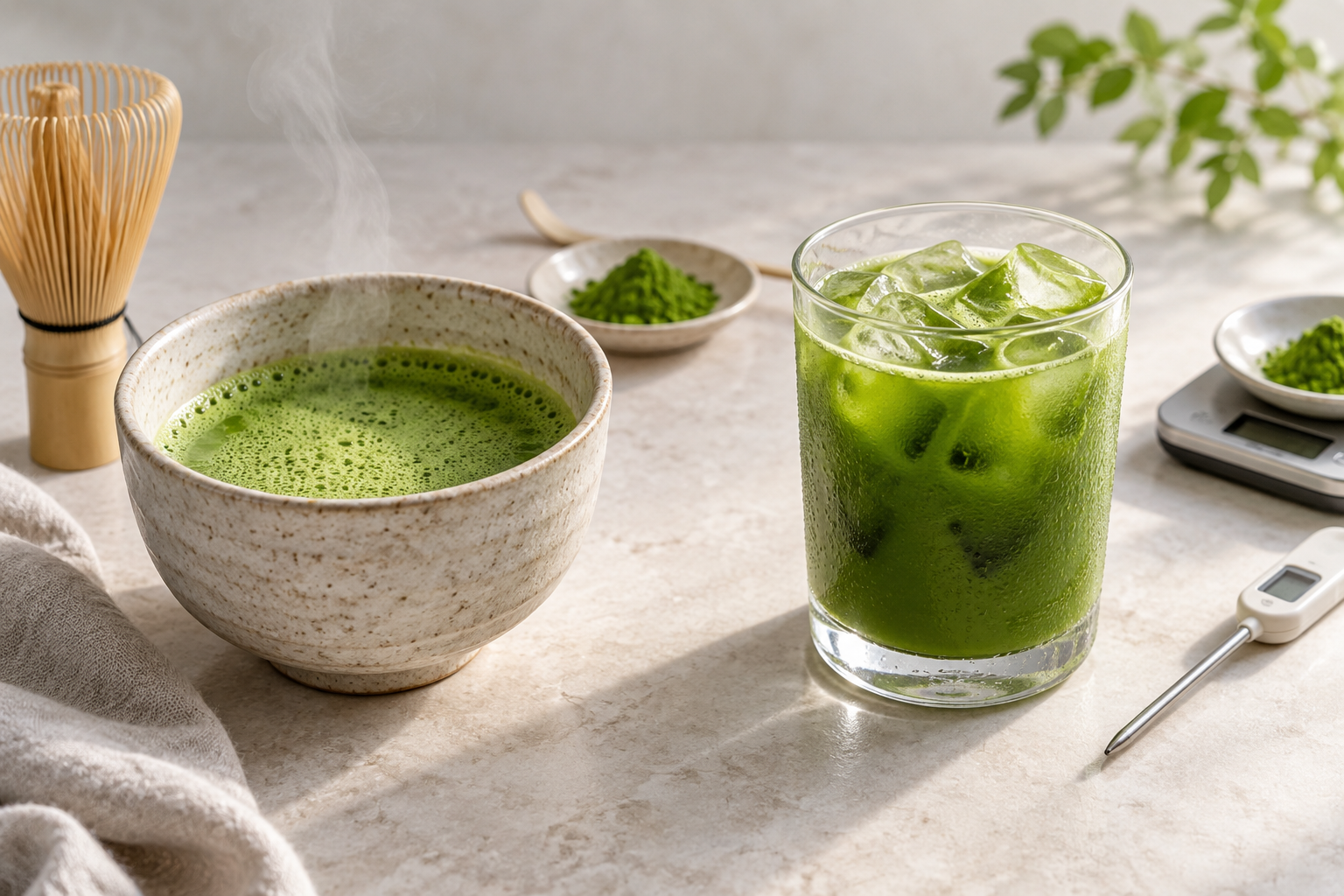
The useful difference is sensory, not a winner
| What changes | Warm matcha | Iced matcha |
|---|---|---|
| Aroma | Volatile aromas are usually easier to notice as you lift the bowl. | Cold can make aroma feel quieter, especially through a lid or straw. |
| Bitterness and astringency | They may be more obvious when the drink is plain and undiluted. | Cold and ice can make the drink feel crisper, but melting ice may thin both pleasant and unpleasant notes. |
| Texture | A fresh whisk can produce fine foam and a softer first sip. | Ice interrupts foam; shaking or vigorous mixing may create larger bubbles. |
| Consistency over time | The drink cools and the foam settles. | The drink warms while ice melts, so concentration changes as well as temperature. |
| Best use | Evaluating a powder, a quiet bowl, or a smaller plain serving. | Warm-weather drinking, travel cups, and milk drinks designed for ice. |
A controlled 2018 study of brewed green tea—not matcha—served samples at 5°C, 25°C and 65°C and found that temperature changed multiple reported sensory attributes and emotional responses. That supports a narrow conclusion: serving temperature can change perception. It does not prove that hot matcha is healthier, that everyone prefers it, or that brewed green tea results transfer perfectly to suspended whole-leaf powder.
Preparation temperature and serving temperature are different decisions
“Cold matcha” can mean at least three things: matcha whisked with cool water, matcha first dispersed in warm water and poured over ice, or a matcha latte served cold. Those methods do not produce the same texture.
A small warm-water concentrate is often the easiest way to smooth lumps before adding cold water or milk. The finished drink can still be iced. Conversely, using very hot water does not make a bowl more authentic by default; it can shift the sensory balance toward harsher notes and makes the drink uncomfortable to taste immediately. Our water-temperature and frothing guide treats water temperature as a preparation variable, not a quality slogan.
Ice is an ingredient, not empty space
The most common hot-versus-iced comparison is unfair because the iced drink receives extra water as the cubes melt. If you whisk the same dose into 70 ml of water, then add 100 g of ice, the concentration changes over the next several minutes. A hot bowl made with 70 ml does not.
For a stronger iced drink, decide the finished volume before you mix. Count the water already used to disperse the powder, the liquid that will come from melting ice, and any milk. Large clear cubes melt more slowly than small crushed ice, but no ice is dilution-free.
Try a fair A/B test at home
- Weigh two equal portions of the same matcha.
- Use the same total liquid and the same sweetener, if any.
- Prepare one warm and one iced. For the iced version, subtract expected ice melt from the initial water instead of simply adding ice to the warm recipe.
- Taste both from open cups rather than comparing a bowl with a lidded straw cup.
- Write down aroma, bitterness, astringency, body, foam and finish at the first sip and again after five minutes.
This simple test is more informative than asking strangers which format is “better.” It also reveals whether your preference is really about temperature, milk, sweetness, concentration or the drinking vessel.
When warm matcha is the better tool
Choose warm matcha when you are assessing a new tin, learning to whisk or trying to understand why a powder tastes flat, sharp or thin. An open bowl makes aroma and foam easier to observe. Warm service also removes ice dilution from the diagnosis. Use the step-by-step hot matcha method when you want a repeatable starting point.
When iced matcha earns its place
Choose iced matcha when refreshment matters more than examining every aroma note, or when the drink is designed around cold milk. It is also useful when you need a sealed travel cup. The trade-off is that you must mix thoroughly and account for ice. Our iced matcha method covers the mechanics without treating cold service as a different kind of powder.
What does not follow from temperature
- Hot matcha is not automatically higher quality.
- Iced matcha is not automatically weaker; recipe dilution makes it weaker.
- Cold service does not make a measured matcha dose caffeine-free.
- A smoother cold drink does not prove the powder contains less bitterness or astringency.
- A hot-versus-cold preference is not evidence that one format has superior health effects.
If the powder itself tastes unfamiliar, use the matcha flavor and quality guide before changing several recipe variables at once. Keep the dose, liquid and sweetener steady; then temperature becomes something you can actually compare.
Source note
The temperature study cited here is Pramudya and Seo, “Influences of Product Temperature on Emotional Responses to, and Sensory Attributes of, Coffee and Green Tea Beverages,” Frontiers in Psychology (2018), available through PubMed Central. It studied brewed green tea rather than matcha, so this article uses it only to support the general role of serving temperature in sensory perception.