
Matcha is popular because several forces overlap: Japanese tea culture, café-friendly latte formats, a bright green visual identity, wellness search demand, caffeine positioning and home-preparation rituals. It is not popular for one single reason, and not every health or “ceremonial” claim attached to the trend is reliable.
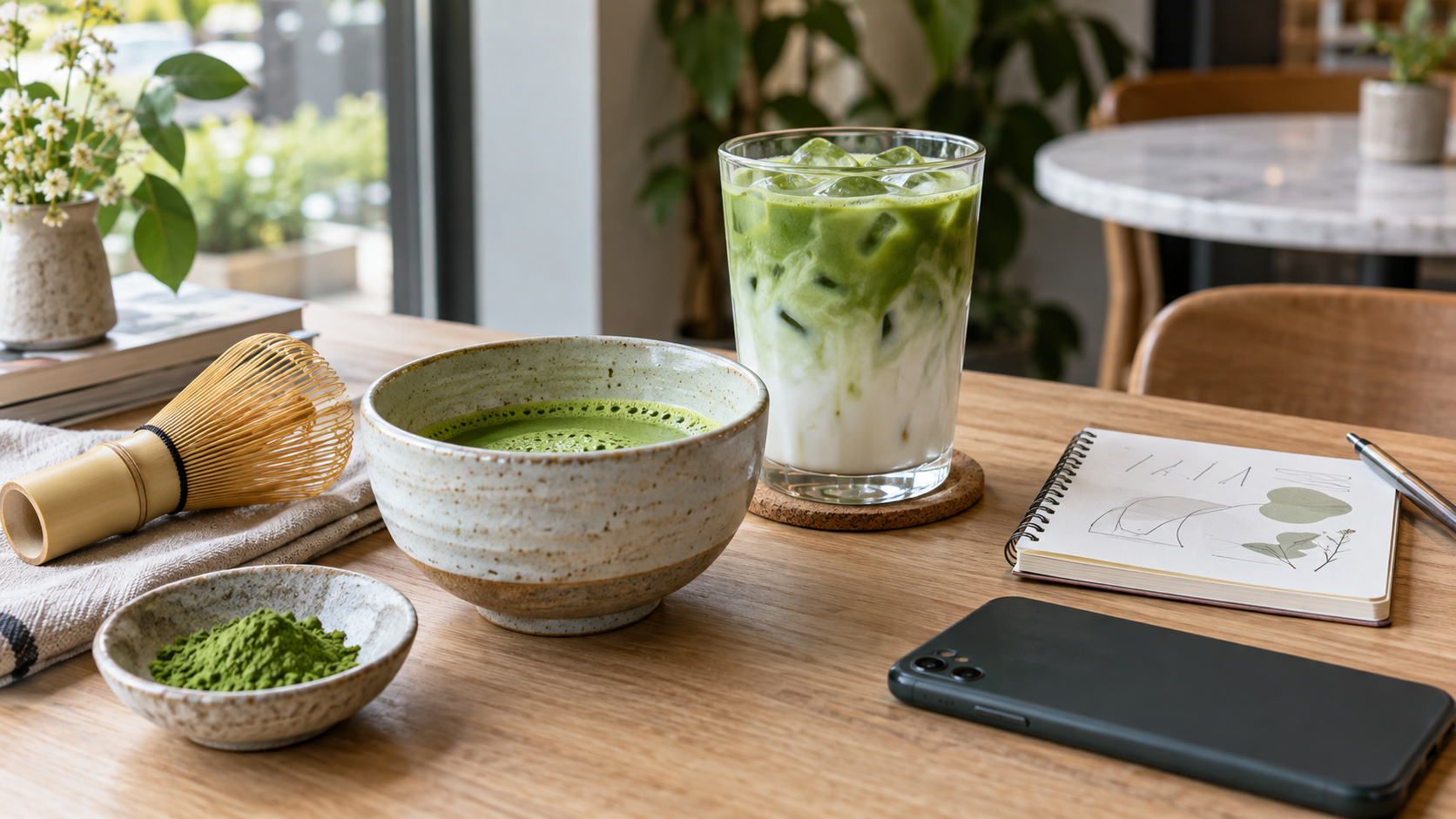
Search results often reduce matcha’s rise to “it is healthy” or “it went viral.” Those are partial explanations. The stronger answer is that matcha works unusually well across different contexts: traditional tea, specialty cafés, iced drinks, bakery flavors, wellness content, influencer visuals and retail powders for home use.
The main reasons matcha became popular
| Driver | Why it helps matcha spread | What to be careful about |
|---|---|---|
| Visual color | Bright green drinks and desserts photograph well. | Color alone does not prove quality. |
| Café formats | Matcha lattes, iced matcha and flavored drinks are easy to menu. | A sweet latte is different from plain tea. |
| Caffeine positioning | Consumers compare it with coffee and energy drinks. | Caffeine still counts and sensitivity varies. |
| Japanese tea culture | Origin, preparation and craft give the product a story. | Do not turn culture into vague luxury claims. |
| Home ritual | Whisking powder gives buyers a repeatable routine. | Bad powder or poor technique can taste bitter. |
| Wellness search | People look for antioxidants, focus and weight claims. | Evidence is narrower than many posts imply. |
Cafés made matcha easier to try
Many consumers first meet matcha as a latte, not as a bowl of straight tea. Milk, ice, syrup and fruit flavors soften bitterness and make the drink familiar to coffee-shop customers. That gives cafés a bridge product: it looks different from coffee, still feels premium, and can be sold hot, iced or blended.
This café fit also explains why matcha is popular in places that did not historically drink it daily. A barista can add matcha to an iced latte workflow, a bakery can use it in cakes, and a brand can package it for home whisking. Sailtik’s matcha latte guide shows why ratios, sweetness and milk format matter once matcha moves into café drinks.
The color is a real marketing advantage
Matcha’s green color is easy to recognize in photos, short videos and menus. That matters because food trends now travel visually. A pale beige tea can be excellent, but it does not stop the eye as quickly as a vivid green latte, tiramisu, cookie, soft serve or cake.
Still, color should be interpreted carefully. Fresh, well-stored matcha is usually greener than stale or oxidized powder, but lighting, milk, editing, cultivar, shading, grinding and recipe strength all affect the final drink. Popularity should not be confused with proof that every bright drink uses high-grade powder.
Caffeine made matcha comparable to coffee
Matcha is often discussed as a coffee alternative, but the better framing is caffeine choice. Some people prefer matcha’s flavor and preparation ritual; others want a drink that feels less like coffee but still caffeinated. Sailtik’s matcha caffeine comparison explains why powder dose and serving size matter more than the word “matcha.”
That caffeine positioning helped matcha enter morning routines, study drinks and office beverages. It also creates a limit: people who are sensitive to caffeine, pregnant, breastfeeding or stacking multiple caffeinated drinks should not treat matcha as automatically gentle.
Japan, Uji and origin stories add demand
Matcha is tied to Japanese tea production and preparation traditions. For many buyers, that origin story is part of the appeal. MAFF’s tea information and Sailtik’s origin guide both show why production context matters: matcha is not just green coloring, and Japanese regional names should not be used casually.
Uji and other Japanese tea regions also became search signals. Consumers use these names as shorthand for quality, even though a real purchase still needs supplier, grade, harvest, storage and intended-use checks. Sailtik’s where matcha comes from page covers those origin boundaries.
Popularity can create supply pressure
When many cafés, home users, brands and food manufacturers want matcha at the same time, supply pressure follows. That does not mean every shelf will be empty, but it can affect price, grade availability, lead time and substitution risk. Sailtik’s 2026 matcha shortage guide covers this buyer-facing side of popularity.
For businesses, the lesson is practical: trend demand should be matched with supplier due diligence, stable specifications and realistic grade selection. A drink that depends on a very specific color, flavor and price point can become difficult to scale when demand jumps.
Where is matcha popular?
Matcha is popular in different ways by market. In Japan, it has a deeper cultural and production context. In the U.S., Canada, Europe and several Asian café markets, drinks, desserts, wellness content and retail powders are major entry points. Online, the most visible format is often iced matcha latte content because it photographs clearly and is easy to customize.
So the location answer depends on whether you mean tea tradition, café menu adoption, social media visibility, retail sales or tourist shopping. Sailtik’s Japan buying guide is a better page for visitors trying to buy matcha in Japanese shops.
What popularity does not prove
- A popular matcha drink is not automatically healthy.
- A “ceremonial” label still needs context.
- A bright green latte may still be sweetened.
- Japan-origin claims need documentation.
- A supplier may struggle to scale the same quality during a demand spike.
Bottom line
Matcha became popular because it sits at the intersection of taste, color, café operations, caffeine, wellness interest and Japanese tea culture. The trend is real, but the careful answer is specific: judge plain matcha, café lattes, desserts, origin claims and supply claims separately. Popularity explains demand; it does not replace quality checks.
Sources checked
- MAFF tea information page
- Sailtik 2026 matcha shortage guide
- Sailtik what-is-matcha guide
- Sailtik matcha origin guide
- Sailtik caffeine comparison
- Sailtik matcha latte guide
- Sailtik Japan buying guide
FAQ
Why is matcha suddenly everywhere?
It fits iced café drinks, visual social content, home rituals and wellness search. Those channels reinforced each other, especially as cafés and home users learned simple latte formats.
Is matcha popular because it is healthy?
Health interest is one driver, but it is not the whole explanation. Taste, color, caffeine, culture and café customization also matter, and some health claims are overstated.
Where is matcha most popular?
It depends on the measure. Japan has the deepest production and cultural context, while café and social-media visibility is strong across many Western cities and urban Asian markets.