
Matcha tea bags are convenient, but they are usually not as good as matcha powder if you want the real matcha experience. A tea bag makes a brewed cup. With powder, the fine tea leaf is mixed into the drink instead of steeped and removed. That difference changes flavor, body, color, caffeine estimate, foam and recipe use.
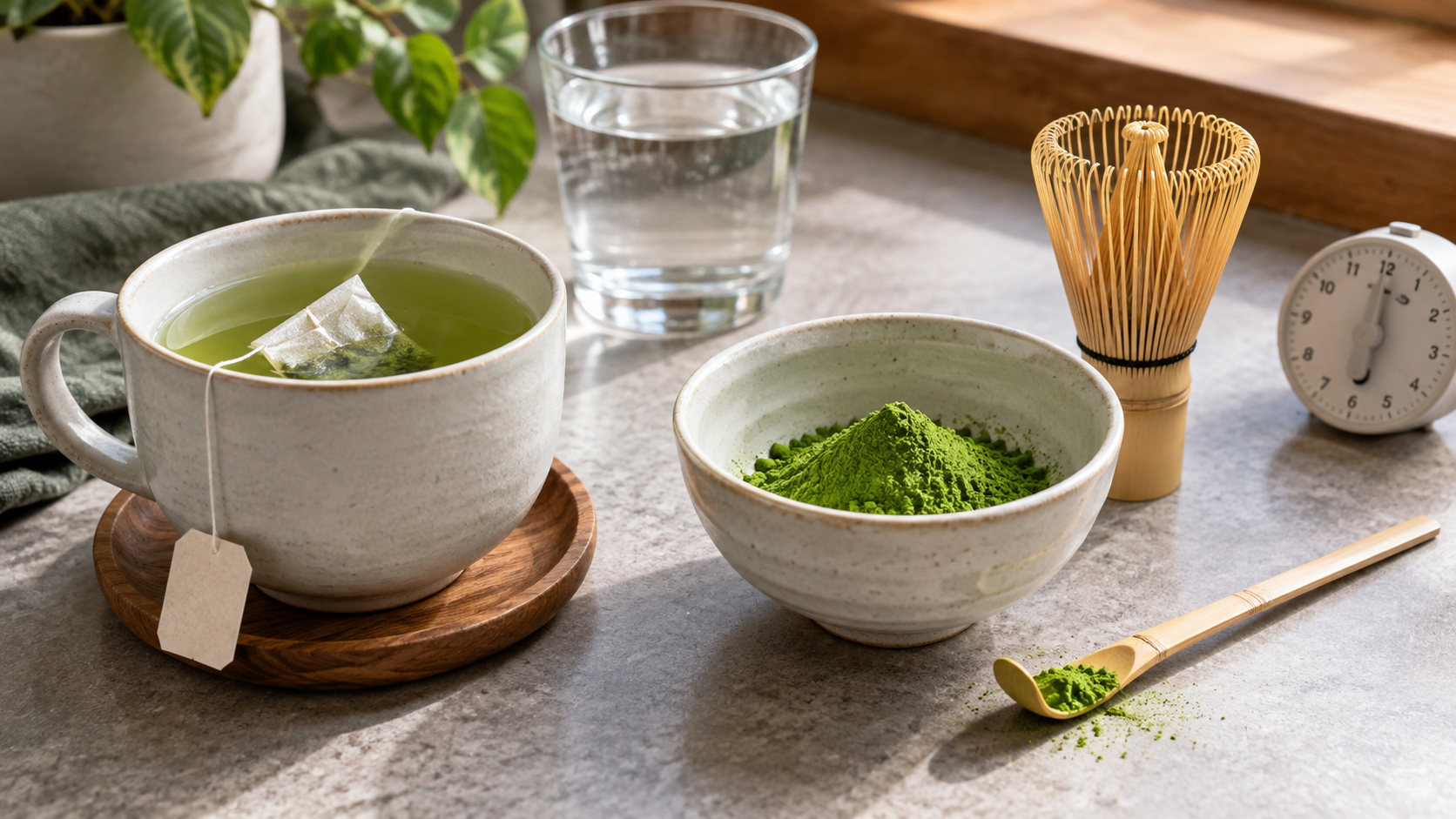
That does not make tea bags useless. They can be fine for a quick office cup, travel, or someone who likes a lighter green-tea drink. The problem starts when a box uses “matcha” on the front and shoppers expect the same thing they would get from a bowl of sifted powder.
The short comparison
| Question | Tea bags | Matcha powder |
|---|---|---|
| What are you drinking? | Mostly brewed compounds from the bag contents. | Suspended powdered tea leaf. |
| Flavor | Lighter, thinner, often closer to brewed green tea. | Stronger, greener, sometimes creamy or bitter depending on dose. |
| Texture | Clearer and tea-like. | Cloudy, fuller and powder-based. |
| Foam | Little to none. | Can foam when whisked or shaken well. |
| Recipes | Poor substitute for baking, frosting and most lattes. | Works for drinks, desserts and café bases. |
| Convenience | Very easy. | Needs measuring and mixing. |
Why bags rarely match powder
Real matcha is a fine powder. Sailtik’s matcha definition guide explains why the powdered-leaf format matters. When you whisk powder into water, the leaf material stays in the cup. A bag works differently: hot water passes through the material, then the bag is removed.
Some bags contain a little matcha mixed with green tea leaves. Others contain green tea dust, flavoring or a blend designed to look matcha-adjacent. That can taste pleasant, but it is not automatically equivalent to whisking plain powder.
When a matcha tea bag is good enough
- You want a simple hot drink at work or while traveling.
- You prefer a lighter taste than whisked matcha.
- You do not need foam, a thick body or a bright café color.
- You are not using it for baking, frosting or a concentrated latte base.
- The package clearly explains the contents.
For that use, there is no shame in choosing the bag. A drink you actually make is more useful than powder that sits untouched because the routine feels fussy.
When powder is the better choice
Use powder when the recipe depends on matcha itself: a traditional-style bowl, a hot or iced latte, cold foam, cookies, cakes, frosting, tiramisu or a café menu test. Tea bags do not give you the same control over grams, color or intensity.
Powder also lets you adjust the dose. Sailtik’s hot matcha guide and tea-with-matcha-powder guide both show why measuring and mixing matter. If you do not have a whisk, use Sailtik’s no-whisk method before deciding that bags are your only option.
Caffeine is not a simple bag-versus-powder answer
Powder often feels stronger because you control the grams and drink the suspended leaf. A tea bag may be lighter, but caffeine depends on the actual contents, amount of tea, steeping time, water temperature and serving size. A bag labeled with matcha is not a caffeine guarantee.
If caffeine matters for sleep, pregnancy, anxiety, heart rhythm or medication timing, check the product information rather than guessing. Sailtik’s matcha powder caffeine guide and direct caffeine answer explain why powder dose and product variation matter.
The label check I would use in the aisle
Pick up the box and look for the first three ingredients. If it says green tea plus matcha powder, it is probably a blended tea-bag product. If it says only green tea, it may not contain true matcha powder at all. If it says sugar, creamer or flavors early in the list, you are shopping for a drink mix, not plain tea.
Also check the bag itself if the packaging allows it. Coarse leaf pieces, dusty fannings and fine powder behave differently in hot water. A bag can leak sediment and still not be the same as a bowl of properly whisked matcha.
Bottom line
Matcha tea bags are good for convenience, not equivalence. Choose them for a lighter brewed drink. Choose powder when you care about matcha flavor, texture, foam, color, recipes or dose control. If a package blurs the difference, trust the ingredient list more than the front label.
Sources checked
- Sailtik: what matcha is
- Sailtik: hot matcha method
- Sailtik: making tea with matcha powder
- Sailtik: no-whisk matcha method
- Sailtik: caffeine in matcha powder
- Sailtik: whether matcha powder has caffeine
FAQ
Are matcha tea bags real matcha?
Some include a small amount of matcha in a green-tea blend. Others are mainly ordinary green tea. The ingredient list is the only reliable way to tell.
Can I use a matcha tea bag for a latte?
You can make a green-tea latte-style drink, but it will usually be thinner and less intense than a latte made from powder. For café-style texture and color, powder is the better tool.
Do matcha tea bags have the same benefits as powder?
Do not assume that. The form, amount and product contents differ. A tea bag infusion is not the same exposure as drinking measured matcha powder.
Are matcha tea bags better for beginners?
They can be easier, especially if you want a light cup with no tools. If you want to learn matcha flavor and texture, start with a small amount of powder and a simple shaker or whisk method.